

Introduction: The Foundation of Guest Satisfaction is a Dry Night's Sleep
In the B2B outdoor equipment sector, particularly for rental fleets, glamping resorts, and adventure tour operators, the quality of sleep directly impacts customer satisfaction scores, repeat booking rates, and the lifespan of your gear. A premium moisture-proof mat is not merely an accessory; it is a critical asset that bridges the gap between a memorable outdoor experience and a miserable one. For sourcing managers and business owners, the decision to invest in high-end, moisture-resistant sleeping solutions is a calculated move that significantly reduces total cost of ownership (TCO) and enhances brand reputation.
Standard foam pads or cheap inflatables fail to address the primary enemy of outdoor comfort: ground moisture and cold. When a sleeper lies directly on a non-insulated surface, body heat is conducted away, leading to restless sleep and physical strain. Furthermore, moisture ingress compromises the structural integrity of the materials, leading to delamination and seam failure. This guide provides a deep dive into the engineering, materials, and commercial ROI of premium moisture-proof mats, ensuring your procurement decisions are backed by data.
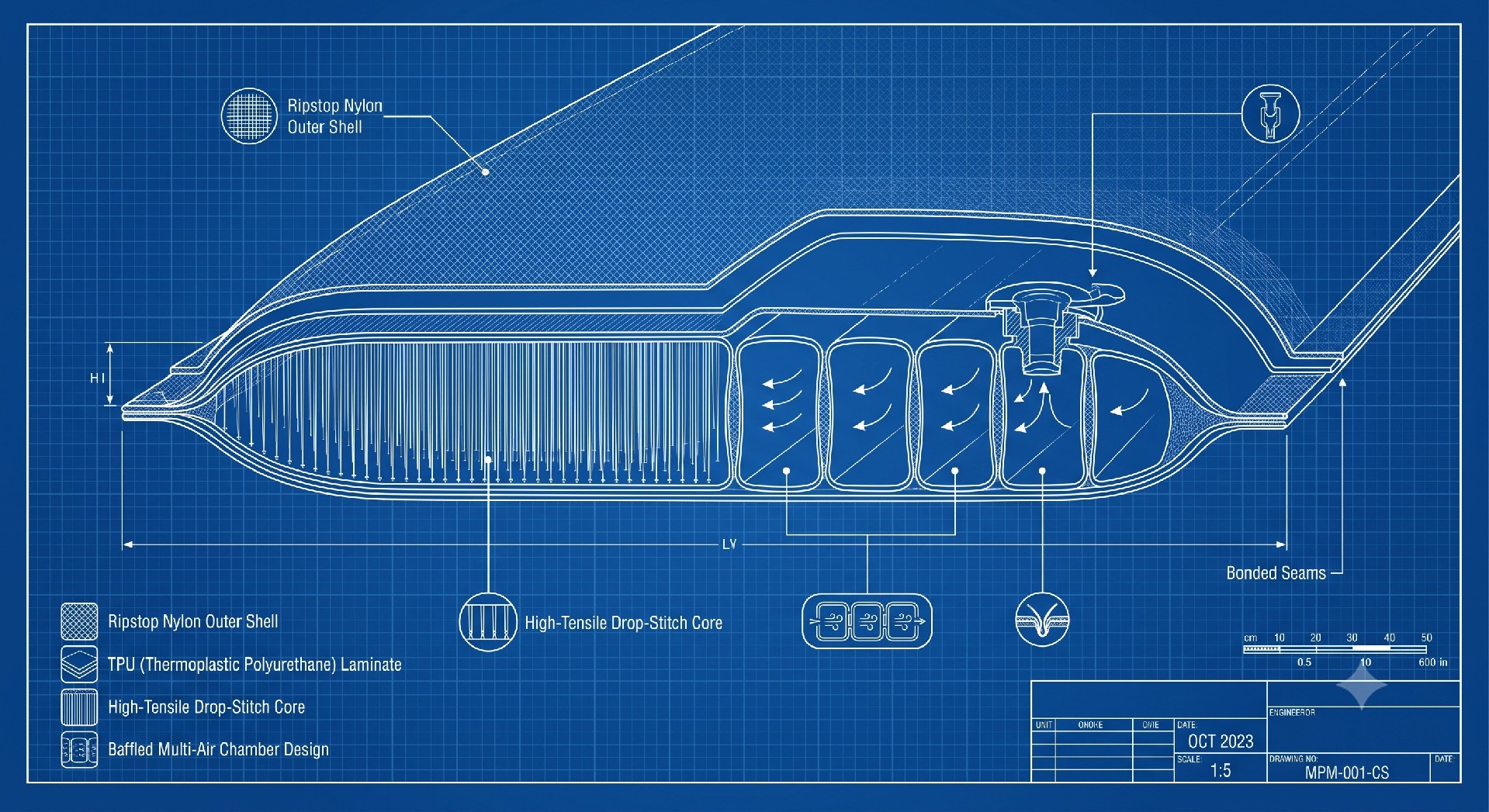
Fabric Technology Deep Dive: Engineering for Moisture Resistance
The efficacy of a moisture-proof mat hinges on the synergy between its core materials and the lamination processes that seal them. In the B2B market, we move beyond simple polyethylene foam to advanced composites designed for rigorous commercial cycles.
Reinforced PVC vs. Advanced TPU Laminates
While traditional mats utilize XPE (Cross-Linked Polyethylene) foam for basic moisture proofing , commercial-grade mats demand robust surface layers. High-specification models often feature a hydrolysis-resistant TPU film laminate, which is critical for preventing breakdown in humid environments over years of use . For extreme durability, reinforced PVC with a thickness of 0.9mm and a high denier count (e.g., 1100D) provides superior abrasion and puncture resistance, crucial for high-turnover rental environments. The material composition must adhere to stringent safety standards, with industry leaders utilizing Oeko-Tex® 100 certified materials to ensure no harmful substances are present, aligning with REACH compliance .
R-Value and Thermal Insulation Metrics
The primary metric for evaluating thermal protection is the R-Value. Under the ASTM F3340 standard, this measures the pad's resistance to conductive heat loss . For premium B2B applications targeting year-round use, an R-Value of 4.2 to 7.2 is considered optimal for blocking ground cold down to freezing temperatures . For instance, premium self-inflating mats utilize 16 kg/m³ open-cell PU foam insulation combined with moisture-regulating organic cotton and wool toppers to manage perspiration and maintain a microclimate .
Weld Engineering and Seam Integrity
The construction methodology determines the long-term durability of the moisture-proof barrier. Glued seams are prone to failure under stress and exposure to moisture, whereas advanced manufacturing utilizes heat-welded seams or liquid-extruded TPU lamination to create a monolithic, impervious seal . This is non-negotiable for commercial equipment, as it ensures the mat remains waterproof and airtight under load.
Technical Specifications and Sourcing Matrix
Understanding the technical specifications is paramount for making an informed B2B sourcing decision. The following table outlines key parameters for evaluating premium moisture-proof mats against standard alternatives.
| Key Parameter | Entry-Level / Standard | Premium Commercial Grade |
|---|---|---|
| Core Material | XPE Foam / Basic PE | Hydrolysis-Resistant TPU / Reinforced 1100D PVC |
| R-Value (Thermal Resistance) | 1.0 – 2.0 (Summer use) | 4.2 – 7.2 (4-Season / Extreme Cold) |
| Material Thickness | 4mm – 10mm | 7.6cm – 10cm (3-4 inches) |
| Seam Construction | Glued / Simple Heat Sealing | Heat-Welded / Liquid-Extruded TPU Lamination |
| Max Payload / Capacity | Unspecified / Light Use | Commercial-grade durability for 400 kg+ loads |
| Standards & Certifications | Basic (if any) | Oeko-Tex® 100, CE, REACH, ASTM F3340 |
Commercial Lifespan and Total Cost of Ownership
For a B2B buyer, the initial purchase price is only one variable. A premium moisture-proof mat offers a significantly lower TCO due to its extended lifespan. While a standard closed-cell foam mat may cost less upfront, its susceptibility to compression fatigue and moisture damage necessitates replacement within a single season of heavy use . In contrast, commercial-grade mats with ripstop shells and machine-washable core-cover designs can last for hundreds of rental cycles . The 5-year material and workmanship warranties offered on high-end military-grade and expedition-grade mats provide a clear indicator of expected durability .
Moisture Management and Hygiene
The inherent moisture-regulating properties of materials like organic cotton and wool provide superior moisture management, reducing the risk of mold and bacterial growth inside the pad . This is a critical hygiene consideration for rental stock that is used by multiple clients. The inclusion of repair kits and accessible valve systems further extends operational life, allowing for quick field fixes and reducing downtime.
[IMAGE_2]
Conclusion: A Strategic Investment in Quality and Comfort
For B2B enterprises, the decision to source premium moisture-proof mats transcends basic comfort; it is a strategic investment in operational efficiency, guest safety, and brand integrity. The data shows that while the upfront cost is higher, the superior materials—such as hydrolysis-resistant TPU, high-R-value insulation, and heat-welded seams—deliver a superior ROI through reduced replacement frequency and higher customer satisfaction. When evaluating suppliers, prioritize those who provide transparent technical specifications, compliance certifications (CE, ISO 6185, REACH), and demonstrable engineering expertise in drop-stitch technology and fabric lamination.
