

The Unseen Logistics Challenge of Vacation Rentals and Resorts
For any commercial operation—from a high-end glamping resort to a high-volume water sports rental fleet—guest satisfaction often hinges on the smallest details. One of the most overlooked pain points in the hospitality and recreation industry is the provision of reliable, safe, and comfortable aquatic equipment. While a generic packing list for a summer vacation might recommend a swimsuit and sunscreen, the logistical reality for B2B buyers is far more complex . Inflatable swimming rings, often dismissed as simple pool toys, represent a significant logistical and financial consideration. Whether you are sourcing for a hotel chain in the Maldives or a municipal pool in the Midwest, the choice of swimming rings impacts storage costs, guest safety, and brand reputation. A failure in this seemingly simple product can lead to negative reviews, increased operational costs, and potential liability issues.
However, the modern commercial-grade inflatable swimming ring is a product of sophisticated engineering. It is not merely a sealed piece of plastic; it is a buoyancy aid that must comply with stringent international safety standards while offering a rapid return on investment (ROI) through durability and guest appeal. This guide will navigate the technical specifications, material science, and procurement strategies necessary for industry professionals to make an informed purchasing decision.
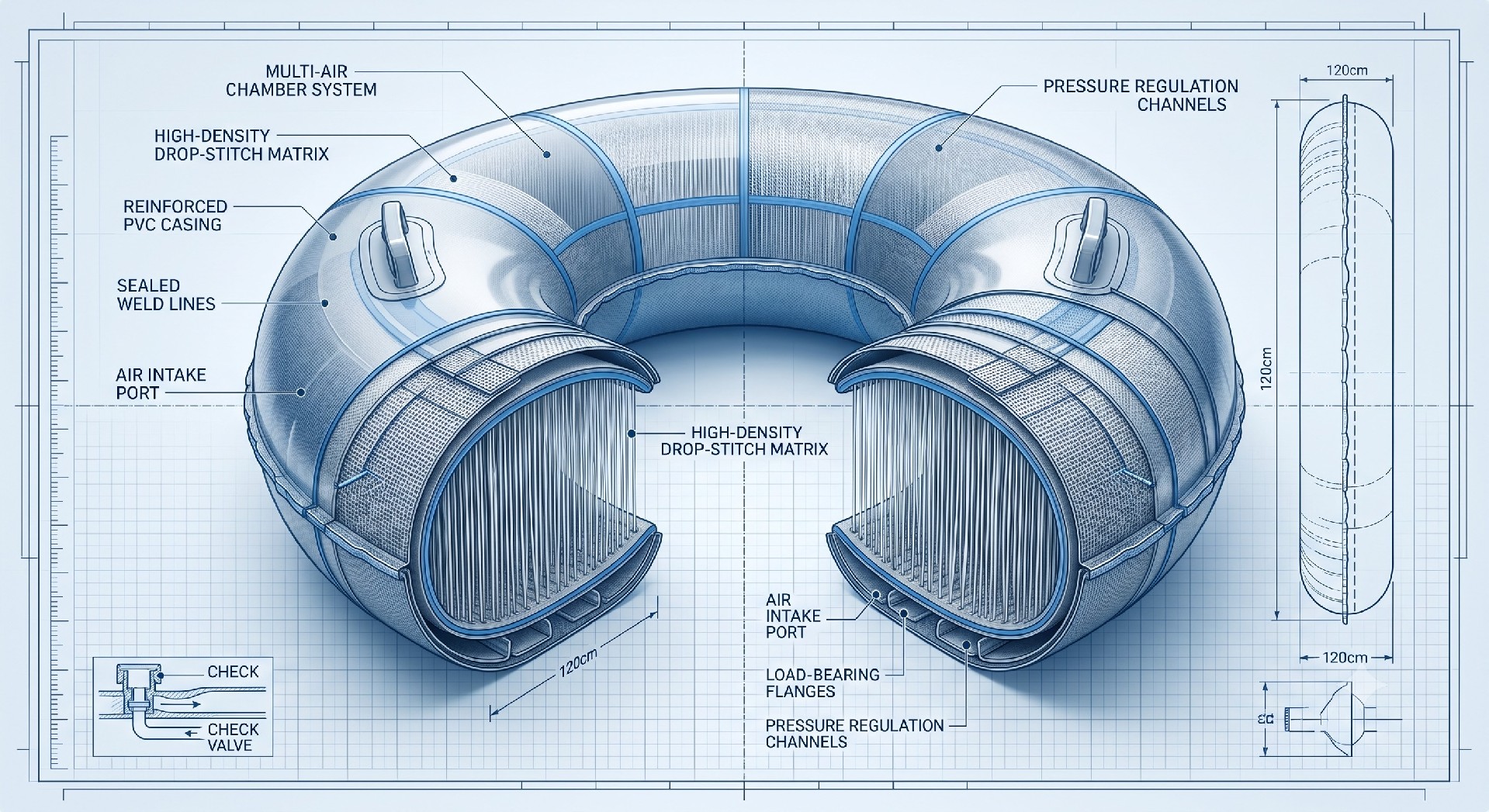
Fabric Technology Deep Dive: PVC vs. Hypalon
The foundational element of any durable inflatable is the material. The two primary contenders in the commercial market are High-Grade Polyvinyl Chloride (PVC) and Hypalon (Chlorosulfonated Polyethylene). While consumer-grade rings might use thin, single-layer PVC susceptible to punctures, commercial variants utilize reinforced PVC (often with a denier count of 1000D to 1100D) or the premium, heavy-duty Hypalon . The choice here dictates the product's Total Cost of Ownership (TCO).
Material Specifications and Durability Metrics
For demanding commercial environments, 1100D reinforced PVC remains the industry standard for its balance of cost and durability. This material typically features a thickness of 0.7mm to 0.9mm, offering significant resistance to abrasion and UV degradation. Hypalon, on the other hand, is the gold standard for extreme conditions. It is inherently resistant to UV rays, chemicals, and extreme temperatures. However, the manufacturing process for Hypalon is more complex and costly, often reserved for high-ticket specialty items or safety equipment .
From a B2B sourcing perspective, it is critical to distinguish between standard PVC and phthalate-free PVC. Compliance with REACH (Registration, Evaluation, Authorisation, and Restriction of Chemicals) and EN71 safety standards requires phthalate-free materials to ensure no harmful substances are released into the environment or absorbed by users. A reputable supplier will provide third-party test reports (e.g., SGS) confirming these material specifications and compliance .
Weld Engineering and Structural Integrity
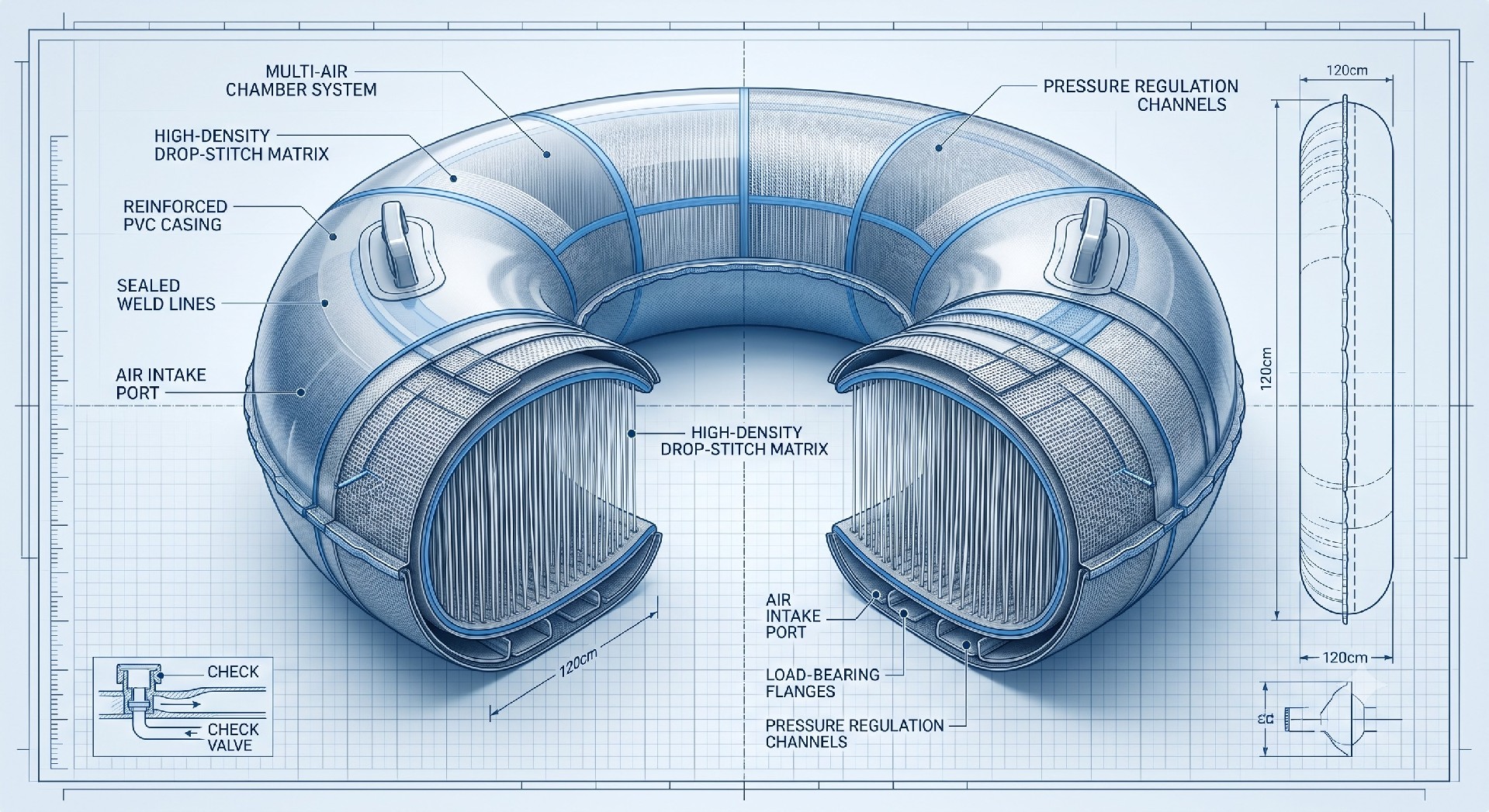
The Achilles' heel of many inflatables is not the material itself, but the seam. Where the layers of plastic join, a structural weak point exists. Heat-welded seams are the benchmark for commercial quality. This process fuses the layers of material at a molecular level, creating a bond that is as strong as the surrounding fabric. This is vastly superior to glued seams, which are susceptible to chemical breakdown and separation over time.
In high-end commercial designs, drop-stitch technology is increasingly being adopted to elevate the rigidity of the floor or base of a swimming ring. This advanced manufacturing process involves thousands of high-tenacity polyester threads connecting the top and bottom fabric layers. When inflated, these threads tension and create a rigid, flat surface that mimics a hard shell . For a standard swimming ring, while drop-stitch might be overkill for the toroid shape itself, the principle of internal structural integrity via multiple air chambers is vital. Multi-chamber safety designs ensure that if one chamber is punctured, the ring retains enough buoyancy to keep the user afloat, a feature highly relevant for safety-focused marine environments (ISO 6185).
Technical Specifications and Benchmarking
For procurement managers, the following technical specifications are non-negotiable in the evaluation process. These metrics provide a quantifiable measure of performance and safety.
| Key Parameter | Technical Specification |
|---|---|
| Material Thickness | 0.9mm / 1100D Reinforced PVC (Commercial Grade) |
| Maximum Payload / Capacity | Up to 150 kg / 330 lbs (Standard Adult Ring) |
| Diameter (Adult) | 90 cm (Range: 80 cm - 120 cm) |
| Working Pressure | 2.0 - 2.5 PSI (High-Pressure Valve) |
| Inflation Time (Electric Pump) | 2 - 3 Minutes |
| Safety Compliance | CE, EN71, REACH (Phthalate-Free) |
| Structural Design | Heat-Welded Seams / Multi-Chamber Safety (Optional) |
Core Parameter Overview
The typical dimensions for adult commercial rings range from 80cm to 120cm in diameter, with 90cm being the standard for most adult applications . The weight capacity is usually between 100kg and 150kg, though reinforced high-capacity models can support up to 200kg. Inflation pressure is a critical metric; while a casual user might inflate by mouth to 0.5-1.0 PSI, a commercial-grade ring should be capable of holding a recommended pressure of 2.0-2.5 PSI to ensure structural integrity and reduce drag. Inflation time is a key operational metric. A standard electric pump can inflate a 90cm ring in approximately 2-3 minutes, while manual pumps or oral inflation take significantly longer—a factor that heavily influences turnover rates at high-volume rental locations .
Portability vs. Hard-Shell Alternatives
The primary competitive advantage of inflatable swimming rings over traditional hard-shell watercraft is their deflatability. This single feature revolutionizes the logistics of vacation packing and inventory management. A deflated 90cm ring compresses to a fraction of its inflated size, occupying the same space as a few pieces of rolled clothing. This allows vacationers to transport gear without needing a trailer or roof rack. For B2B operations, this translates to massive savings in warehouse storage. An entire fleet of 100 rings can be stored on a single rack, significantly reducing the square footage required for off-season storage .
Furthermore, weight is a critical factor. While hard-shell kayaks or paddleboards can weigh 20-40kg, a premium inflatable swimming ring weighs between 1.0kg to 1.9kg . This lightweight nature reduces shipping costs (FOB freight) and makes transportation by staff seamless. For resorts offering "picnic on a lake" experiences, this portability is invaluable.
Commercial Use Cases and Target Markets
The versatility of high-quality inflatable swimming rings makes them suitable for a diverse range of commercial scenarios.
Glamping and High-End Resorts: For these venues, the "wow" factor is paramount. Large, oversized rings (e.g., 2-person rings up to 185cm in diameter ) or designer shapes (flamingos, unicorns) serve as visual anchors for Instagrammable moments, directly contributing to organic marketing and guest retention.
Water Parks and Rental Fleets: These operations require extreme durability. Rings are subjected to continuous exposure to chlorine, UV, and abrasive surfaces. Thus, sourcing rings with high puncture resistance and UV inhibitors is essential to minimize maintenance and replacement cycles .
Safety and Emergency Solutions: While traditional swimming rings are not lifebuoys, their inherent buoyancy makes them effective for supervised aquatic environments. Products meeting specific CE or ISO 6185 standards are mandatory for commercial entities offering swim support .
B2B Sourcing Strategy: Supplier Evaluation
When engaging with suppliers, due diligence is crucial. The global market is dominated by manufacturing hubs in Guangdong and Zhejiang provinces in China . Key performance indicators to evaluate include:
Certification Compliance: Verify ASTM F963 (US), EN 13138 (EU), and ISO 9001 certifications. These are non-negotiable for insurance and liability purposes.
Production Capacity: Assess the supplier's ability to scale. A factory with an output of 15,000 to 50,000 units per month demonstrates reliability .
MOQ Flexibility: Minimum Order Quantities vary. Suppliers may offer MOQs as low as 500 units for startups or up to 5,000 units for custom colors and branding .
Lead Times: Factor in 35-45 days for production, especially for custom OEM/ODM orders .
Conclusion
Inflatable swimming rings have evolved from simple water toys into sophisticated tools for commercial success in the hospitality and recreation industries. Their portability solves the logistical headaches of vacation packing and storage, while advanced material sciences—from high-denier PVC to multi-chamber safety systems—ensure durability and compliance. For the discerning B2B buyer, the decision is not about whether to stock a swimming ring, but which technical specifications and supplier reliability will deliver the best ROI. By prioritizing heat-welded seams, material thickness, and regulatory compliance, businesses can secure a profitable and safe addition to their commercial fleet.
