

The Silent Margin Killer: Logistics in the Inflatable Industry
For any water park, rental fleet operator, or resort manager, the appeal of bulk water park rafts is undeniable. The promise of high ROI, guest satisfaction, and a premium experience is a powerful driver for investment. However, the excitement of a large-scale procurement often collides with a complex and frequently underestimated challenge: shipping costs. The initial quote from a manufacturer may paint a rosy picture, but the final landed cost is often inflated by a host of variables unique to the transportation of bulky, lightweight, or dense commercial-grade inflatables. In an era where operational efficiency dictates profitability, treating shipping as a simple line item rather than a strategic component of procurement can severely erode margins.
This comprehensive guide serves as a deep-dive into the anatomy of shipping costs for water park rafts. We will move beyond the basic freight rate to analyze the engineering, material science, and logistics strategies that determine the true cost of moving these assets from factory to water. We will explore how factors like dimensional weight (DIM), packaging engineering, and even the type of fabric you choose can have a massive impact on your total cost of ownership (TCO).
Deconstructing the Quoted Cost: How Carriers Calculate Freight
Understanding how logistics providers price their services is the first step toward mastery. The old model of simple weight-based pricing has largely been replaced by sophisticated algorithms that consider volume, density, and special handling requirements. For bulk water park raft orders, which are inherently large and require specialized care, this is where the most significant cost fluctuations occur.
The DIM Weight Rule: A Bulky Enemy
A critical concept for any B2B buyer is Dimensional Weight (DIM). This is a pricing technique used by carriers to account for the space a package occupies relative to its actual weight. The formula is a simple calculation: (Length x Width x Height) / DIM Divisor (often 139 in the U.S.). The carrier charges you for the greater of the actual physical weight or the DIM weight . For water park rafts, this is where costs spiral. A single deflated raft, even if it weighs only 50 kg (110 lbs), can have a volumetric footprint that pushes its billable weight into the hundreds of pounds. This is the primary reason why simply negotiating a lower price per unit is insufficient; you must optimize the cubic volume of your shipment.
Freight Class and Commodity Codes
For Less-Than-Truckload (LTL) freight, the classification of your goods is crucial. This is determined by the National Motor Freight Classification (NMFC) system. The freight class is assigned based on density, stowability, handling, and liability . Inflatable rafts, being bulky but relatively durable, generally fall into a favorable density class, but packaging plays a role. For international shipments, you must know your Harmonized System (HS) Code and Schedule B number. The correct HS code for inflatable rafts is 890710 . Getting this wrong can lead to customs delays, penalties, and incorrect duties. Understanding these codes ensures you are not overpaying due to a misclassification.
Material Engineering and Manufacturing: A Nexus with Logistics
The irony of shipping bulk orders is that the product's construction—designed for durability and performance—directly influences its shipping profile. Decisions made at the drawing board dictate the weight, foldability, and packaging of the final product.
PVC vs. Hypalon and Fabric Denier
The choice of material is a classic trade-off between durability and weight. Commercial rafts typically use either high-grade PVC or Hypalon (CSM) fabric. While Hypalon offers superior UV and chemical resistance, it is generally heavier and less flexible than advanced PVC. Manufacturers like those in Shandong and Zhejiang provinces are increasingly using advanced 1100D reinforced PVC . A higher denier count (e.g., 1100D vs. 840D) means a thicker, more abrasion-resistant fabric . While this adds a few kilograms to each unit, it could justify a higher freight class or increased DIM weight. Conversely, a manufacturer like Qingdao Audac Outdoor Sports specializes in ultralight TPU packrafts, which are significantly lighter and fold smaller, drastically reducing shipping costs per unit . For water parks, where rafts are subject to high throughput, the weight and foldability of the material are critical KPIs for shipping logistics.
Construction: Drop-Stitch and PSI
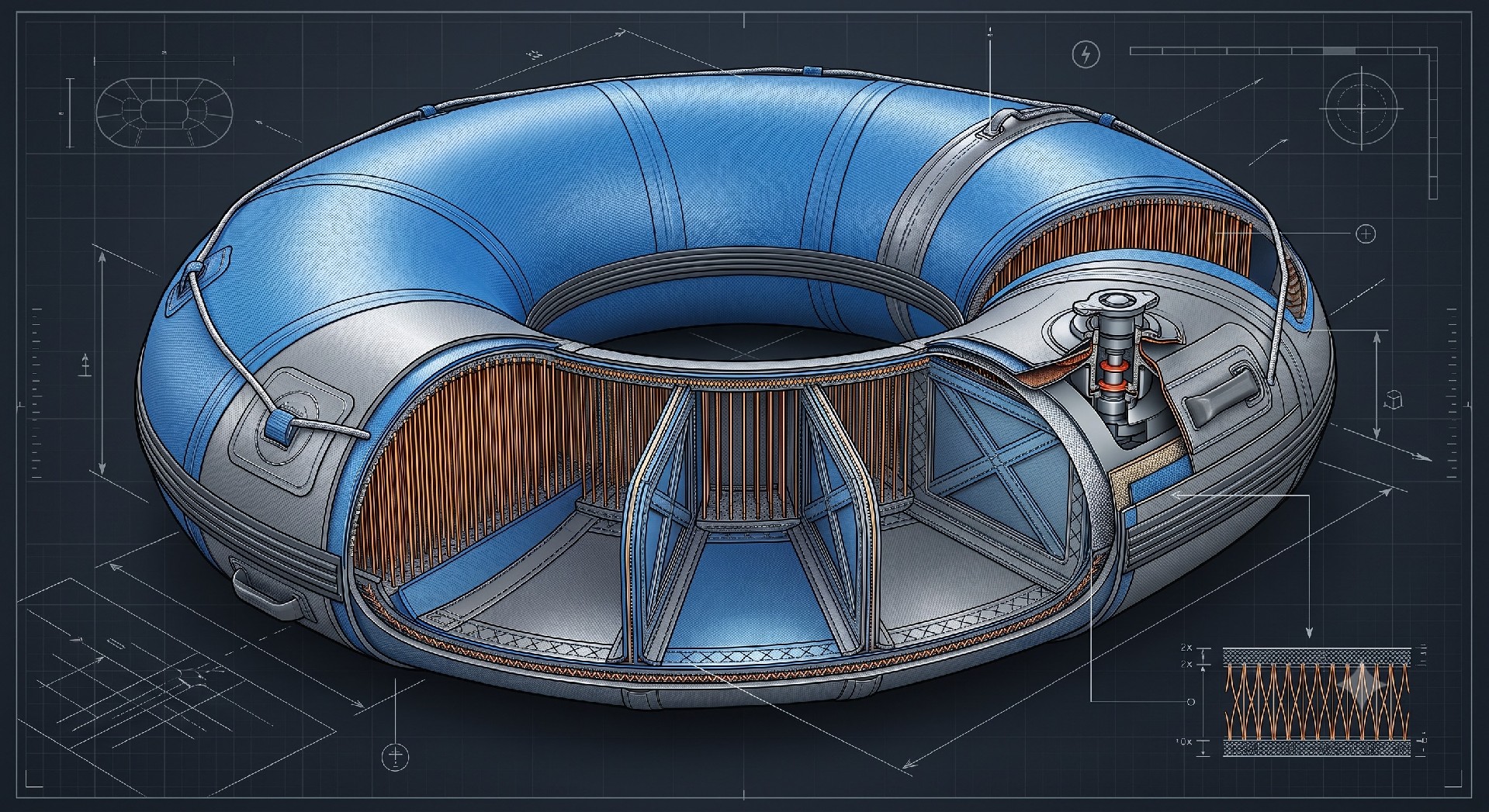
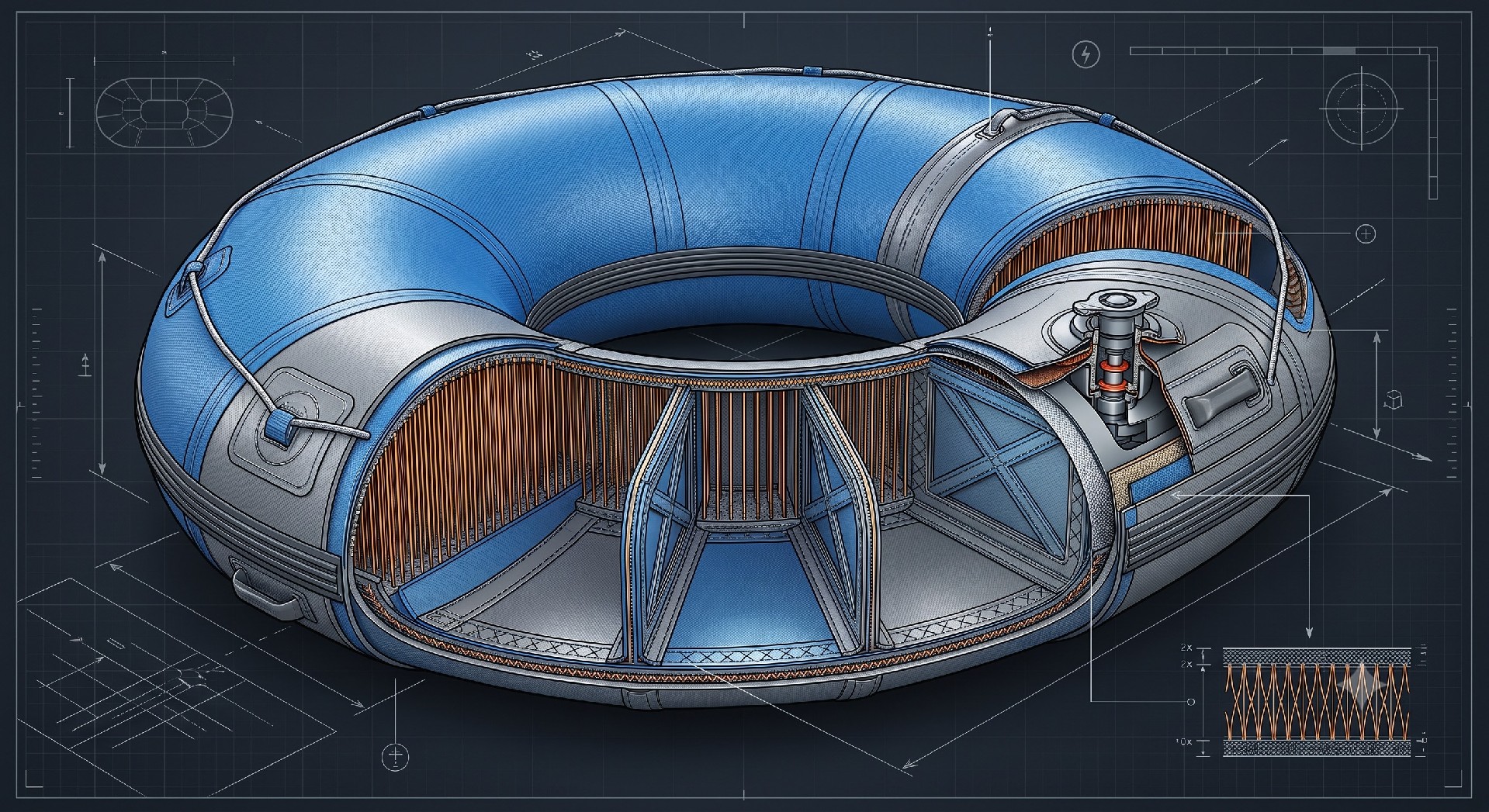
The engineering of the raft's internal structure dictates its rigidity and performance. The drop-stitch technology, which connects the top and bottom fabric layers with thousands of high-tenacity threads, allows for high-pressure inflation. A standard drop-stitch raft can be inflated to a high PSI, creating a rigid, stable platform . Achieving this rigidity is great for the guest experience, but it also means the product requires more precise packaging to prevent damage during transit. Furthermore, high-pressure valves and multi-chamber designs add to the structural integrity but can create awkward shapes or protrusions that challenge standard packaging .
Strategic Optimization: Engineering Your Way to Lower Costs
The key to optimizing shipping costs does not lie solely in negotiating freight rates; it lies in product and packaging engineering. By collaborating with your supplier on the following fronts, you can significantly reduce your logistics expenses.
1. Advanced Packaging Design
Raw, unboxed rafts are challenging to ship. The ideal packaging is a custom-designed carton or a heavy-duty roll that fits the raft's folded shape perfectly. Packaging engineering is a highly effective way to minimize cubic volume and reduce the DIM weight penalty . Some suppliers, like Meizhou Lanchao, offer wrapped packaging with cloth and transparent film . However, for air freight or fragile high-PSI models, rigid cartons may be necessary to prevent puncture damage. The goal is to create the smallest possible square or rectangular footprint without damaging the product. This is a collaborative process; a manufacturer with advanced facilities like Hangzhou Kudo Outdoors Inc (6,000m²+ facilities) will have the expertise to optimize packaging lines .
2. Deflation and Flattening Efficiency
A raft is only as small as its folding technique. Advanced manufacturers have automated deflation and rolling machines that expel all the air and compress the fabric into a tight, uniform roll. This process reduces the volume of a 10-person raft from 3 cubic meters to less than 0.5 cubic meters. Inflation/deflation time is not just a user-facing metric; it is a logistics metric. The more efficiently a raft can be packed, the lower the shipping cost per unit.
3. Material Selection vs. Packaging Protection
There is a direct correlation between material strength and packaging cost. A raft made from thick, heavy-duty 0.9mm PVC is more resistant to punctures and can likely be shipped in a lighter, less protective wrapping . A thinner, lighter 0.65mm TPU raft requires more rigid packaging to prevent damage. As a buyer, you must analyze this trade-off. The cost difference in packaging must be weighed against the material's benefits in the field.
| Key Parameter | Technical Specification & Impact on Shipping |
|---|---|
| Material Thickness | 0.9mm / 1100D Reinforced PVC (Heavier, more durable, may reduce packaging need) vs. 0.65mm TPU (Lighter, requires more protective packaging) |
| Construction | Drop-Stitch Core (Increases rigidity, requires careful flat folding to minimize volume) |
| Dimensional Weight | Billable weight = max(Actual Weight, (LxWxH)/DIM Divisor). Key target for cost optimization. |
| HS Code | 890710 - Inflatable Rafts. Crucial for customs and duty calculation. |
| Max Payload (Per Raft) | Varies (e.g., 400-1000kg). Affects material density and thus shipping weight. |
Commercial Use Cases and ROI
Optimizing shipping costs is not just about saving money; it is about increasing your overall ROI. Lower shipping costs mean you can offer more competitive pricing, buy more units for the same budget, or achieve a faster break-even on your rental inventory.
Resorts and Glamping
For high-end glamping resorts, the visual appeal of the equipment is paramount. However, shipping damage to unique, custom-colored rafts is costly and delays the launch of premium experiences. Investing in high-quality packaging and reliable logistics partners with 100% on-time delivery rates, such as those specializing in bulky items, is a non-negotiable element of the project plan .
High-Throughput Rental Fleets
Rental companies rely on a high volume of rafts. A key metric is the turnaround time for bringing new inventory online. The logistics chain doesn't end at the dock; it ends when the rafts are inflated and ready for customers. An optimized shipping process ensures that new stock arrives on schedule, fully intact, and can be integrated into the fleet with minimal disruption. A B2B procurement strategy that factors in the total landed cost of each unit, including shipping and handling, is the only way to accurately project profitability. This is a fundamental aspect of a comprehensive Cost-to-Serve (CTS) analysis .
Conclusion
Mastering the logistics of bulk water park raft orders is a strategic imperative for any serious operator. The days of accepting a base price from a supplier and paying whatever freight bill arrives are over. By understanding the interplay between material science, manufacturing engineering, packaging design, and carrier pricing models, you can unlock significant cost savings. The choice of PVC versus TPU, the implementation of drop-stitch technology, and the negotiation of optimized packaging are just as important as the unit cost itself. The goal is to minimize the dimensional weight while ensuring structural integrity, effectively treating shipping efficiency as a core component of the product design. Partner with manufacturers who have a proven track record in logistics, such as those offering FOB or CIF terms with clear documentation, and who have the operational maturity to deliver on-time, every time .
