

Introduction: The Critical Need for High-Speed Deployment
In the demanding world of military and commercial maritime operations, the ability to deploy personnel and equipment rapidly and safely is paramount. Modern landing assault boats are no longer simple ferries; they are sophisticated, high-performance connectors designed to bridge the gap between sea-based assets and hostile or austere shorelines. As a B2B sourcing expert, understanding the engineering and material science behind these craft is essential for making procurement decisions that balance performance, durability, and total cost of ownership. This guide provides a comprehensive, data-driven analysis of the key components that define next-generation high-speed landing assault boats, drawing on real-world specifications and operational demands .
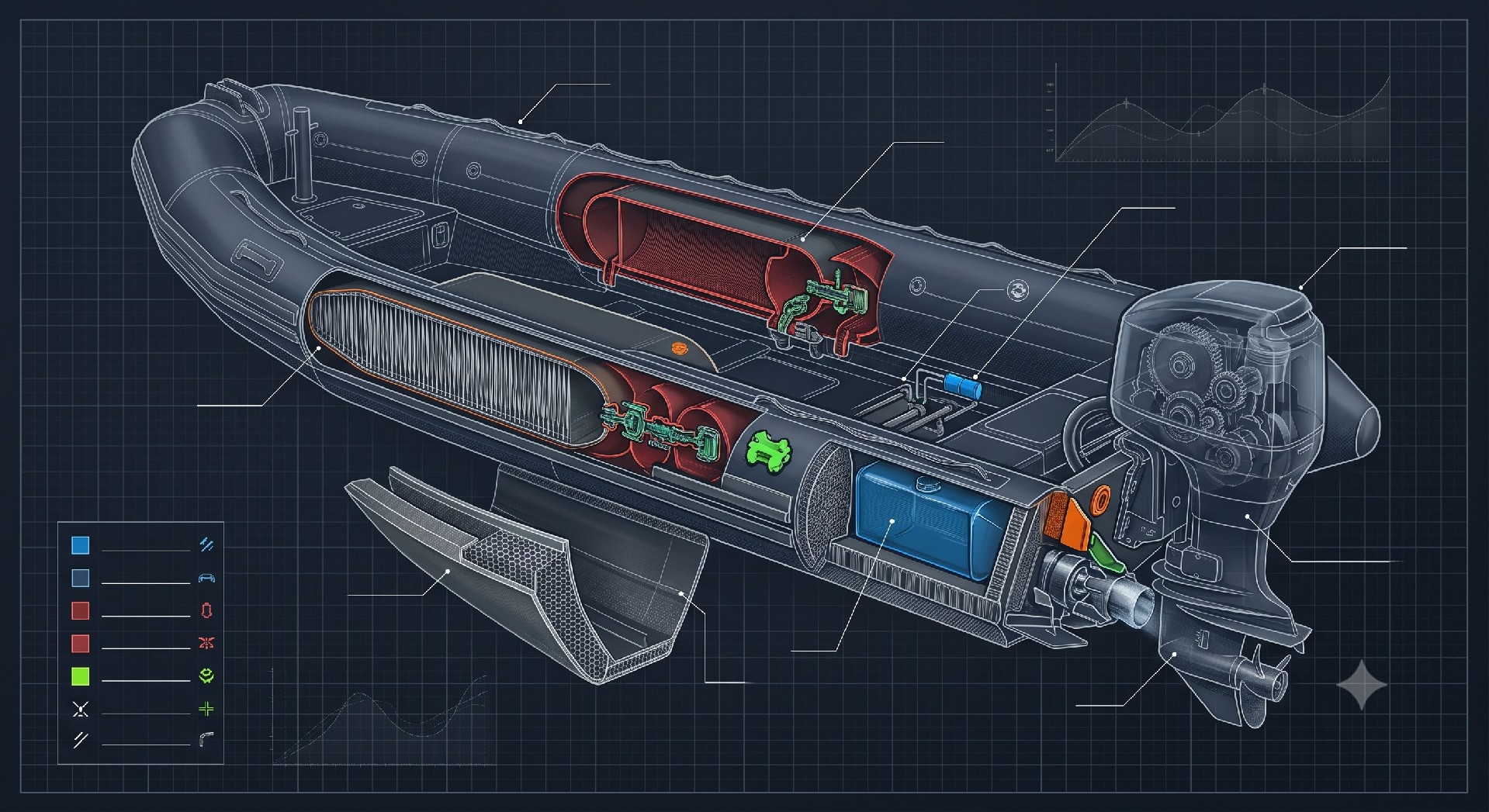
Fabric Technology and Material Science: The Core of Durability
The foundation of any high-performance inflatable or rigid-hulled landing craft lies in its materials. For commercial and military applications, the choice between materials dictates the vessel's lifespan, maintenance schedule, and operational envelope.
PVC vs. Hypalon: A Comparative Analysis for Landing Assault Boats
For inflatable components and rigid-hull inflatable boats (RHIBs), the debate often centers on PVC (Polyvinyl Chloride) versus CSM (Chlorosulfonated Polyethylene, commonly known as Hypalon). In the context of high-speed deployment, Hypalon is often preferred for its superior resistance to UV degradation, ozone, and chemical exposure—critical for vessels operating in extreme marine environments. While PVC is cost-effective, professional-grade landing craft utilize reinforced 1100D or higher denier fabrics to achieve the necessary puncture resistance and tensile strength. For example, a typical specification might involve a 0.9mm to 1.2mm thick fabric with a 1100D base, offering a robust barrier against abrasion during beaching operations.
Drop-Stitch Core Engineering: Achieving Rigidity on Demand
For inflatable hull sections or floorboards, drop-stitch technology is a game-changer. This construction method uses thousands of high-tenacity polyester threads connecting the top and bottom fabric layers. When inflated to high pressures (typically 8-15 PSI), the drop-stitch core creates a rigid, plank-like structure that mimics a solid hull, providing exceptional stability and planing capability at speed. This technology allows for the high-load capacities required for transporting troops and equipment while maintaining the portability of an inflatable craft.
Weld Engineering and Seam Integrity
In a high-speed assault boat, seam failure is catastrophic. Therefore, the manufacturing process focuses on creating seams that are stronger than the surrounding material. Heat-welded seams are the gold standard. This process fuses the material at a molecular level, creating a bond that is significantly stronger and more airtight than glued seams. To meet stringent safety standards like ISO 6185 and CE (EN71) requirements, multi-chamber designs are essential. These designs ensure that in the event of a puncture to one chamber, the boat retains sufficient buoyancy and structural integrity to return to base, safeguarding the crew and mission .
Technical Specifications and Performance Metrics
When evaluating landing assault boats for B2B procurement, quantifiable data is crucial. Below is a detailed specification matrix based on industry standards and real-world platforms.
| Key Parameter | Technical Specification | Operational Impact |
|---|---|---|
| Hull Material | Hypalon / 1100D Reinforced PVC | High UV resistance, critical for longevity in high-sun environments |
| Drop-Stitch PSI | 8 - 15 PSI (High-Pressure) | Creates rigid planing surface, enables high-speed performance |
| Max Troop Capacity | Up to 21 Combat Troops | Rapid personnel deployment for amphibious operations |
| Payload Capacity | 1,500 kg (Assault) to 800 LT (Connector) | Varies by mission type; logistics and equipment carriage |
| Max Speed | 42-43 Knots (CB90/BK-16/Trimaran) | Reduces time to objective; increases mission success rate |
| Compliance | CE, EN71, ISO 6185, REACH | Ensures regulatory compliance and safety standards |
Note: Specifications vary by platform. For instance, the CB90 can transport up to 21 troops at speeds of 40+ knots , while the BK-16E can carry 19 troops and reach 42 knots . Larger connectors, like the high-speed trimaran designs, can achieve 43 knots while carrying 800LT of payload, demonstrating the scalability of this technology . Modern designs, such as the Caimen Japan landing craft, utilize advanced tri-bow hull forms to achieve speeds over 20 knots with excellent seakeeping capabilities .
Commercial Use Cases and Deployment Strategies
Military and Defense Applications
Primarily designed for rapid delivery of amphibious assault teams, these vessels are used for strike operations, coastal patrol, and special operations support. The use of jet propulsion in some designs allows for operation in shallow waters and high-risk beach zones, enabling soldiers to disperse rapidly upon landing .
Commercial and Industrial Roles
Beyond military use, the engineering principles of high-speed assault boats are applied in commercial sectors, including:
Search and Rescue (SAR): Rapid response in coastal emergencies.
Resorts and Glamping: Premium transport for guests in remote locations.
Oil and Gas: Personnel transfer to offshore platforms in rough seas.
Law Enforcement: Interdiction and anti-piracy operations .
[IMAGE_2]
Conclusion: Maximizing ROI with Strategic Sourcing
Designing and sourcing a landing assault boat for high-speed deployment is a complex task that requires a deep understanding of materials science and hydrodynamics. By prioritizing reinforced fabric technologies, drop-stitch rigidity, and compliance with ISO 6185 and REACH regulations, procurement managers can ensure they select a fleet that offers durability, safety, and a superior return on investment. Whether the mission is military assault or high-end commercial transport, the principles of robust engineering remain the same. We invite you to contact our engineering team to discuss how these specifications can be tailored to your specific operational needs.
