

Introduction: The Sourcing Challenge for Compact Spaces
For procurement specialists and B2B buyers, the selection of an inflatable swimming pool for small backyards is often more complex than it appears on the surface. While the consumer market is saturated with colorful options, the commercial requirement demands a rigorous evaluation of material science, engineering integrity, and total cost of ownership. This guide moves beyond aesthetic appeal to provide a data-driven analysis for sourcing durable, safe, and profitable compact pools. We will dissect the technical specifications that define commercial-grade products, ensuring your investment delivers long-term value and meets strict safety standards. Whether you are outfitting a resort, managing a rental fleet, or supplying a retail chain, understanding these parameters is critical.
Fabric Technology and Material Deep Dive
The primary differentiator between a disposable consumer product and a commercial-grade asset lies in the materials used. For small backyard applications, the interplay of portability and durability is paramount. Most inflatable pools utilize Polyvinyl Chloride (PVC), but the quality varies drastically. B2B sourcing must focus on reinforced variants and the manufacturing standards they meet. For instance, a pool constructed from a 3-ply laminated material offers superior puncture resistance compared to single-layer vinyl . Look for specific metrics such as denier count (e.g., 1100D) and thickness (e.g., 0.9mm), which directly correlate with abrasion resistance .
Additionally, material safety is non-negotiable. Ensure products comply with REACH regulations and use BPA-free materials, especially if the pool is intended for children . Responsible manufacturers will provide certifications confirming the absence of harmful phthalates. The UV resistance of the material is another critical factor; a product with ASTM G154 certification for UV exposure (e.g., 500 hours) will significantly outlast a standard alternative in direct sunlight, reducing the frequency of replacements .
Structural Engineering and Pressure Management
Drop-Stitch and Chamber Configuration
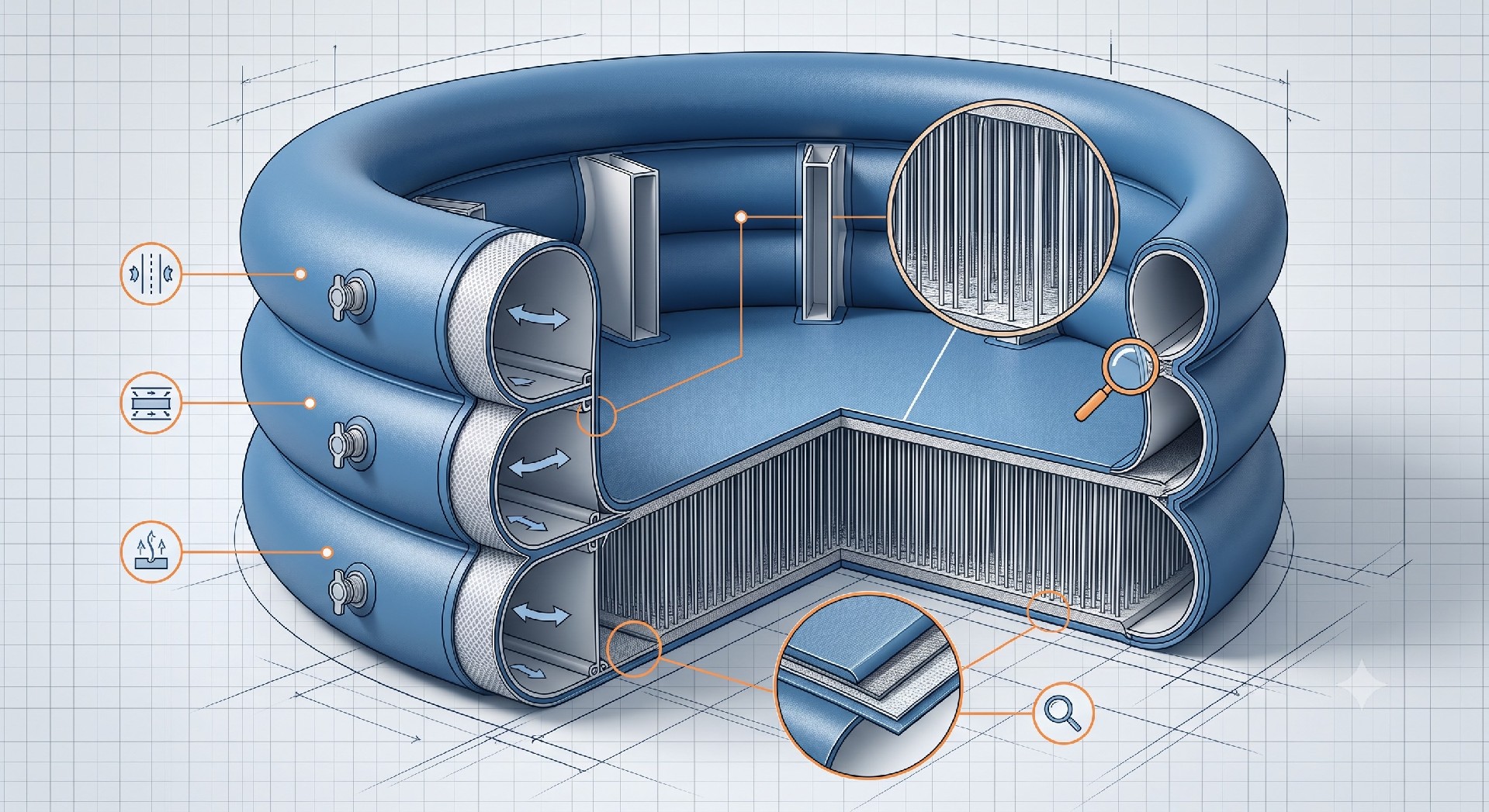
For pools that aim to provide deeper water or more rigid sidewalls, the engineering of the internal structure is key. While often associated with stand-up paddleboards, drop-stitch technology is increasingly used in premium inflatable pools to achieve high rigidity at low weight. This involves thousands of threads connecting the top and bottom layers, allowing for high-pressure inflation (measured in PSI) without deformation. For smaller backyard units, multi-chamber designs are more common. These pools feature independently inflated rings or sections. This redundancy is a crucial safety feature; if one chamber is punctured, the pool will maintain its structural integrity and not collapse entirely .
Seam Integrity and Welding
Seams are the most vulnerable points in any inflatable structure. Commercial-grade products should utilize heat-welded seams rather than glued seams. Heat welding creates a molecular bond between the PVC layers, resulting in a seam that is often stronger than the surrounding material. In contrast, glued seams are susceptible to chemical breakdown and separation over time, especially when exposed to water and temperature fluctuations. When evaluating products, request information on the seam welding process and the psi rating the seams can withstand.
Technical Specifications and Performance Matrix
| Key Parameter | Technical Specification |
|---|---|
| Material Thickness | 0.5mm – 0.9mm Reinforced PVC (Pro Models) |
| Denier Count | 1000D – 1100D for superior abrasion resistance |
| Inflation Time | 5 – 10 minutes (with high-output commercial pump) |
| Deflation/Storage Footprint | Folds to < 0.5 m³ for compact storage |
| Safety Standards | CE, EN71, REACH, ASTM F413 |
| Seam Construction | Heat-welded (vs. glued for consumer goods) |
| UV Resistance | 300 – 500 hours exposure (ASTM G154 certified) |
Commercial Application Scenarios
Understanding the use case is vital for selecting the correct specifications. For B2B buyers, a one-size-fits-all approach is rarely effective.
Resort and Glamping (Premium Guest Experiences)
For resorts offering upscale glamping, the aesthetic and durability of the pool are paramount. A pool with a tufted or designer pattern (such as those from Minnidip) can serve as a photogenic amenity that drives guest bookings . Here, material thickness (e.g., 0.4mm to 0.5mm PVC) and stability are key to withstanding regular use while presenting a premium image .
Rental and Event Fleets (High Throughput)
Rental companies require pools that can be set up and broken down rapidly. A pool with a rapid inflation system and a large drain plug can significantly reduce turnaround time, improving asset utilization. Products like the Intex Easy Set, which inflate the top ring and rise as they fill with water, are ideal for quick deployment . However, durability is critical; an average pool might only last a season, while a reinforced option with a 0.5mm thickness offers better ROI despite a higher upfront cost .
Residential Retail (Family and Child Use)
For retail, the focus is on safety features and ease of use for the end consumer. Pools with padded bottoms for hard patios and built-in shading offer clear value propositions . Furthermore, offering pools that are ASTM F413 certified ensures they meet industry safety benchmarks for backyard use . Products must also be easy to deflate and store compactly, a major selling point for consumers in urban environments .
[IMAGE_2]
Conclusion: A Strategic Sourcing Approach
Choosing the best inflatable swimming pool for small backyards requires a shift in perspective from a simple item to a strategic investment. The most cost-effective pool is not always the cheapest; it is the one that offers the best balance of material durability, safety compliance, and operational efficiency. For B2B buyers, prioritizing heat-welded seams, REACH-compliant materials, and appropriate denier thickness will ensure the product withstands the rigors of commercial use. By aligning the technical specifications with the specific commercial scenario—whether it's a luxury glamping resort or a high-turnover rental fleet—buyers can maximize ROI, minimize risk, and deliver a superior product to their end-users.
