

The Commercial Imperative: Why Inflatable Kayaks Are Reshaping Fleet Economics
The global inflatable kayak rental market is experiencing a significant growth trajectory, valued at USD 225.12 million in 2025 and projected to reach USD 369.84 million by 2032, growing at a CAGR of 7.34% . For B2B operators, this growth reflects a strategic shift. The fundamental question is no longer if to include inflatable kayaks, but how to optimize their Total Cost of Ownership (TCO) to maximize profitability. The economic logic is compelling: inflatable kayaks offer a superior return on investment (ROI) by minimizing the 'silent killers' of rental operations—storage costs, transportation logistics, and downtime.
This guide provides a data-driven Total Cost of Ownership (TCO) analysis of commercial-grade inflatable kayaks. We move beyond simple retail comparisons to examine the hard metrics of durability, operational efficiency, and fleet management that determine long-term profitability. For a rental business, the most expensive kayak is the one that fails prematurely. A durable, well-specced inflatable kayak typically pays for itself within the first season of operation, provided that a strict maintenance discipline is upheld .
Deconstructing Total Cost of Ownership (TCO) for Rental Fleets
1. CapEx vs. OpEx: The Acquisition and Maintenance Equation
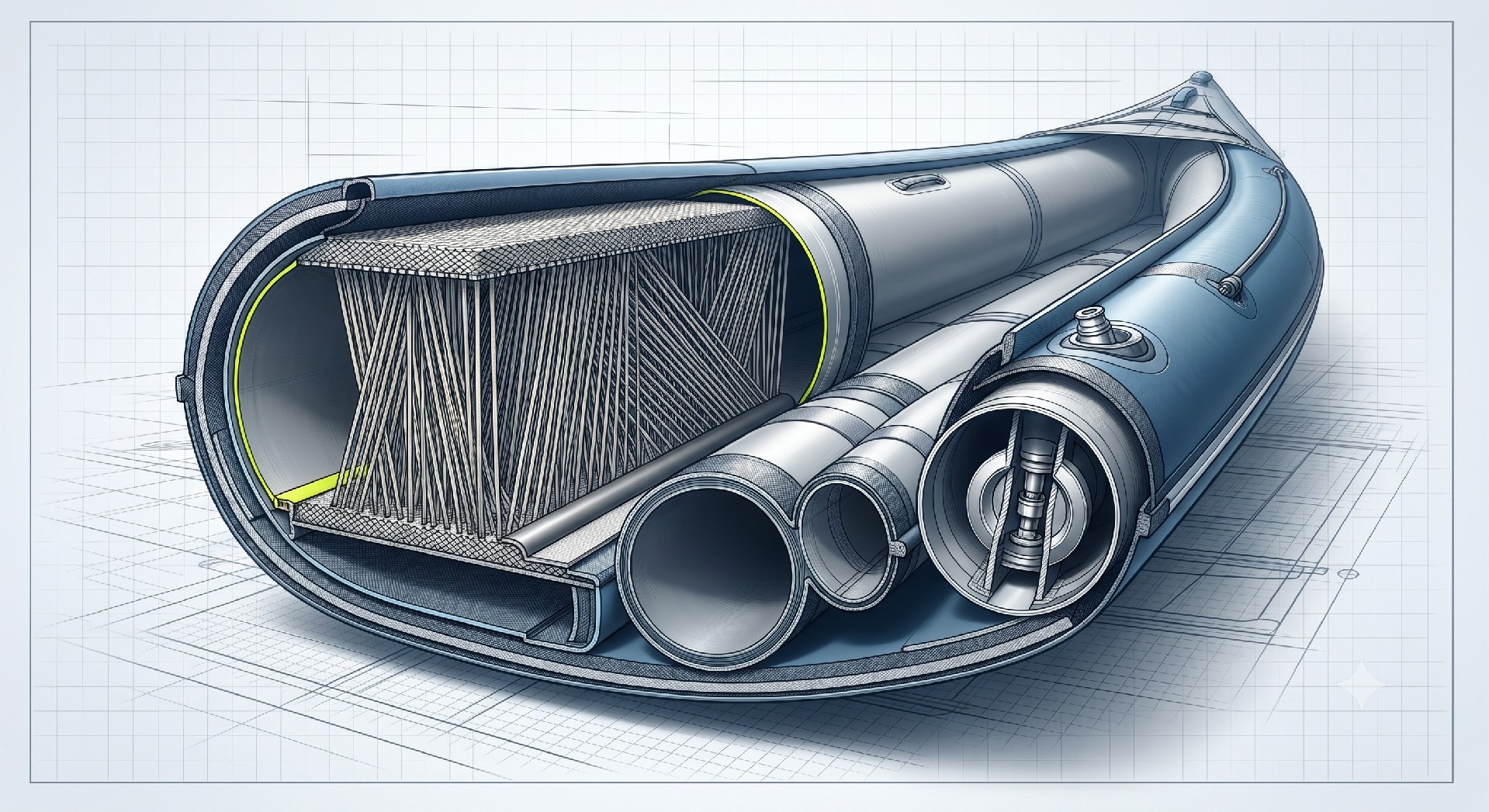
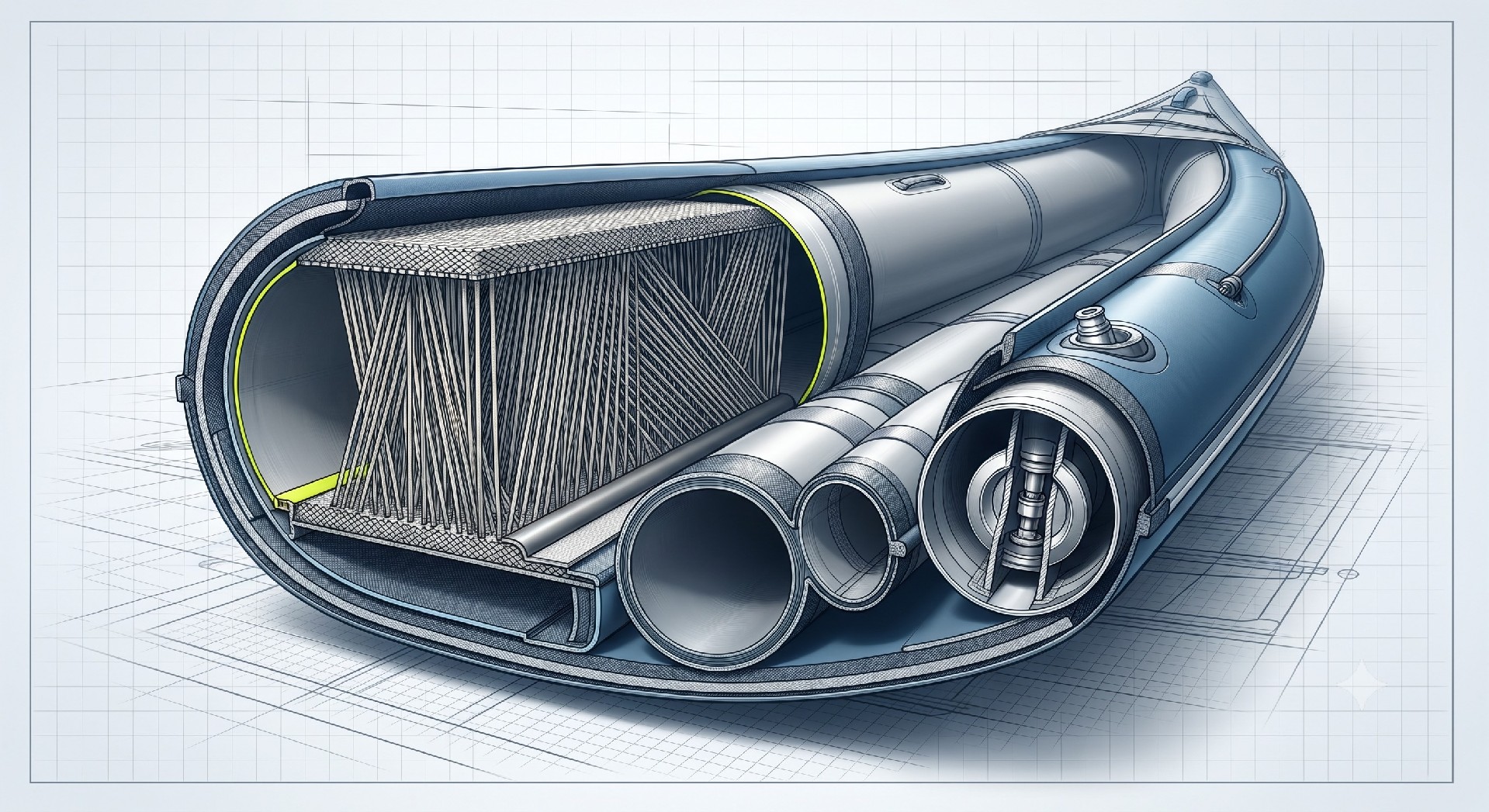
While the initial capital expenditure (CapEx) for a commercial-grade inflatable is higher than a budget retail model, it's a critical investment in asset longevity. The primary operational expenditure (OpEx) drivers are maintenance and replacement costs. A kayak built with 1000D reinforced PVC with heat-welded seams and a drop-stitch floor will withstand the high-frequency abuse of daily rentals, which includes being dragged on gravel, flipped by beginners, and exposed to prolonged UV rays . The 'budget' kayak, often using 600-840D fabric and glued seams, presents a lower upfront cost but a significantly higher OpEx due to frequent repairs, which translates directly to lost revenue from downtime.
2. The Hidden Cost of Downtime
Operational uptime is the primary driver of profit. When a kayak is in the repair shop, it is not generating revenue. The most expensive piece of equipment is not the one with the highest sticker price but the one that sits idle due to seam failure or a damaged valve . A commercial fleet built with multi-chamber redundancy (typically three independent air chambers for side tubes and floor) ensures that a puncture in one chamber doesn't sideline the entire kayak, allowing it to remain operational and paddleable until a scheduled repair . This design choice is a direct countermeasure against profit loss from unplanned downtime.
3. Storage and Logistics: The Deflated-Asset Advantage
This is where inflatable kayaks deliver an unparalleled advantage. A fleet of 20 hardshell kayaks requires expansive racking, a large yard, and often a dedicated trailer. Conversely, the same 20 inflatables can be deflated, rolled, and stored in duffel-sized bags that stack in a small closet or the back of a van . This 'deflated asset' model drastically reduces warehouse footprint, lowers off-season storage costs, and provides the flexibility to shuttle inventory to satellite locations or events without the expense of a specialized boat trailer. This logistical efficiency is a direct contributor to a healthier bottom line.
Technical Specifications and Commercial Durability Standards
The commercial viability of an inflatable kayak is determined by its material composition and construction standards. For B2B sourcing, these are non-negotiable metrics.
| Key Parameter | Commercial-Grade Specification |
|---|---|
| Floor Construction | Drop-stitch High-Pressure (8-12 PSI) |
| Material Thickness | 1000D Reinforced PVC / Hypalon (CSM) |
| Seam Integrity | Heat-Welded (Superior to Glued) |
| Safety Design | Multi-Chamber Redundancy (3+ Chambers) |
| Payload Capacity | Typically 400 kg (882 lbs) for Tandem |
| Inflation/Deflation | 4-6 mins with High-Flow Valves & Pump |
| Relevant Standards | CE, ISO 6185, REACH Compliant |
Critical Component Specifications
Drop-Stitch Floor (High-Pressure): This technology uses thousands of internal threads connecting the top and bottom fabric layers, enabling inflation to 8-12 PSI without ballooning. This creates a rigid, near-solid platform that provides superior tracking, stability, and resistance to 'banana' flexing under heavy loads .
Fabric Denier: Specifying 1000D reinforced PVC is the practical floor for rental abuse. Lighter 600-840D fabrics are suitable for personal boats but will fail prematurely in a commercial setting . Ask about UV-stabilized topcoats and abrasion reinforcement on the hull bottom.
Seam Construction: Heat-welded seams are superior to glued seams for longevity under the repeated flexing and UV exposure common in rental operations. Heat welding creates a molecular bond between the PVC layers, whereas adhesives degrade and delaminate over time .
Valve Systems: High-flow, spring-loaded valves (like the Halkey-Roberts style) are the commercial standard. They facilitate rapid inflation and deflation, reducing turnaround time—a key metric for maximizing daily rental cycles. A high-volume pump can fill a kayak in 4-6 minutes .
Optimizing Fleet Composition for Maximum Revenue
A successful rental operation requires a strategic mix of kayak types to match customer demographics and maximize asset utilization. The 'golden ratio' depends on your operational environment.
Demand-Driven Fleet Mix
Rental data reveals distinct patterns. For calm water resorts and family parks, where the primary clientele are couples and families, a ratio of 70% Tandem to 30% Single kayaks is recommended. Tandem kayaks are the 'cash cows' of the fleet; they occupy roughly the same storage space as a single but generate 1.5 to 2 times the rental revenue . In contrast, for adventure rivers or long-distance touring, where customers are more experienced and value speed and maneuverability, a ratio of 40% Tandem to 60% Single (often high-performance drop-stitch models) is more appropriate .
The Strategic Value of Convertible Kayaks
To eliminate the risk of a mismatched fleet, 'convertible' tandem kayaks offer a compelling solution. These models feature three seat positions, allowing operators to configure the kayak as a tandem, a balanced solo, or a family setup (two adults and a child) . This flexibility ensures that a single asset can adapt to daily booking trends, maximizing utilization and adapting to 'third-wheel' scenarios that would otherwise turn away business.
Operational Efficiency and Asset Lifecycle Management
To protect your investment and ensure a long commercial lifespan, implement a rigorous maintenance and operational protocol.
Best Practices for Fleet Longevity
Daily Visual and Pressure Check: Inspect for punctures and ensure proper inflation levels before each rental.
Immediate Field Repairs: Small punctures in 1000D PVC can be fixed with a five-minute patch, preventing a small issue from becoming a major failure .
Weekly Seam and Valve Inspection: Regular checks catch wear before it leads to downtime.
End-of-Season Deep Clean: Rinse off salt, chlorine, and debris, and dry thoroughly before storage to prevent mildew and material degradation.
UV Protection: Store boats out of direct sunlight when idle, as UV is a primary cause of material fatigue .
Conclusion: The Data-Driven Verdict
The data is clear: for rental businesses, the advantages of commercial-grade inflatable kayaks are measured not just in convenience, but in tangible financial metrics. The deflated-asset advantage solves storage and transport costs, while a well-specified fleet of drop-stitch kayaks with heat-welded seams and multi-chamber redundancy minimizes costly downtime. By understanding and applying the principles of TCO, optimizing fleet mix based on demand, and adhering to a strict maintenance schedule, operators can significantly increase their profit margins. An inflatable kayak is a depreciating asset rented by the trip; the unit that lasts multiple seasons at 40 rentals a week earns its keep many times over . The future of profitable water sports rental lies in deploying high-performance, durable inflatable kayaks as managed assets, not consumable goods .
