

The Ultimate B2B Sourcing Guide to Halloween Pumpkin Ghost Decor: Market Trends, Material Science, and Supply Chain Strategy
Abstract
As the global festive economy experiences a post-pandemic resurgence, seasonal decor has transitioned from traditional, single-use ornaments to high-tech, durable outdoor installations. This white paper provides a comprehensive analysis of the Halloween Pumpkin Ghost sector, a top-performing product category driving record-breaking import volumes across North America and Europe. For global B2B buyers, sourcing agents, and wholesale distributors, navigating this lucrative market requires a deep understanding of shifting consumer preferences, advanced material science, and stringent international compliance standards. This guide illuminates the core manufacturing technologies, cost-mitigation strategies, and logistical optimization frameworks necessary to maximize profit margins and secure supply chain resilience ahead of the peak Q3/Q4 retail season.
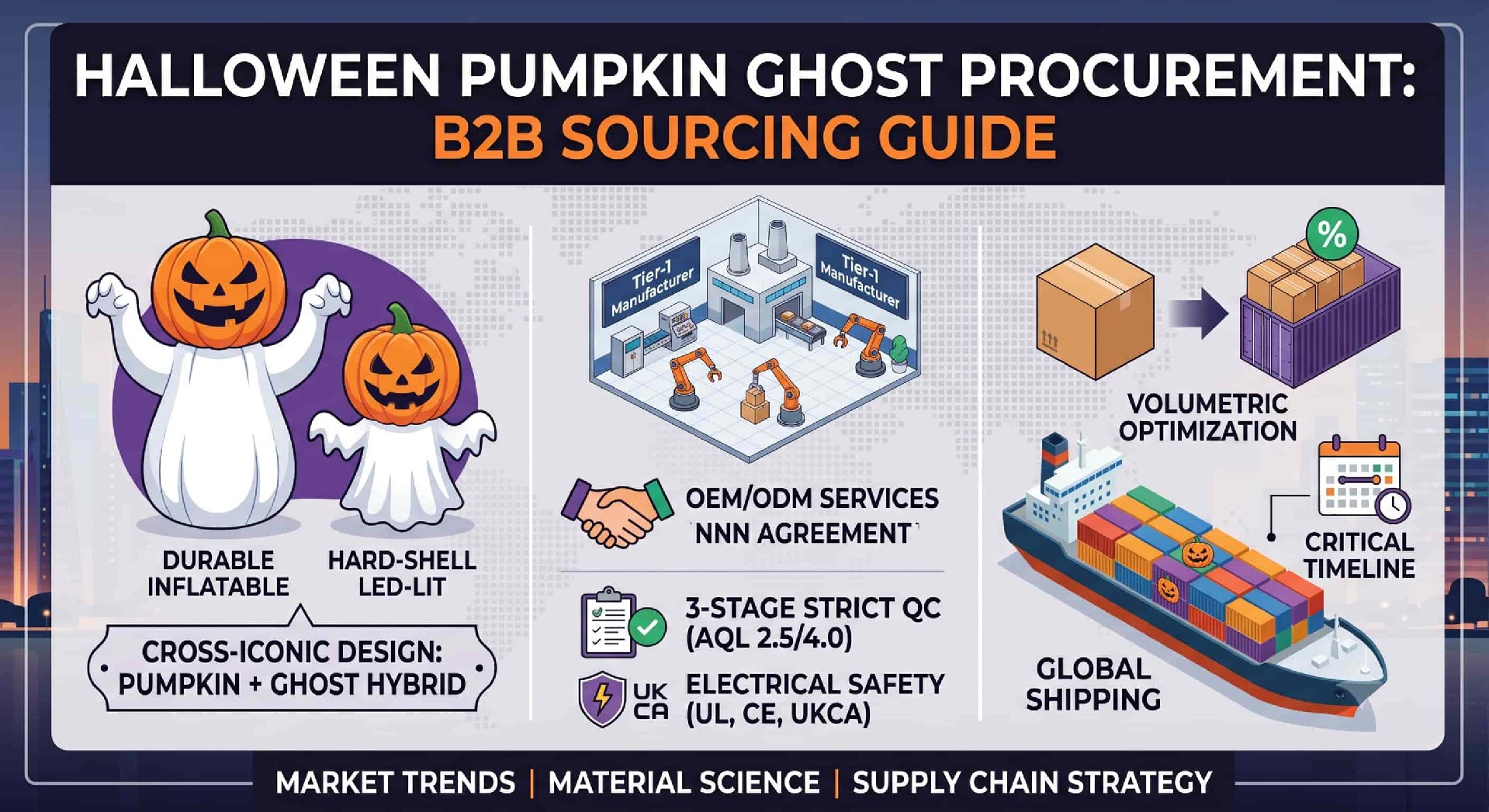
1. Global Market Dynamics: The Commercial Power of the Halloween Pumpkin Ghost
The global festive decoration market has witnessed exponential growth over the past five years. According to recent consumer sentiment data, seasonal spending on outdoor decor has reached an all-time high, with Halloween leading as one of the most profitable retail events globally (Source: National Retail Federation, 2025). Within this landscape, the fusion of two iconic symbols—the pumpkin and the ghost—has emerged as a dominant design paradigm.
Global Seasonal Decor Market Growth (2021 - 2026)
[2021] ██████████ $11.4B
[2023] ██████████████ $13.2B
[2026] ██████████████████ $15.8B (Projected)
The Psychology Behind Cross-Iconic Design
The Halloween Pumpkin Ghost blends the earthy, harvest-centric symbolism of the Jack-o'-lantern with the supernatural, ethereal aesthetic of the classic ghost. This hybrid design maximizes consumer appeal by checking multiple boxes simultaneously: it satisfies the demand for traditional autumnal motifs while delivering the spooky, cinematic thrill that younger demographics crave. For retail conglomerates and e-commerce giants, stocking cross-iconic products reduces inventory risk; these items appeal to a broader demographic than pure gore or purely whimsical decorations.
B2B Demand Analysis and Import Influx
Data from global import-export manifests indicates a 22% year-over-year increase in customs filings for PVC, polyester-based, and inflatable festive goods labeled under seasonal tariff codes (Source: Panjiva Supply Chain Intelligence, 2025). The primary drivers of this B2B demand are:
Commercial Landscapes: Amusement parks, shopping malls, and corporate venues ordering large-scale, heavy-duty displays to create "Instagrammable" experiential marketing spaces.
Residential Upgrades: Homeowners investing in premium, long-lasting outdoor statement pieces rather than low-cost, disposable novelties.
E-commerce Domination: Amazon FBA sellers, Wayfair vendors, and specialized e-tailers requiring high-margin, easily shippable products with low return rates.
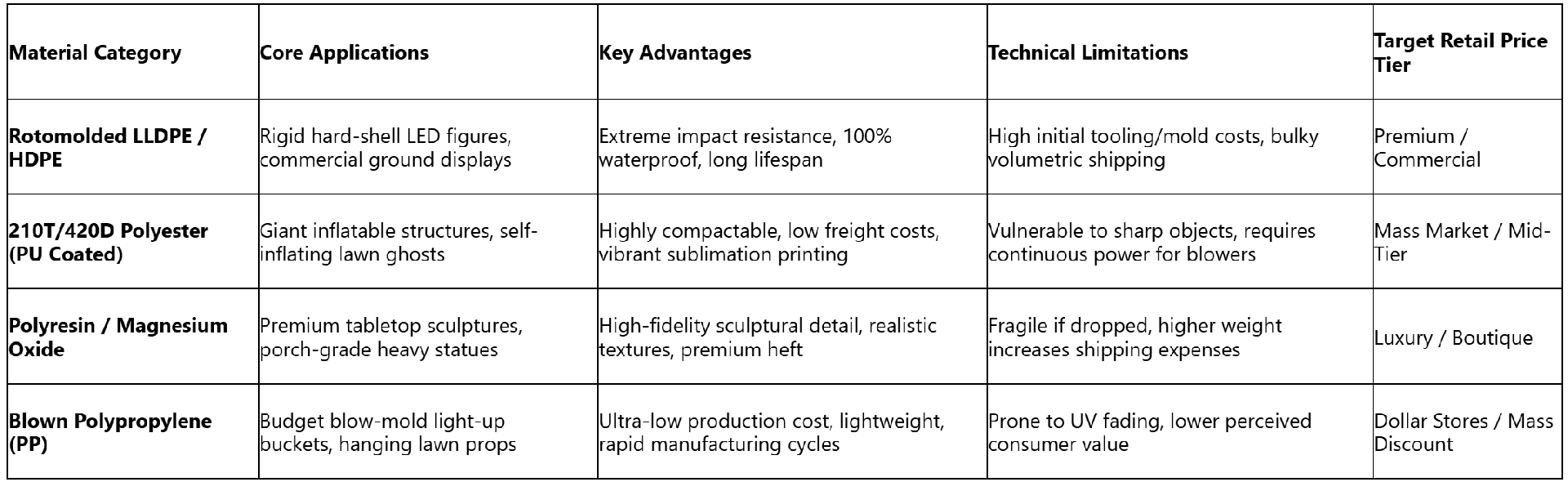
2. Material Classification and Engineering Specifications
When procuring a
Engineering for the Outdoors: Weatherproofing and UV Stabilization
For outdoor installations, environmental degradation is the primary cause of consumer returns. Premium manufacturers mitigate this by integrating specific chemical stabilizers during the raw material compounding phase:
UV-8 Stabilizers: Outdoor plastics must withstand prolonged exposure to solar radiation. Incorporating Hindered Amine Light Stabilizers (HALS) prevents the vibrant orange of the pumpkin and the crisp white of the ghost from yellowing or becoming brittle under UV light.
Hydrophobic PU Coatings: For textile-based items like inflatables, a polyurethane (PU) coating with a hydrostatic head rating of at least 2000mm ensures the fabric remains impervious to autumn rain and sleet.
Tensile and Tear Strength: Inflatable variants utilize reinforced ripstop nylon grids to ensure that high-velocity winds do not cause catastrophic tearing at anchor points.
3. Electrical Engineering, Lighting Tech, and Intellectual Property
Modern seasonal decor is inherently electronic. A high-performing festive product relies heavily on its internal illumination and power systems to attract consumers.
Advanced LED Integration and Smart Control Systems
Static incandescent bulbs have been entirely phased out due to energy inefficiency and fire hazards. The current B2B gold standard requires low-voltage SMD (Surface Mounted Diode) LED modules.
Technical Insight: Elite suppliers are now integrating addressable RGBIC chips into their festive lines. This allows a single figure to flash, cycle through colors, or pulse in sync with ambient sound, creating a highly dynamic consumer experience.
Standard LED Setup vs. Advanced RGBIC Architecture

[Standard LED] ---> Single Circuit ---> Uniform Color Change (All LEDs Same)

[RGBIC Setup]  ---> Individual ICs  ---> Multi-Color Chasing Effects + Sound Sync
Furthermore, integration with Smart Home ecosystems (Amazon Alexa, Google Assistant) via Tuya BLE or Wi-Fi modules is a major value-add for high-end retail markets, allowing users to schedule illumination via smartphone applications.
Power Supply Units (PSU) and International Electrical Safety
Cross-border traders must ensure that all power adapters match the destination country's regulatory architecture. A failure here can result in entire shipments being seized at customs.
North America: Requirements include UL 1310 or ETL certification, Class 2 power units, and a standard 120V/60Hz input.
European Union: Compliance demands CE-EMC, CE-LVD, RoHS, and GS certifications, typically utilizing a 230V/50Hz IP44 waterproof Schuko plug.
UK: Compliance requires UKCA marking and BS 1363 certified fused plugs.
Intellectual Property (IP) and Design Patent Navigation
The seasonal decor industry is plagued by copyright infringement claims. When sourcing a specific design, buyers must perform due diligence to ensure the facial expressions of the pumpkin or the silhouette of the ghost do not infringe upon copyrighted entertainment franchises (e.g., Disney, Warner Bros., or proprietary independent designs registered on Amazon's Brand Registry). Working with an OEM/ODM manufacturer that offers original, patent-cleared designs or creating custom proprietary molds is the safest strategy for long-term brand equity.
4. B2B Sourcing Framework: Procurement, Customization, and Quality Control
Sourcing festive items at a B2B scale requires a structured approach to supplier selection, prototyping, and quality assurance to protect your investment.
Identifying Tier-1 Manufacturers vs. Trading Companies
In major manufacturing hubs (such as Zhejiang and Guangdong provinces), hundreds of entities list seasonal products. However, genuine Tier-1 factories possess distinct characteristics that differentiate them from domestic trading companies:
Specialized Machinery: Look for factories housing their own rotomolding setups, high-frequency fabric welding stations, or large-format sublimation printing presses.
Audited Facilities: Tier-1 facilities willingly provide recent BSCI (Business Social Compliance Initiative), SMETA, or ISO 9001 audit reports.
Off-Season Production Timelines: True manufacturers run seasonal production lines from January to June, shifting entirely to logistics and shipping by July/August. Trading companies often source leftovers late in the season, resulting in inconsistent quality.
OEM/ODM Customization Capabilities and MOQ Metrics
To stand out in a saturated retail marketplace, customization is vital. B2B buyers should evaluate a supplier's agility in the following areas:
3D Prototyping: Can the factory convert a 2D sketch into a 3D CAD model within 5 business days?
Custom Packaging (Litho-Laminated Color Boxes): High-end retail requires drop-test certified packaging (ISTA 1A or 3A standards) to ensure the product survives both ocean freight and last-mile e-commerce delivery.
Minimum Order Quantities (MOQ): Standard MOQs for custom molded plastics generally range from 1,000 to 3,000 pieces due to tool-setting costs, while textile inflatables may offer more flexible MOQs starting at 500 pieces.
OEM/ODM Sourcing Workflow
[Design Sketch/CAD] -> [3D Sample/Prototyping] -> [Tooling/Mold Creation] -> [Mass Production] -> [OQC Inspection]
The Strict 3-Stage Quality Control (QC) Protocol
To eliminate defective merchandise before it leaves the factory floor, implement a rigorous 3-stage inspection protocol based on the AQL 2.5/4.0 acceptable quality limit standard:
Pre-Production Inspection (PPI): Verify raw material compliance. Test the flame-retardant properties of textiles and ensure plastic pellets are free from contaminated regrind.
During Production Inspection (DPI): Conducted when 20%–50% of the order is completed. Inspect internal wiring paths, soldering quality on LED strips, and seam strength on inflatable models.
Pre-Shipment Inspection (PSI): Conducted when 100% of the order is produced and at least 80% is packaged. Perform a 24-hour inflation/inflation-retention test for all inflatable goods, a hi-pot electrical isolation test for all power components, and a carton drop test to evaluate packaging resilience.
5. Logistics, Tariff Optimization, and Supply Chain Risk Management
The profitability of a seasonal product line depends heavily on logistics management. Because seasonal items have a rigid expiration date—losing up to 80% of their retail value on November 1st—any supply chain delay can be catastrophic.
Volumetric Weight vs. Actual Weight Optimization
Many seasonal items, particularly rigid molded plastic structures, suffer from high volumetric weight ($CBM$). This means you pay for the space the item occupies in a shipping container rather than its physical mass.
$$ ext{Volumetric Weight (kg)} = rac{ ext{Length (cm)} imes ext{Width (cm)} imes ext{Height (cm)}}{5000}$$
To optimize container utilization ($FCL$ 20GP/40HQ):
For rigid plastics, source designs that nest inside one another (stackable geometries) or feature detachable components (e.g., a ghost body that detaches from its pumpkin base).
For inflatables, implement mechanical vacuum compression packaging to reduce individual box volume by up to 40%, significantly increasing the total units per container.
Packaging Optimization Impact on 40HQ Container Yield
[Standard Packaging]   ██████████ 1,200 Units
[Vacuum Compressed]    █████████████████ 2,000 Units (+66% Efficiency)
Tariff Classification and Compliance Strategies
Accurate Harmonized System (HS) code classification prevents costly customs delays and punitive duties. Festive items generally fall under HS Code 9505.90.0000 (Festive, carnival, or other entertainment articles). However, if an item features significant utility beyond decoration—such as acting as a functional porch light or an electronic speaker system—customs authorities may reclassify it under lighting apparatus (HS Code 9405) or audio equipment, which often carry higher tariff rates. Importers must review regional customs rulings to ensure precise compliance.
The Seasonal Timeline: Mitigating Peak Shipping Congestion
To guarantee that products hit retail shelves by early September, B2B buyers must adhere to a strict macro-logistical timeline. Failing to secure ocean freight allocations before the mid-summer peak season can cause shipping costs to spike dramatically (Source: Drewry World Container Index, 2025).
CRITICAL PROCUREMENT TIMELINE
+-----------------------+---------------------------------------------------------+
| Phase                 | Target Completion Date                                  |
+-----------------------+---------------------------------------------------------+
| 1. Design & RFQ       | January 15 - February 28                                |
| 2. Sample Approval    | March 15                                                |
| 3. Mass Production    | April 1 - June 15                                       |
| 4. QC & Consolidation | June 30                                                 |
| 5. Ocean Transit      | July 5 - August 15 (Avoiding Peak Congestion)           |
| 6. Inland Distribution| August 20 - September 5                                 |
+-----------------------+---------------------------------------------------------+
6. Frequently Asked Questions (FAQs)
Q1: What is the ideal material for a large commercial outdoor Halloween Pumpkin Ghost display?
For large commercial installations, Rotomolded Linear Low-Density Polyethylene (LLDPE) or heavy-duty 420D polyurethane-coated ripstop polyester are the premier choices. LLDPE offers structural permanence and high wind resistance, while 420D polyester is ideal for giant, cost-effective inflatable structures that require rapid deployment and teardown.
Q2: How can I verify that a manufacturer's festive electronics are safe for rain and snow?
Ensure the product carries an IP44 or higher Ingress Protection rating, indicating resistance to splashing water from all directions. Additionally, request verified test reports for UL 1310 (US), CSA C22.2 (Canada), or CE-LVD/GS (Europe) from an accredited third-party laboratory like SGS, TÜV, or Intertek.
Q3: What are the typical MOQs for custom-designed OEM seasonal decorations?
For specialized textile-based items or inflatables, MOQs usually start between 500 and 1,000 units per design. For rigid plastic blow-molded or rotomolded products, MOQs generally range from 2,000 to 3,000 units due to the high initial setup costs and long calibration times required for heavy machinery.
Q4: How do I protect my custom product designs from being copied by other B2B buyers?
Before sharing 3D CAD files or tech packs, execute a robust, bilingual (English/Chinese) NNN Agreement (Non-use, Non-disclosure, Non-circumvention) with the factory. Additionally, file design patents in your target retail markets and register your brand with customs authorities to intercept counterfeit goods.
Q5: Why is vacuum compression packaging critical for sourcing inflatable festive goods?
Inflatable items are lightweight but naturally bulky when folded. Vacuum compression removes trapped air within the fabric and retail packaging, reducing the physical box volume by up to 40%. This directly lowers ocean freight costs per unit and maximizes the total quantity of goods you can fit into a 40HQ container.
Q6: Can festive items with built-in electronics qualify under the lower-tariff HS Code 9505?
Yes, provided the primary function remains purely ornamental or festive. If the item includes significant non-festive utility—such as serving as a primary ambient light fixture or a standalone Bluetooth speaker—customs may reclassify it under HS Code 9405 or 8518, which can carry much higher duty rates.
Q7: What AQL standard should be applied during pre-shipment inspections?
The globally recognized standard for consumer goods is AQL 2.5 for Major Defects (e.g., non-functioning LEDs, torn seams, failed power supplies) and 4.0 for Minor Defects (e.g., minor paint smudges, loose threads, slight packaging creases). Critical defects (e.g., exposed wires, fire hazards) must be strictly at 0.
Q8: How early should a B2B buyer place an order for the Q3/Q4 holiday season?
Final purchase orders should be placed no later than late February or early March. This gives factories ample time to complete production before June, allowing you to book ocean freight in July and bypass the volatile shipping rate spikes and port congestion typical of late summer.
7. Conclusion and Strategic Recommendations
The Halloween Pumpkin Ghost category offers an excellent blend of high retail margins, steady market demand, and creative versatility. However, capturing this value requires structured execution across your entire procurement lifecycle. To protect your investment and build a resilient product line, consider these four core strategies:
Prioritize Structural Integrity: Reject low-tier suppliers using un-stabilized plastics or thin 190T polyester. Insist on UV-8 stabilizers and minimum 210T/420D fabric specifications to minimize consumer returns.
Guarantee Compliance Early: Treat electrical certification as a non-negotiable prerequisite. Never accept generic "factory-certified" assurances; require verifiable test reports mapped directly to your target market's regulatory frameworks (UL, ETL, CE, UKCA).
Optimize Volumetric Footprints: Work alongside your factory's structural packaging engineers to develop nested designs or high-efficiency vacuum packaging. Saving centimeters on an individual box can yield thousands of dollars in ocean freight savings across a full container.
Secure Early Freight Bookings: Align your production schedule so that all cargo is ready for container loading by late June. Beating the mid-summer logistics rush protects your margins from sudden shipping rate spikes and ensures your inventory arrives well ahead of the autumn retail kickoff.
If you are looking to expand your inventory with premium, high-margin seasonal decorations, explore our extensive collection of innovative designs by visiting our
