

Abstract
This comprehensive whitepaper explores the technical specifications, market dynamics, and B2B sourcing strategies for the Inflatable Car Pontoon—a rapidly growing segment in both the recreational water sports and utilitarian marine transport industries. As outdoor leisure and emergency response sectors expand, the demand for highly durable, modular floating platforms capable of supporting heavy vehicles is at an all-time high. Understanding the material science behind drop-stitch technology, buoyancy physics, and global supply chain logistics is critical for wholesalers and distributors. Readers will learn how to evaluate OEM/ODM manufacturers, assess technical safety standards, and strategically position inflatable pontoons alongside complementary products to maximize ROI in the competitive cross-border trade market.
1. Understanding the Inflatable Car Pontoon Market Landscape
The global marine and water sports equipment market has witnessed a paradigm shift toward portability, durability, and modularity. An
1.1 Definition and Industry Scope
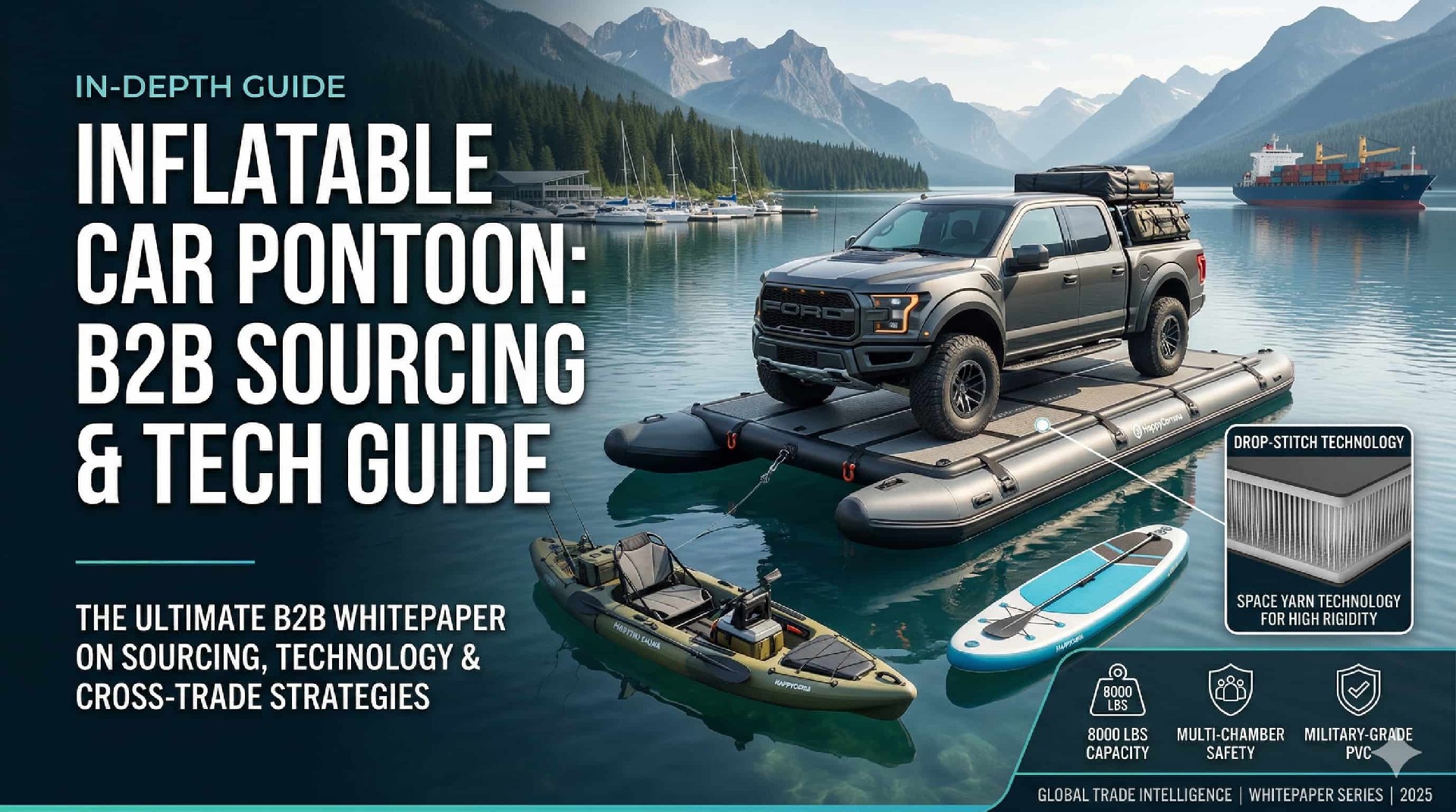
In the commercial and recreational marine sectors, an inflatable car pontoon refers to heavy-duty, pneumatically structured platforms designed specifically to float vehicles—ranging from ATVs and UTVs to full-sized SUVs and trucks. These are not standard recreational tubes; they are highly engineered logistical tools that serve a dual purpose: expanding high-end outdoor camping experiences (amphibious leisure) and providing critical infrastructure for emergency rescue, military logistics, and remote marine construction.
1.2 Global Market Growth and Trends
The demand for high-capacity inflatable floating platforms is accelerating. The broader inflatable boat and platform market is projected to grow significantly, driven by the rising popularity of overlanding, remote camping, and the need for disaster relief equipment.
Recreational Overlanding: Campers and off-road enthusiasts are increasingly seeking ways to cross bodies of water without permanent bridges.
Disaster Relief: Government agencies and NGOs require rapidly deployable platforms for flood response.
Commercial Applications: Marina maintenance and shallow-water construction teams utilize these pontoons for stable, non-damaging access.
(Source: Grand View Research, Global Inflatable Boat Market Analysis, 2024)
2. Core Technologies Behind Heavy-Duty Floating Platforms
To confidently source and distribute an
2.1 Advanced Drop-Stitch (Space Yarn) Technology
The foundation of any high-capacity inflatable is drop-stitch construction. Tens of thousands of fine polyester or nylon threads connect the top and bottom interior surfaces of the pontoon.
Pressure Dynamics: This internal structure allows the pontoon to be inflated to incredibly high pressures (often 10 to 15 PSI or more, depending on the application), transforming flexible PVC into a rigid surface comparable to wood or aluminum.
Material Layers: Premium car pontoons utilize military-grade, multi-layer PVC (Polyvinyl Chloride) or Hypalon. While PVC is cost-effective and highly weldable for mass production, Hypalon offers superior resistance to UV degradation, harsh chemicals, and extreme temperatures, making it the preferred choice for extreme B2B utility applications.
2.2 Buoyancy Physics and Weight Distribution Systems
Calculating the load capacity of an inflatable vehicle pontoon is a matter of strict Archimedean physics. A standard passenger vehicle weighs between 3,000 and 5,000 lbs.
Displacement Calculation: Manufacturers must design the volume of the pontoon to displace an amount of water equal to or greater than the combined weight of the vehicle and the pontoon itself, with a significant safety margin (usually 200% to 300%).
Multi-Chamber Safety: Professional-grade pontoons feature multiple independent air chambers. In the event of a puncture, the remaining chambers must maintain enough buoyancy to prevent the vehicle from sinking. This is a non-negotiable safety standard in B2B procurement.
2.3 Automated Air Valve and Pressure Relief Systems
Heavy loads combined with solar exposure can cause the internal air pressure of a pontoon to spike dangerously. High-quality products integrate Halkey-Roberts style locking valves alongside automatic Pressure Relief Valves (PRVs). These PRVs autonomously release air if the internal pressure exceeds safe structural limits, preventing seam blowouts.
3. Sourcing Strategy: Choosing the Right B2B Manufacturer
For cross-border traders and wholesale distributors, partnering with the right factory is more critical than the product design itself. The manufacturing of life-safety and heavy-load inflatables requires rigorous quality control.
3.1 Evaluating Factory Certifications and Compliance
When auditing potential suppliers in manufacturing hubs, prioritize factories that hold international certifications:
ISO 9001:2015: Ensures consistent quality management systems.
CE Certification: Mandatory for entering the European market, indicating compliance with health, safety, and environmental protection standards (specifically EN ISO 6185 for inflatable boats).
Material Testing Reports: Request SGS or TUV reports verifying the tensile strength, UV resistance, and puncture resistance of the PVC/Hypalon used.
3.2 OEM/ODM Capabilities and Customization
B2B buyers rarely purchase off-the-shelf designs. Your supplier must offer robust OEM (Original Equipment Manufacturer) and ODM (Original Design Manufacturer) services.
Dimensional Customization: The ability to alter track widths, platform lengths, and buoyancy volumes to accommodate specific regional vehicle sizes (e.g., wider platforms for American trucks vs. narrower ones for European SUVs).
Branding and White-Labeling: High-quality silkscreen or heat-transferred logos, custom colorways, and branded packaging are essential for establishing a premium local brand presence.
3.3 Lead Times, MOQ, and Supply Chain Resilience
Inflatable manufacturing is highly seasonal and labor-intensive (particularly the hand-gluing or thermal welding of seams).
Minimum Order Quantities (MOQ): Negotiate pilot runs. While standard MOQs might be 50-100 units, securing a smaller initial batch (10-20 units) is vital for physical stress testing.
Logistics Planning: Inflatable pontoons are heavy and bulky even when deflated. Work with suppliers who optimize palletizing and container loading to reduce the per-unit freight cost. (Source: Supply Chain Management Review, 2024)
4. Expanding Your Portfolio: Complementary Water Sports Equipment
A successful B2B distribution strategy involves cross-selling. Buyers interested in heavy-duty amphibious solutions or premium outdoor gear are prime targets for complementary inflatable products. Structuring your container shipments to include a mix of high-margin items improves overall profitability.
4.1 The Integration of Fishing and Leisure
While a vehicle pontoon provides the base camp on the water, users still require agile watercraft for exploration. Offering a high-quality
4.2 Expanding the Stand-Up Paddleboard Segment
For high-volume, high-margin retail distribution, the SUP market remains incredibly lucrative. Bundling an
5. B2B Marketing and SEO Strategies for Marine Distributors
Acquiring the best products is only half the battle; ensuring your target audience (marinas, government agencies, outdoor retailers) can find your products requires a robust digital strategy.
5.1 Generative Engine Optimization (GEO) for Niche Marine Equipment
As AI-driven search engines (like Perplexity, Google SGE, and Bing Chat) become the primary research tools for B2B procurement officers, optimizing content for GEO is essential.
Conversational Queries: B2B buyers no longer search for just "pontoon boat." They search for "What is the weight capacity of a drop-stitch inflatable vehicle platform for a Ford F-150?" Your technical specifications, blogs, and whitepapers must directly answer these complex, long-tail queries.
Structured Data: Implement rigorous schema markup (Product, FAQ, HowTo) on your e-commerce pages to ensure AI models can easily parse your pricing, dimensions, and load capacities.
5.2 Content Marketing: Case Studies and Stress Tests
In the B2B space, trust is paramount. Video content demonstrating an
6. Maintenance, Longevity, and After-Sales Support
For B2B distributors, the cost of returns and warranty claims on large, expensive marine equipment can devastate profit margins. Establishing clear maintenance protocols and robust after-sales support is mandatory.
6.1 Storage and UV Protection
The primary enemy of PVC and Hypalon is prolonged exposure to ultraviolet radiation, which breaks down the plasticizers, leading to brittleness and seam failure.
User Guidelines: Provide comprehensive manuals instructing end-users to clean the pontoon with fresh water after saltwater use, dry it completely to prevent mold in the drop-stitch crevices, and apply marine-grade UV protectant sprays (like 303 Aerospace Protectant) regularly.
6.2 Patching and Thermal Repair Kits
Every heavy-duty inflatable must ship with an industrial-grade repair kit. Unlike small pool toys, a puncture in a high-pressure vehicle platform requires specialized repair techniques.
Two-Part Adhesives: Standard single-tube glues are insufficient. Supply two-part MEK-based (Methyl Ethyl Ketone) adhesives and heavy-weight PVC/Hypalon patches. Educate your B2B retail partners on how to instruct their customers on permanent, airtight patching procedures.
7. Future Trends in Amphibious Inflatable Technology
The industry is not static. Staying ahead of the curve ensures your catalog remains relevant to high-end buyers.
7.1 Sustainable and Eco-Friendly Materials
The traditional PVC manufacturing process has a significant environmental footprint. We are seeing a shift toward TPU (Thermoplastic Polyurethane), which is lighter, more abrasion-resistant, and significantly more eco-friendly (recyclable and biodegradable under specific conditions) than PVC. While currently more expensive, TPU is the future of premium marine inflatables.
7.2 Smart Inflation and Monitoring Systems
Future iterations of high-capacity pontoons will feature integrated IoT (Internet of Things) pressure sensors. These sensors will connect via Bluetooth to a smartphone app, providing real-time alerts if a specific air chamber begins to lose pressure or if ambient heat is pushing the PSI to dangerous levels, allowing for proactive safety measures before a critical failure occurs.
8. FAQs: Frequently Asked Questions
1. What is the maximum weight capacity of a standard inflatable car pontoon?
While capacities vary by size and design, professional-grade drop-stitch vehicle pontoons are engineered to support anywhere from 4,000 lbs to over 10,000 lbs, accommodating everything from small ATVs to fully-loaded commercial pickup trucks safely.
2. How long does it take to inflate a heavy-duty vehicle pontoon?
Using industrial-grade 12V or 110V/220V electric air pumps, a standard multi-chamber car pontoon can be fully inflated to the required operating pressure (usually 8-15 PSI) in approximately 15 to 30 minutes.
3. Are inflatable car pontoons safe for saltwater environments?
Yes. Premium pontoons are constructed from marine-grade PVC or Hypalon, materials highly resistant to saltwater corrosion. However, thorough rinsing with fresh water after each use is mandatory to ensure maximum lifespan and prevent hardware rusting.
4. Can these pontoons be towed behind a motorized boat?
Yes, most high-end designs feature heavy-duty, reinforced stainless steel D-rings specifically engineered for towing. However, towing speeds must be strictly regulated (usually under 5-10 mph) to prevent excessive drag and structural stress on the D-ring patches.
5. What happens if one of the air chambers gets punctured?
Safety-compliant B2B car pontoons are designed with multiple, isolated air chambers. If one chamber suffers a puncture, the remaining intact chambers are calculated to provide sufficient buoyancy to keep the vehicle safely above water until rescue or repair.
6. Is Hypalon better than PVC for commercial inflatable pontoons?
Hypalon is generally superior for heavy commercial use as it offers greater resistance to UV rays, extreme temperatures, and chemical spills (like oil or gasoline from vehicles). PVC is more cost-effective and easier to repair but has a slightly shorter lifespan under extreme exposure.
7. How should an inflatable car pontoon be stored during the off-season?
It should be thoroughly cleaned, completely dried, deflated, and rolled loosely (not folded sharply). Store it in a cool, dry, and climate-controlled environment away from direct sunlight, rodents, and extreme temperature fluctuations.
8. What is the standard lifespan of a commercially used inflatable pontoon?
With rigorous maintenance, proper UV protection, and careful storage, a high-quality drop-stitch PVC pontoon can last 5 to 10 years, while a premium Hypalon model can remain operational for 10 to 15 years or more in a commercial setting.
9. Conclusion
The market for the Inflatable Car Pontoon represents a highly lucrative, technically complex niche within the broader marine and outdoor equipment industry. For B2B wholesalers and cross-border traders, success hinges on a deep understanding of material engineering—specifically drop-stitch technology, multi-chamber safety physics, and rigorous quality control protocols. By partnering with certified factories, prioritizing user safety, and cross-merchandising with complementary products like kayaks and SUPs, distributors can build a highly profitable and resilient supply chain.
Ready to scale your marine equipment business? Evaluate your current sourcing strategy, prioritize manufacturers with ISO and CE certifications, and start expanding your inventory with high-margin, heavy-duty inflatable platforms today to capture the growing global demand.
