

Swimming Pool for Ages 0-3 Years: Safety, Neurodevelopment, and Engineering Standards
Abstract
What: This technical guide provides a comprehensive analysis of swimming environments specifically engineered for the 0-3 year demographic, covering material toxicology, thermal regulation systems, and water sanitization protocols.
Why: The first three years are a critical window for neurological and physical development; however, standard adult pools often fail to meet the rigorous safety and hygiene standards required for infants with undeveloped immune systems and thermoregulatory capabilities.
How: Readers will gain actionable insights into selecting ASTM F963 compliant materials, implementing low-chlorine sanitization workflows (such as saltwater systems), and engineering safe installation environments to maximize developmental benefits while mitigating biological and physical risks.
The Neurophysiological Case for Infant Hydrotherapy
To understand the technical requirements of a swimming pool for ages 0-3 years, one must first understand the biological objective. This is not merely recreation; it is an environment for sensory integration and motor skill acquisition.
Proprioception and Vestibular Stimulation
According to pediatric research, the buoyancy of water reduces the effects of gravity, allowing infants to execute three-dimensional movements that are impossible on land. This stimulation is crucial for the vestibular system—the sensory system that contributes to the sense of balance and spatial orientation. When an infant moves against the resistance of water, it sends heightened feedback to the cerebral cortex, accelerating the myelination of neurons responsible for gross motor control (Source: American Academy of Pediatrics, 2024).
The Cortisol-Oxytocin Balance
A properly engineered aquatic environment (specifically regarding temperature stability) mimics the intrauterine environment. Studies suggest that warm water immersion (32°C - 34°C) significantly lowers cortisol (stress hormone) levels while promoting oxytocin release. For the pool facility or home setup, this dictates that thermal stability is not a luxury but a functional requirement to ensure the physiological state necessary for learning and bonding.
Material Toxicology and Structural Integrity: Beyond Basic Compliance
For the 0-3 age group, the definition of "safety" shifts from simple physical containment to complex chemical safety. Infants have a high surface-area-to-body-weight ratio and a thinner stratum corneum (skin barrier), making them significantly more susceptible to transdermal absorption of toxins.
Chemical Safety Standards (ASTM & EN71)
When selecting a swimming pool for ages 0-3 years, the material composition must meet strict toxicological standards.
1、Phthalate-Free Mandates: Polyvinyl Chloride (PVC) is the standard material for portable pools. However, industrial PVC often uses phthalates as plasticizers to increase flexibility. These are known endocrine disruptors. A safe pool must be certified Phthalate-Free and compliant with ASTM F963-17 (Standard Consumer Safety Specification for Toy Safety).
2、BPA and Heavy Metals: The material must be free of Bisphenol-A (BPA) and must pass migration tests for heavy metals like lead and cadmium, which can leach into the water over time, especially when heated.
Structural Engineering for Active Toddlers
While infants are passive, toddlers (ages 1-3) are active and unpredictable.
1、Sidewall Torsion Resistance: Frame pools for this demographic must utilize rust-resistant galvanized steel with a T-joint assembly system to prevent structural collapse under lateral pressure.
2、Puncture Resistance: The liner should ideally feature a 3-ply construction—a polyester mesh core laminated between two layers of high-gauge PVC. This structure prevents catastrophic failure (bursting) even if the outer layer is punctured.
[Internal Link: Detailed analysis of ASTM safety standards for children's aquatic products]
Water Quality Engineering: Sanitization for Immature Immune Systems
Perhaps the most critical technical aspect of a swimming pool for ages 0-3 years is water chemistry. Infants are prone to swallowing water, and their respiratory systems are highly sensitive to chloramines (the byproduct of chlorine reacting with ammonia/urine).
The Problem with Traditional Chlorine
Standard pool chlorine levels (1.0 - 3.0 ppm) can be harsh on infant skin, causing eczema flare-ups. More dangerously, the formation of trichloramine ($NCl_3$) is linked to the development of childhood asthma (Source: World Health Organization, Guidelines for Safe Recreational Water Environments).
Recommended Sanitization Technologies
1、Saltwater Chlorination Systems: This is the gold standard for infant pools. By electrolyzing dissolved salt ($NaCl$), the system generates pure sodium hypochlorite. This results in "softer" water that is less irritating to the eyes and skin, with a salinity level similar to human tears (approx. 3000 ppm).
2、UV-C Sterilization: As a secondary line of defense, UV-C light neutralizes Cryptosporidium and Giardia—parasites often resistant to chlorine and common in fecal accidents. However, UV-C provides no residual protection, so it must be paired with a low-level sanitizer.
3、Ozone Generators: Ozone ($O_3$) is a powerful oxidizer that breaks down organic contaminants (body oils, urine) instantly. It reduces the reliance on chemical chlorine by up to 60-70%.
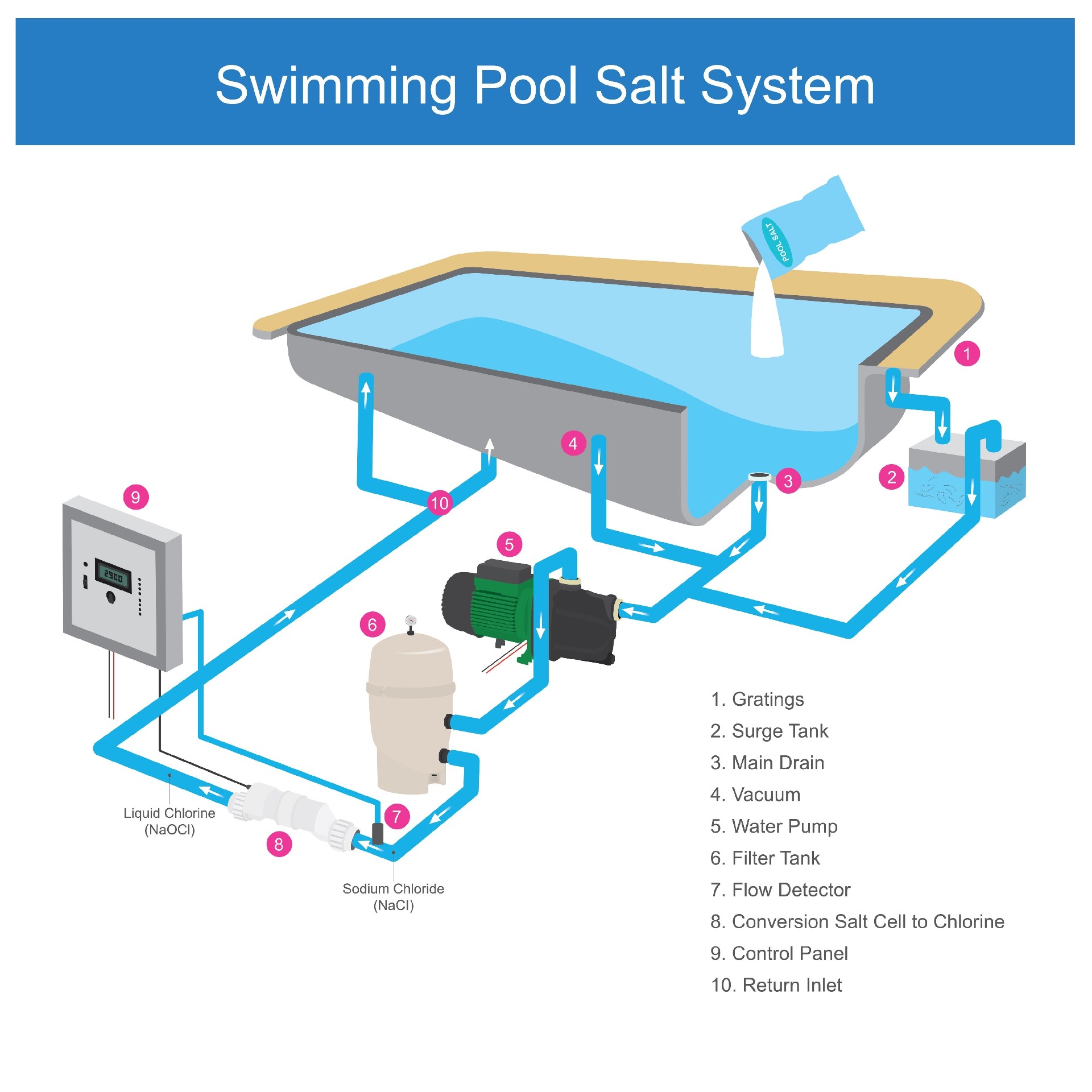
Comparative Analysis of Pool Architectures
For B2B buyers or discerning parents, choosing the right form factor involves balancing durability against hygiene control. The following table contrasts the three dominant market solutions.
Feature Dimension | Inflatable Pools (PVC) | Frame Pools (Canvas/Steel) | Rigid Acrylic Spas |
Primary Use Case | Occasional use, Ages 0-1 (Sensory play) | Skill acquisition, Ages 1-3+ (Swimming) | Professional Hydrotherapy, Ages 0-3 |
Structural Integrity | Low (Susceptible to puncture & UV degradation) | High (3-ply liner + Steel skeleton) | Extreme (Industrial grade fiberglass/acrylic) |
Sanitization Capability | None (Must drain & refill daily) | Moderate (Compatible with cartridge pumps) | Advanced (Built-in Ozone/UV/Heater) |
Thermal Retention | Poor (Rapid heat loss to ground/air) | Moderate (Vinyl has low R-value) | Excellent (Insulated foam core) |
Setup & Logistics | Instant (Air pump required) | Complex (Assembly required, level ground) | Permanent (Requires plumbing/electrical) |
Estimated Lifespan | 1 - 2 Seasons | 3 - 5 Years | 10+ Years |
Thermodynamic Management and Heating Protocols
Thermoregulation is a critical safety constraint. Infants cannot regulate their body temperature as effectively as adults. A swimming pool for ages 0-3 years effectively acts as a heat sink.
The 32°C - 34°C Threshold
Hypothermia can set in rapidly if water temperature drops below 30°C. Conversely, temperatures above 38°C pose a risk of hyperthermia and dehydration.
1、Heating Systems: For frame or rigid pools, an electric heat pump is efficient. For smaller setups, maintaining room temperature (for indoor pools) is insufficient; water-specific heaters are necessary.
2、Thermal Covers: Evaporation accounts for 70% of heat loss. A bubble-style solar cover (polyethylene) is mandatory when the pool is not in use. It acts as a vapor barrier and an insulator, retaining heat and preventing chemical off-gassing into the home (if indoors).
Site Selection and Deployment Safety
Where the pool is placed is as important as the pool itself.
Indoor Deployment: The Structural Load
A cubic meter of water weighs 1,000 kilograms. A standard residential floor is often designed for a live load of approximately 200 kg/$m^2$. A pool filled to a depth of just 40cm exerts 400 kg/$m^2$ of pressure.
1、Engineering Rule: Never place a frame pool on an upper story or balcony without a structural engineer's approval. Ground floors on concrete slabs are the only universally safe indoor location without reinforcement.
Outdoor Deployment: Environmental Protection
2、UV Shielding: Infant skin burns in minutes. Outdoor pools must be covered by a shade sail offering UPF 50+ protection.
3、Fencing: To prevent unsupervised access (drowning risk), installation must adhere to local barrier laws—typically requiring a 1.2m high non-climbable fence with a self-latching gate (Source: CPSC Safety Barrier Guidelines for Residential Pools).
Maintenance Workflow for Optimal Hygiene
Maintaining a swimming pool for ages 0-3 years requires a stricter regimen than an adult pool.
1、Daily Testing: Test for Free Chlorine (1-3 ppm) and pH (7.2-7.6) prior to every swim.
2、The "Shock" Protocol: Weekly oxidation (using non-chlorine shock like Potassium Monopersulfate) is recommended to break down organic waste without spiking chlorine levels.
3、Filtration Cycles: The pump should turn over the entire volume of water at least 4 times per day (Turnover Rate = 6 hours).
4、Biofilm Prevention: Thoroughly scrub the waterline and walls weekly to prevent the formation of biofilm, which harbors bacteria resistant to sanitizers.
[Internal Link: Step-by-step tutorial on balancing pool alkalinity for sensitive skin]
FAQs (Frequently Asked Questions)
At what age can a baby safely use a swimming pool?
A: Infants can generally begin water introduction around 6 months old. However, in controlled, heated, and sanitized environments (like private hydrotherapy tubs), use can begin as early as 6 weeks (after the umbilical stump heals). Consult a pediatrician before starting.
What is the ideal temperature for a 0-3 year old's pool?
A: The gold standard is 32°C to 34°C (89.6°F - 93.2°F). This range prevents the infant from shivering (hypothermia risk) while avoiding overheating. Water below 29°C is generally considered too cold for non-active infants.
Are swim diapers effective at keeping the pool clean?
A: No, swim diapers do not contain urine; they only contain solids (feces). Urine passes through immediately, reacting with chlorine to form chloramines. This is why a robust filtration and sanitation system is critical, alongside frequent bathroom breaks for toddlers.
Can I use regular bleach to sanitize a baby pool?
A: While chemically similar (sodium hypochlorite), household bleach often contains additives, scents, or stabilizers not safe for pools. Always use pool-grade liquid chlorine or, preferably, a saltwater generation system for precise control and purity.
How often should I change the water in an inflatable pool without a filter?
A: For small inflatable pools lacking a filter pump, water must be changed daily. Stagnant water warms up quickly and becomes a breeding ground for bacteria like Legionella and E. coli within 24 hours.
Is a neck ring safe for my baby?
A: The use of neck rings is controversial. While popular in some spas, many experts (including the AAP) advise against them due to potential strain on the neck muscles and the risk of deflation. Parent-assisted holding or underarm floats are safer, more ergonomic alternatives.
How do I prevent slippery floors around an indoor baby pool?
A: Splash-out is inevitable. Use anti-slip rubber mats (specifically those with drainage holes) around the pool perimeter. Ensure the room has adequate drainage or use a wet-vac immediately after sessions to prevent mold growth and slip hazards.
What is the difference between "shocking" and "sanitizing"?
A: Sanitizing maintains a steady level of chemical to kill bacteria continuously. Shocking involves adding a high dose of oxidizer to destroy built-up organic waste (sweat, urine) and combined chlorine. For baby pools, use non-chlorine shock to avoid harsh chemical residues.
Conclusion
Selecting the correct Swimming Pool for Ages 0-3 Years is a decision that sits at the intersection of developmental science and safety engineering. It requires moving beyond aesthetic appeal to prioritize toxicological safety (BPA/Phthalate-free), thermal stability, and advanced water sanitation.
Whether opting for a high-end acrylic hydrotherapy spa or a high-quality reinforced frame pool, the goal remains the same: creating a controlled, risk-free aquatic environment that nurtures your child's physical and cognitive growth.
Ready to build the perfect aquatic environment for your child? Start by assessing your available space and load-bearing capacity, then consult our [Certified Safe Pool Equipment List] to ensure your hardware meets 2026 safety standards.
(Source: Centers for Disease Control and Prevention (CDC), Healthy Swimming Guidelines, 2025)
