

Why a Child's Life Vest Fit Is a Safety System, Not a Size Label
A child's life vest only performs as designed when it stays in place, keeps the head above water, and matches the child's weight and chest dimensions. On a fishing trip, the risk profile is different from a swimming pool: the child may be seated on a boat bench, leaning over the gunwale, standing on a dock, or moving between a parent and gear. A loose vest can ride up over the chin or slip off entirely during a fall; an oversized vest can push the wearer face-down. For buyers specifying children's life vests for fishing trips, the purchase decision is a fit-and-restraint problem, not a color or comfort problem.
This guide answers the commercial and practical question behind life vest fit for children on fishing trips: how to define the right size range, evaluate buoyancy and closure systems, and set acceptance criteria before ordering or recommending a vest.
Match the Vest Class to the Fishing Environment
Not every children's vest suits every fishing scenario. The first decision is the vest class and its intended use, because that determines buoyancy, turnover behavior, and minimum fit requirements.
Inherently buoyant vs. inflatable
For children on fishing trips, inherently buoyant foam vests are the common choice because they do not require inflation, have no cartridge or trigger mechanism, and cannot be defeated by a puncture. Inflatable belt packs and suspenders are generally designed for adults and typically require the wearer to be conscious, able to pull a handle, and able to float face-up; they are a poor fit for young children and are often restricted by local carriage rules. Confirm the local legal requirement for the water body, vessel type, and child age before selecting an inflatable.
Type and performance level
In markets using US Coast Guard or equivalent classification, a Type II or Type III children's vest is common for inland fishing. Type II offers more turning capability for an unconscious wearer; Type III offers freedom of movement and is often chosen for active children who will be seated and supervised. In other markets, look for the applicable national approval and the weight range on the label. The key buying check is that the approval and weight range match the child, not the boat.
Fishing-specific features
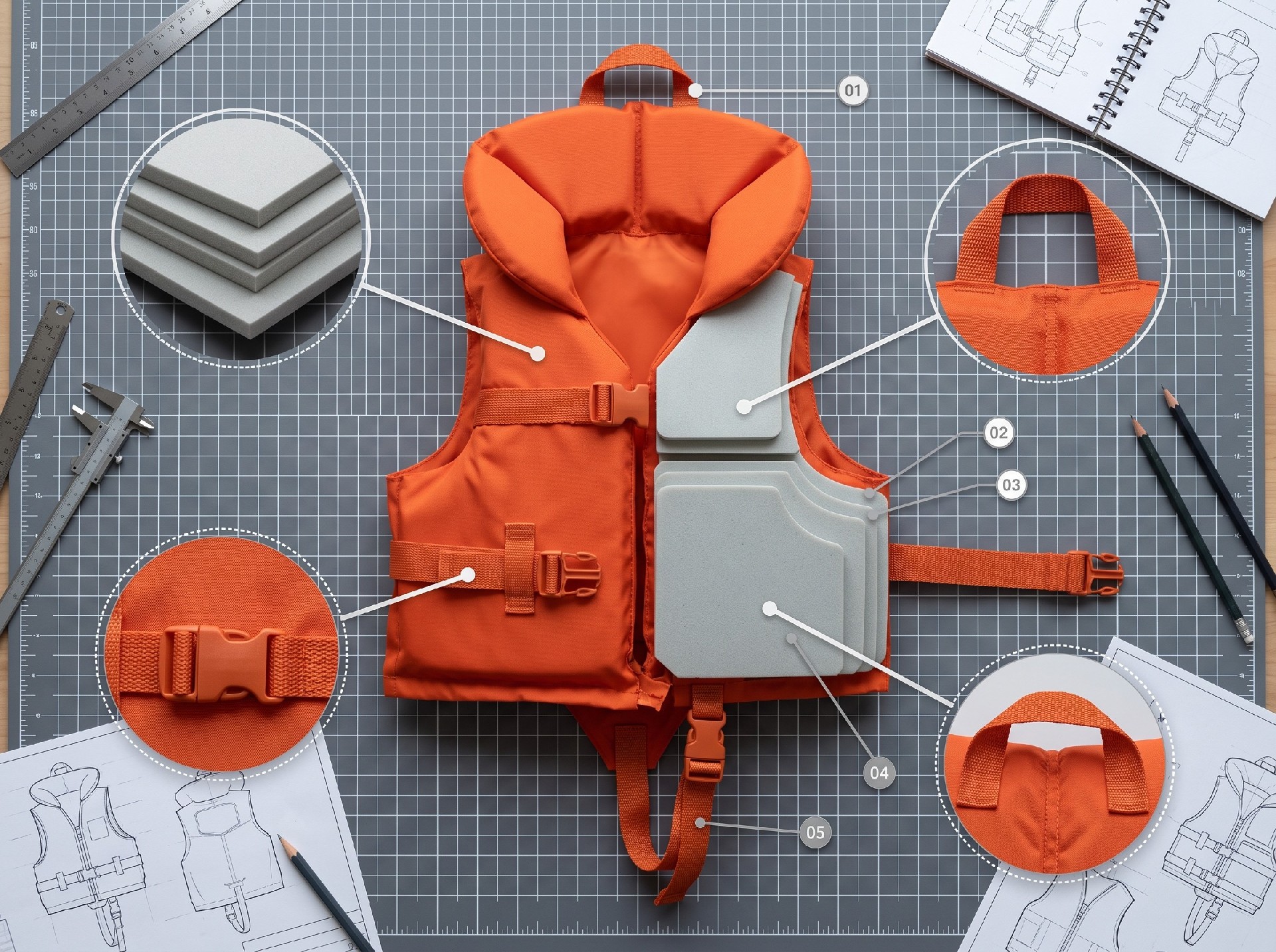
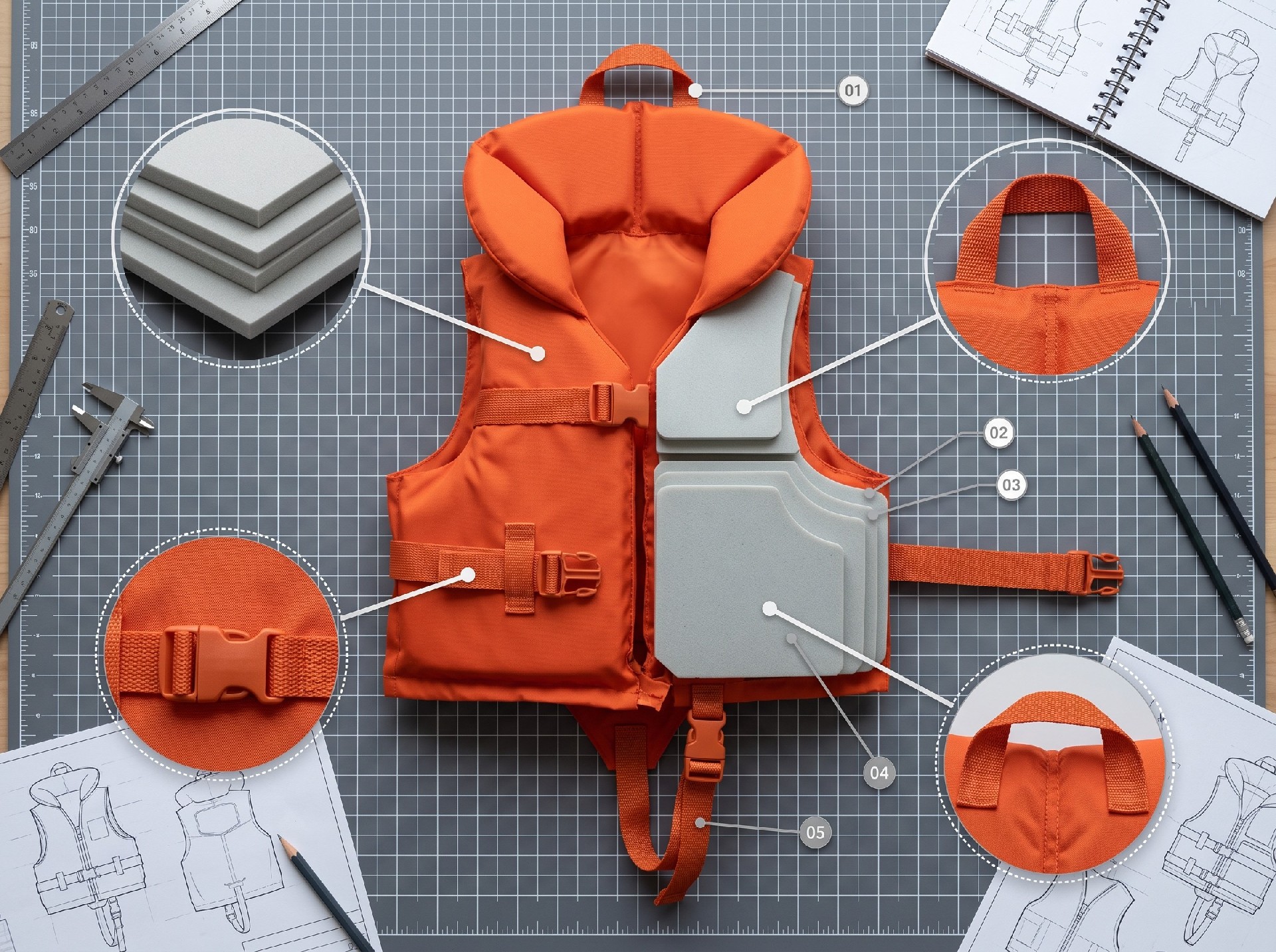
Fishing trips add requirements that a general swim vest may not satisfy: a crotch strap or leg strap to prevent ride-up, a grab handle on the collar or back for lifting a child back into the boat, high-visibility color, a whistle or attachment point, and a collar that supports the head. Pockets and tackle attachments are secondary; they must not interfere with the closure system or add bulk that lifts the vest off the shoulders.
Fit Is Defined by Weight, Chest, and Torso Length
Age labels are unreliable. Children of the same age vary widely in chest circumference and torso length, and a vest that is correct by weight can still be wrong by torso length. Use three measurements and one field test.
Measurement sequence
Weight: the primary selection variable; the vest label must cover the child's actual weight with margin for clothing.
Chest circumference: measured under the arms at the fullest point; the vest should close without compressing the chest or leaving a gap at the neck.
Torso length: from the shoulder to the waist; a vest that is too short rides up, one that is too long restricts sitting on a boat bench.
The lift test and the tug test
With the vest on and all closures tightened, lift the child by the shoulder straps or grab handle. The vest should not slide above the ears or expose the chest. Then pull the front panels upward; if more than a hand's width of movement occurs, the vest is too large or the straps are not adjustable enough. For fishing trips, test the vest while the child is seated, because a seated posture changes how the vest sits against the boat bench and the backrest.
Clothing and layering
Children on fishing trips often wear rain jackets or fleece. A vest sized over a T-shirt may not fit over a jacket. Specify the vest size against the thickest expected layer, and verify that the closures can be tightened without compressing the chest. Do not rely on the child growing into the vest; an oversized vest is a hazard, not a longer-term investment.
| Fit Variable | Buyer Target | Why It Matters | Verification Check |
|---|---|---|---|
| Weight range | Match label range with margin for clothing; replace when exceeded | Primary determinant of buoyancy and ride-up risk | Compare label to child's actual weight |
| Chest circumference | Close without compressing chest or gapping at neck | Prevents vest from slipping off shoulders | Measure under arms at fullest point |
| Torso length | Shoulder to waist; must not restrict sitting | Short vests ride up; long vests interfere with boat bench | Check while child is seated |
| Closure system | Front zipper plus two or more adjustable buckled straps | Single closure can fail under load or be opened accidentally | Pull test each strap and buckle |
| Crotch strap | Required for children under approx. 30 kg or if lifted by vest | Prevents vest from riding above the ears | Confirm strap is present and adjustable |
| Grab handle | Reinforced handle on collar or back | Allows adult to lift child vertically from water | Lift test with child's weight |
| Foam type | Closed-cell, non-water-absorbing | Open-cell foam becomes heavy and loses buoyancy | Inspect after repeated wet-dry cycles |
| Approval label | Matches local carriage rule and intended use | Legal requirement and performance baseline | Verify certificate and weight range |
Buoyancy, Closures, and Hardware: What to Verify Before Buying
Once the size is defined, evaluate the construction details that determine whether the vest will stay in place and survive a season of fishing use.
Buoyancy rating and distribution
Children's vests are commonly rated by weight range, not by a single buoyancy number. The label should state the approved weight range and the intended use. Foam distribution matters: more flotation in the front panels helps keep the face up, while a collar design can support the head. For a child who may fall from a boat, a vest with a high collar and front flotation is generally preferred over a flat-back vest.
Closures and adjustability
Look for a front zipper plus two or more buckled straps, or a vest with side-release buckles and adjustable webbing. A single zipper is not enough for a child. Straps should be wide, with no sharp edges, and should hold tension when wet. Check that the buckles are sized for adult hands but cannot be opened accidentally by the child. A crotch strap is strongly recommended for children under about 30 kg or for any child who may be lifted by the vest.
Hardware and durability
Fishing environments expose vests to sun, salt, fish slime, and repeated wet-dry cycles. Check the webbing, buckles, and zipper for corrosion resistance and UV stability. Foam should be closed-cell and not absorb water; an open-cell foam vest becomes heavy and loses buoyancy over time. Seams and strap attachment points should be bar-tacked or reinforced. If the vest has a whistle, ensure it is attached with a lanyard that will not tangle.
Visibility and rescue access
High-visibility orange or yellow improves spotting in the water. A grab handle on the back or collar lets an adult lift the child vertically. Reflective tape is useful for low-light fishing. These are not decorative features; they are part of the rescue workflow on a small boat.
Buyer Checklist for Ordering or Recommending Children's Fishing Vests
Use this sequence to reduce the risk of buying a vest that fits the shelf but not the child.
Confirm the local carriage rule for children and the required vest class.
Record the child's weight, chest, and torso length, and size against the heaviest layer.
Verify the label states the approved weight range and intended use.
Require front flotation, a collar, a crotch strap, and a grab handle.
Check two or more adjustable closures and a zipper that stays closed under load.
Perform the lift test and tug test while the child is seated and wearing a jacket.
Inspect foam type, webbing, buckles, and seam reinforcement before accepting a sample.
Confirm the vest is not oversized for future growth and is replaced when the weight range is exceeded.
For distributors and OEM buyers, the sample acceptance test should include a wet fit test with a representative child size, a closure cycle test, and a check that the foam does not waterlog after repeated immersion. Documentation should include the approval certificate, weight range, and care instructions in the target market's language.
Final Decision: Fit First, Features Second
The right children's life vest for a fishing trip is the one that stays on the child, keeps the head up, and can be lifted by an adult without slipping. Choose an inherently buoyant, approved vest with a crotch strap and grab handle, sized by weight and chest measurement rather than age. Avoid oversized vests, single-closure designs, and adult inflatable belts. Verify the local carriage requirement and the approval label before purchase. If the vest does not pass the lift and tug test while the child is seated in fishing clothing, do not use it on the water.
