

The Problem: Why Pool Water Turns Musty So Quickly
You fill a commercial inflatable pool, test the equipment, and within two or three days, the water develops an unpleasant musty, earthy, or swampy odor. This isn't just a nuisance—it's a sign of biological activity that can lead to slippery surfaces, skin irritation for users, and premature degradation of the pool's material. For rental operators, resort buyers, and commercial facility managers, addressing this issue quickly is critical to maintaining a usable product and avoiding downtime. The core of the problem isn't the pool itself, but a rapid imbalance in water chemistry caused by a combination of environmental factors and the pool's material characteristics.
Understanding the Root Cause: Bacteria, Biofilm, and Material Interaction
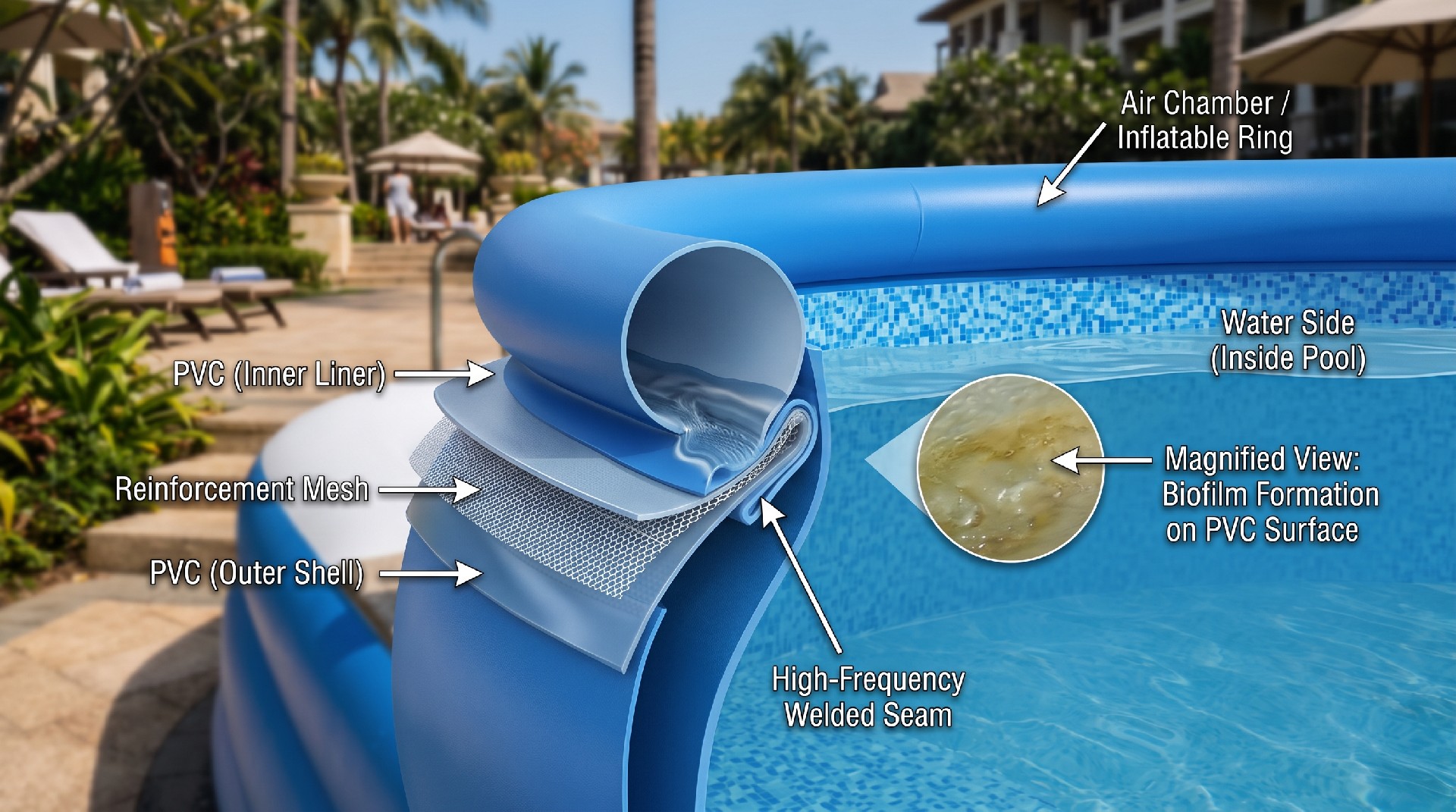
Musty odors in pool water typically arise from a combination of factors. The most common cause is the rapid formation of biofilm—a thin, slimy layer of bacteria, fungi, and algae that adheres to the pool's interior surfaces. This biofilm is the primary source of the musty smell, which is often due to the production of geosmin and 2-methylisoborneol (MIB), volatile organic compounds (VOCs) that are easily detectable by the human nose at very low concentrations. For a commercial inflatable pool, several factors accelerate this process:
High Surface Area to Volume Ratio: Inflatable pools often have a large surface area relative to their water volume, especially at shallower depths. This means a higher proportion of water is in contact with the pool's walls and floor, providing more surface area for biofilm to colonize.
Material Absorption: Many inflatable pool materials, particularly PVC and some coatings, can be slightly porous or have surface irregularities. This provides micro-crevices where bacteria can attach and form a resistant biofilm, making them harder to eliminate with standard cleaning.
Warm, Stagnant Water: Commercial inflatable pools are often used in warm conditions and may be set up for several days. Stagnant or low-flow water, combined with warm temperatures, creates ideal conditions for bacterial growth. The temperature range of 20-35°C (68-95°F) is where many waterborne bacteria proliferate rapidly.
Organic Load: Users introduce organic matter—sweat, body oils, lotions, and even trace amounts of urine—into the water. This organic material serves as a food source for bacteria, accelerating their growth and the production of odor-causing compounds.
Understanding these root causes informs the most effective prevention and treatment strategies.
Immediate Action: The Shock Treatment Protocol for Inflatable Pools
If the water has already developed a musty smell, standard chlorine or bromine levels (1-3 ppm) are often insufficient to eliminate the problem quickly. The biofilm and the bacteria within it are more resistant to disinfectants than free-floating bacteria. A shock treatment is required:
Choose the Right Oxidizer: For inflatable pools, sodium dichloroisocyanurate (dichlor) or calcium hypochlorite (cal hypo) are commonly used. Dichlor is often preferred as it has a neutral pH and dissolves easily, reducing the risk of damaging the pool liner. Do not use trichlor tablets directly in the pool as they are highly acidic and can cause rapid material degradation.
Calculate the Dosage: Shock levels typically require raising the free chlorine to 10-20 ppm. For a typical commercial pool, this means adding 2-4 times the normal chlorine dose. Always follow the manufacturer's guidelines for the specific product you are using. As a general rule, to achieve a 10 ppm rise in a 1,000-gallon (3,785-liter) pool, you would need approximately 1.5 ounces (42 grams) of 65% available chlorine granular cal hypo. Verify against your product's label.
Apply at Dusk or Night: Apply the shock treatment in the evening or at night. Sunlight (UV radiation) rapidly degrades free chlorine. Applying it at night ensures the chlorine has several hours to work effectively without significant loss to UV rays.
Circulate and Filter: If you have a pump and filter system connected to the inflatable pool, run it continuously during and after the shock treatment to distribute the sanitizer and filter out dead particles. For pools without a filter, use a pool brush or pole to agitate the water to help distribute the shock evenly.
Assess and Repeat if Necessary: The next morning, the water should appear clearer and the musty odor should be significantly reduced. If the odor persists or the water remains cloudy, the shock may have been insufficient. You may need to repeat the process, potentially with a slightly higher dose, ensuring it is safe for the material. If the water turns a shade of green or brown, this is often oxidized metals or combined chlorine and may require a clarifier.
| Observed Symptom | Likely Cause | Diagnostic Check | Corrective Action |
|---|---|---|---|
| Musty, earthy smell when water is agitated. | Biofilm growth producing geosmin/MIB. | Test free chlorine. If it's 0 ppm, the sanitizer is depleted. | Shock the pool with dichlor or cal hypo to 10-20 ppm. |
| Water appears clear but has a persistent odor. | Combined chlorine (chloramines) or very low-level biofilm. | Test for combined chlorine (total chlorine - free chlorine). If > 0.5 ppm, chlorine is tied up. | Shock treatment to break down combined chlorine and oxidize biofilm. Add a clarifier to remove dead particles. |
| Water is cloudy and smells musty. | High organic load and bacterial bloom. | Check pH and alkalinity. High pH (> 8.0) makes chlorine ineffective. | Adjust pH to 7.2-7.6. Shock with a higher dose (up to 20 ppm). Run a pump and filter system if available. |
| Odor returns rapidly after shocking. | Severe biofilm or material absorption. | Inspect the pool interior for slimy patches. If present, biofilm is well-established. | Drain the pool, clean the entire interior surface with a 10:1 water-to-bleach solution, rinse thoroughly, and refill. |
Prevention: A Proactive Strategy to Keep Water Fresh
Prevention is always more effective and less labor-intensive than remediation. A proactive approach focuses on maintaining proper water chemistry and addressing the biofilm issue before it starts.
Maintain the Free Chlorine Level
The cornerstone of prevention is maintaining a free chlorine level of 1-3 ppm or a bromine level of 2-4 ppm at all times. This is best achieved with a floating chlorine dispenser or an inline feeder, which can be attached to the pool's inlet. For rental operations, consider using a slow-dissolving chlorine tablet designed for inflatable pools. Test the water daily with a reliable test kit (DPD or OTO) to ensure levels are within range.
Shock Weekly
Even with a steady chlorine level, weekly shock treatment is recommended for pools used for several days. This preventive shock (raising the level to 5-10 ppm) oxidizes organic buildup before it can form a stubborn biofilm. This should be done after a heavy use period or at the end of the day when the pool is not in use.
Manage pH and Alkalinity
Chlorine's effectiveness is highly dependent on pH. At a pH of 7.2-7.6, chlorine is most effective as hypochlorous acid, which kills bacteria. If the pH rises above 8.0, chlorine's killing power drops significantly, leading to biological growth and odors. Maintain total alkalinity at 80-120 ppm to stabilize the pH. Use a test kit to monitor these levels and adjust with pH increaser (sodium carbonate) or decreaser (sodium bisulfate) as needed.
Use a Phosphate Remover
Phosphates are a primary food source for algae and many bacteria. They can be introduced from fertilizers, rainwater, or the pool's water source. Using a commercial phosphate remover regularly can starve the bacteria of this nutrient, significantly slowing their growth and the onset of odors.
Cover the Pool When Not in Use
A pool cover prevents debris (leaves, dirt, and insects) from entering the water. This reduces the organic load and helps maintain chlorine levels. It also prevents the growth of algae which can also contribute to musty odors.
Material-Specific Considerations for Commercial Pools
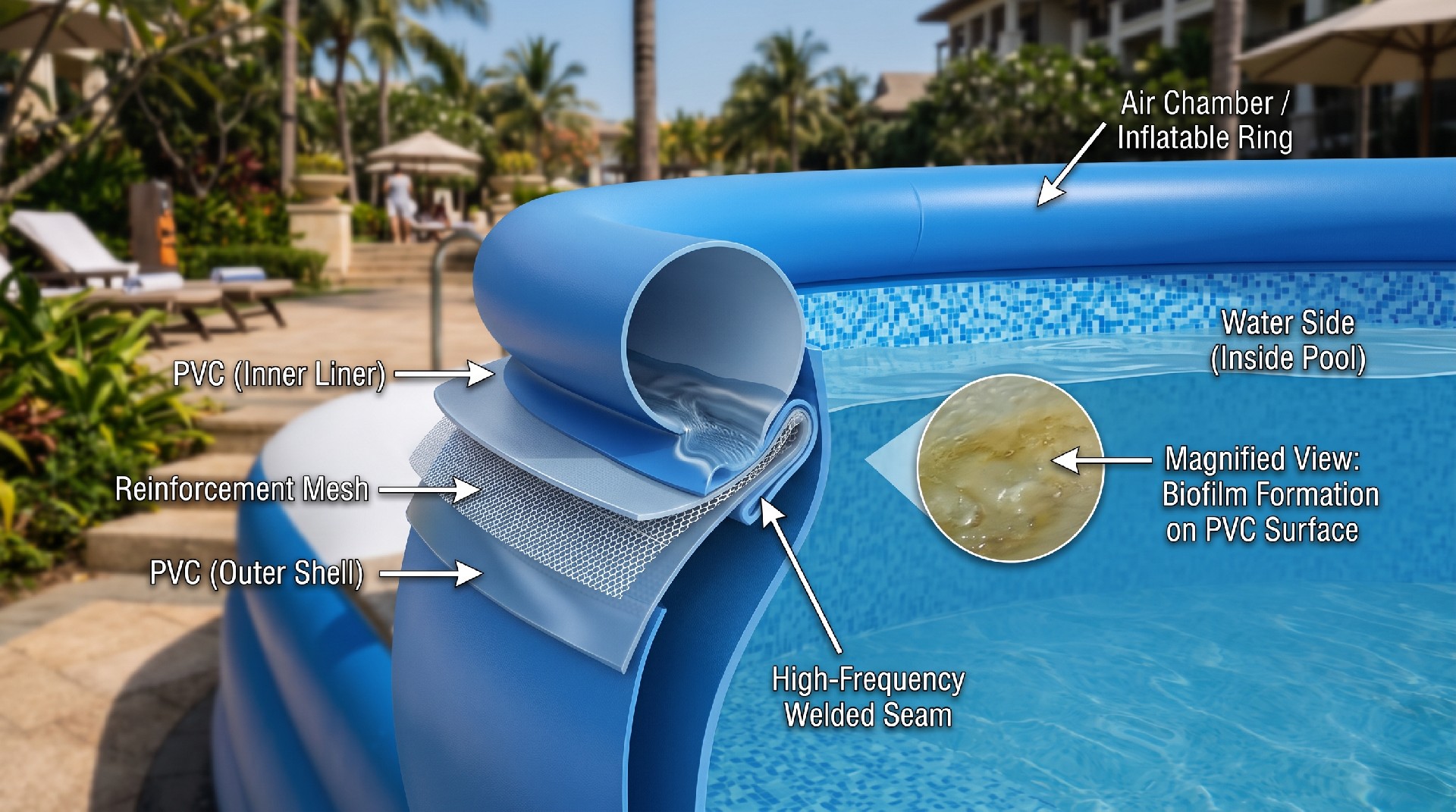
The material of your inflatable pool influences how you should treat and maintain the water. Most commercial pools are made from PVC, sometimes with a drop-stitch construction for rigidity. While durable, PVC and its plasticizers can be sensitive to certain chemicals.
Avoid High Acid or Base: Never add acid directly to the water without first diluting it. A sudden drop in pH can stress the PVC and damage the seams.
Limit Shock Frequency: While weekly shock is effective, excessive shock (more than once a week) can accelerate the leaching of plasticizers from the PVC, making the material stiff and prone to cracking over time. This is a commercial decision—you must balance sanitization with the material's lifecycle.
Choose Compatible Algaecides: Some algaecides contain metals like copper or silver. While effective, they can stain the pool's surface over time. If using an algaecide, choose a polyquat-based product, which is non-foaming and compatible with most inflatable pool liners.
Drain and Clean Properly: Between uses, drain the pool completely. Clean the interior with a mild, non-abrasive cleaner and a soft cloth to remove any biofilm residue. A solution of water and a small amount of bleach (10:1 ratio) can be used, but ensure the pool is thoroughly rinsed and dried before the next use to prevent any chemical residue from contaminating the new fill water.
Commercial Decision: Choosing the Right Chemicals for Your Fleet
For commercial operators, selecting the right chemicals involves balancing cost, efficacy, and material safety.
Chlorine: The most common and cost-effective sanitizer. Calcium hypochlorite is powerful but has a high pH, requiring careful balancing. Dichlor is a more stable, pH-neutral option, often preferred for inflatable pools.
Bromine: Bromine is effective over a wider pH range and has a milder odor than chlorine. It is often considered more forgiving for operators who may not test water daily. However, it is generally more expensive.
Non-Chlorine Shock: Potassium monopersulfate (MPS) is a powerful oxidizer that breaks down organic waste without raising chlorine levels. It can be used weekly in addition to regular chlorine to prevent biofilm formation. It's a good choice for reducing the reliance on harsh chlorine shocks, which can extend the life of the pool's material.
We recommend maintaining a daily chlorine level of 1.5 ppm and using a non-chlorine shock weekly for commercial inflatable pools with moderate use.
When to Replace the Pool and Supplier Verification
If you consistently struggle with musty odors despite following a robust maintenance protocol, the pool may have a compromised surface or a material flaw that harbors bacteria. In this case, consider replacing the pool or working with the supplier. When sourcing a new commercial inflatable pool, verify the following with your supplier:
Material Specification: Request the material's detailed specification, including its resistance to chemicals and UV stabilizers.
Surface Finish: Inquire about the interior surface. Is it smooth or textured? A smoother surface is easier to clean and less prone to biofilm formation.
Seam Integrity: Verify the seam construction. Welded or heat-sealed seams are more robust and less likely to create microscopic crevices for bacteria. Ask for the seam strength test results from the manufacturer's quality control process.
Cleaning Guidelines: Ask the supplier for their specific cleaning and chemical compatibility guidelines. Reputable suppliers will have detailed recommendations based on their material's characteristics.
By combining immediate action, a robust prevention strategy, and careful material selection, you can effectively stop pool water from smelling musty and ensure a safe, pleasant experience for your commercial users.
