

Choosing the Best Water Toys for School-Aged Pool Parties: A Commercial Buyer's Guide
School-aged children, typically between 5 and 12 years old, represent a unique demographic for pool party water toys. They are energetic enough for active play, coordinated enough for complex inflatables, and safety-conscious enough for structured fun. For B2B buyers—whether resort activity directors, rental fleet operators, or private-label sellers—selecting the best water toys for this age group requires balancing safety, engagement, and durability. The wrong choice leads to downtime from punctures, disappointed guests, or, worse, safety incidents. This guide specifies exactly what commercial teams should verify before ordering, focusing on the operational realities of school-aged pool parties.
Operational Scenarios: School Pool Parties vs. Family Leisure
The demands of a school-aged pool party differ from general leisure use. A typical party may involve 20-30 children over a 2-3 hour period. This means the inflatables must withstand high-frequency use in a short window. Unlike a resort pool where usage is spread across the day, a party brings peak occupancy, increasing wear on seams, valves, and surfaces. For rental operators, this concentrated use pattern may shorten the effective lifespan of products with lower-grade materials. For resort buyers, it means considering inventory rotation—having backup units on hand for weekend bookings. In both cases, the best water toys are those specifically designed for commercial durability, not residential-grade items that may fail after a single busy weekend.
Capacity and Throughput Assumptions
When evaluating capacity, consider the age range. Children aged 5-8 are often lighter and require smaller inflatables with low entry points. Children aged 9-12 are heavier and more agile, suitable for obstacle courses and slides. A product rated for a maximum payload of 200 kg (approx. 440 lbs) is a common spec for a medium-sized inflatable slide, translating to 4-6 children at a time. However, for operational safety, the occupancy limit should be calculated on the floor area, not just weight. A common commercial guideline is 1 child per 2-3 square meters of play area for active toys. For a typical 5x3 meter slide, this suggests a maximum of 5-8 children, depending on the activity level.
Safety Standards and Material Compliance for School-Aged Children
Safety is non-negotiable. The relevant standard for inflatable play equipment used by children is EN 14960, which covers the design, manufacture, and operational safety of inflatables. While it is primarily a European standard, it is widely used as a benchmark globally. Buyers should require a CE mark where applicable, but note that CE marking is a manufacturer's declaration of conformity, not a third-party certification. For genuine assurance, request a test report from an accredited lab showing compliance with EN 14960. This includes tests for seam strength, material tear resistance, and stability against wind and overturning. For pool toys, additional checks for buoyancy materials and the absence of hazardous substances under REACH are critical. Buyers must verify that materials are free from phthalates, lead, and other restricted substances.
When sourcing from OEMs, ask: "Has this model been tested to EN 14960 by a notified body?" If the supplier cannot provide a certificate, it is a red flag. The typical commercial range for seam strength on play inflatables is 80-120 N/cm, depending on the material weight. The material should be at least 0.45 mm thick for PVC inflatables to ensure durability against constant use and abrasion.
| Decision Factor | Commercial Target for School-Aged Use | Why It Matters | Buyer Check |
|---|---|---|---|
| Safety Compliance | EN 14960 certified | Ensures structural stability and seam strength for active use | Request test report from an accredited lab |
| Material Thickness | >0.45 mm PVC or equivalent | Provides abrasion resistance and prevents puncture | Verify with supplier datasheet and sample inspection |
| Seam Construction | Heat-welded with >50mm overlap on high-stress zones | Prevents separation under dynamic load | Inspect sample for weld consistency and width |
| Valve Type | Boston valve with >30mm diameter | Allows fast inflation and deflation for party turnaround | Check valve seat weld and request cycle life data |
| Occupancy Limit | 1 child per 2-3 sq meters of play area | Prevents overloading and ensures safety | Calculate based on floor area and product spec |
| Setup Time | <30 minutes for 2 staff | Minimizes labor cost and maximizes party booking efficiency | Request a setup video or test on sample |
| Repair Kit | Including matching material and adhesive | Enables quick field repairs, reducing downtime | Verify kit contents and ask for a repair demonstration |
| Warranty | Minimum 1 year on materials and workmanship | Indicates supplier confidence and protects investment | Review warranty terms and exclusions |
Product Architecture and Material Choices
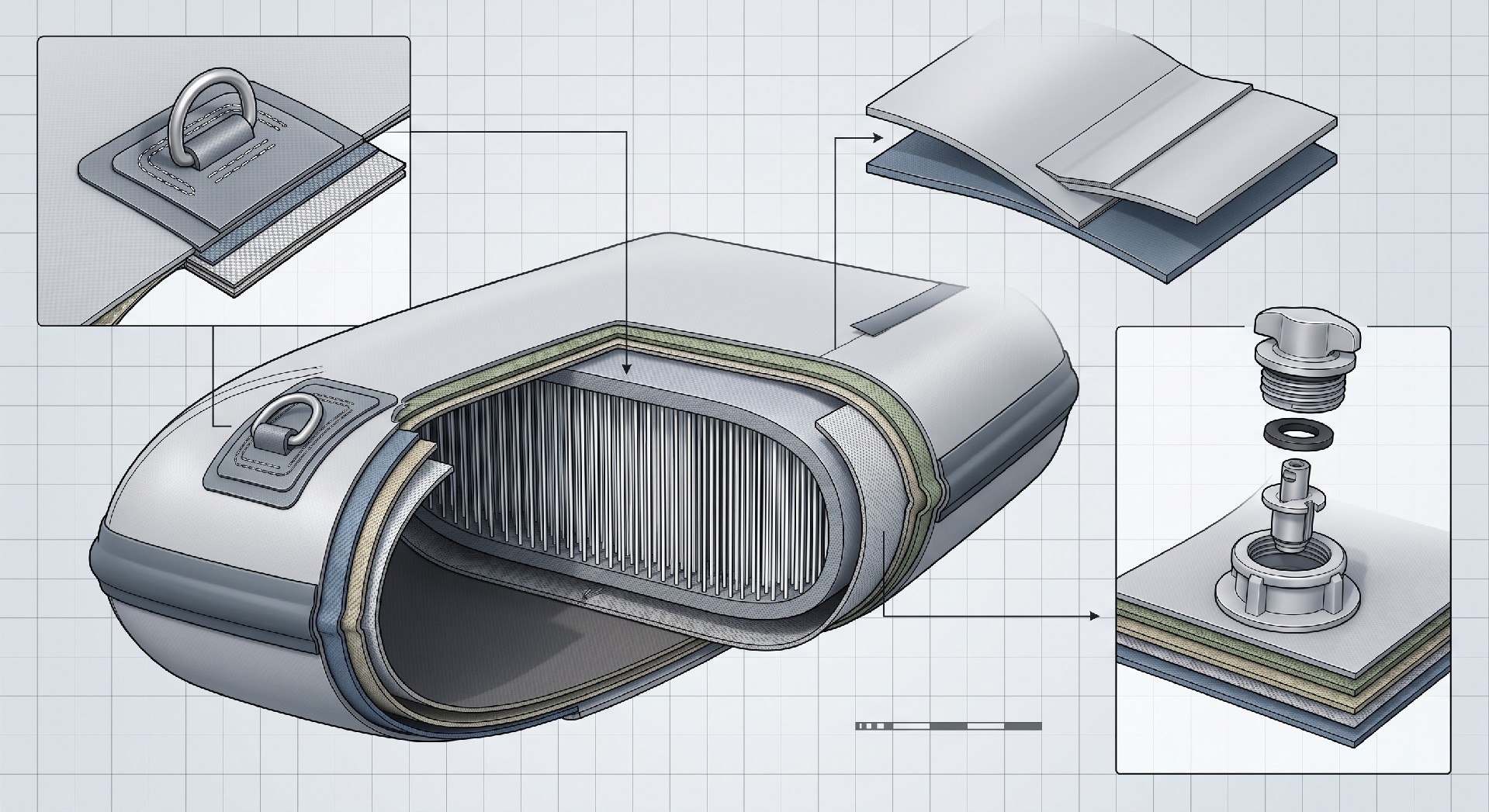
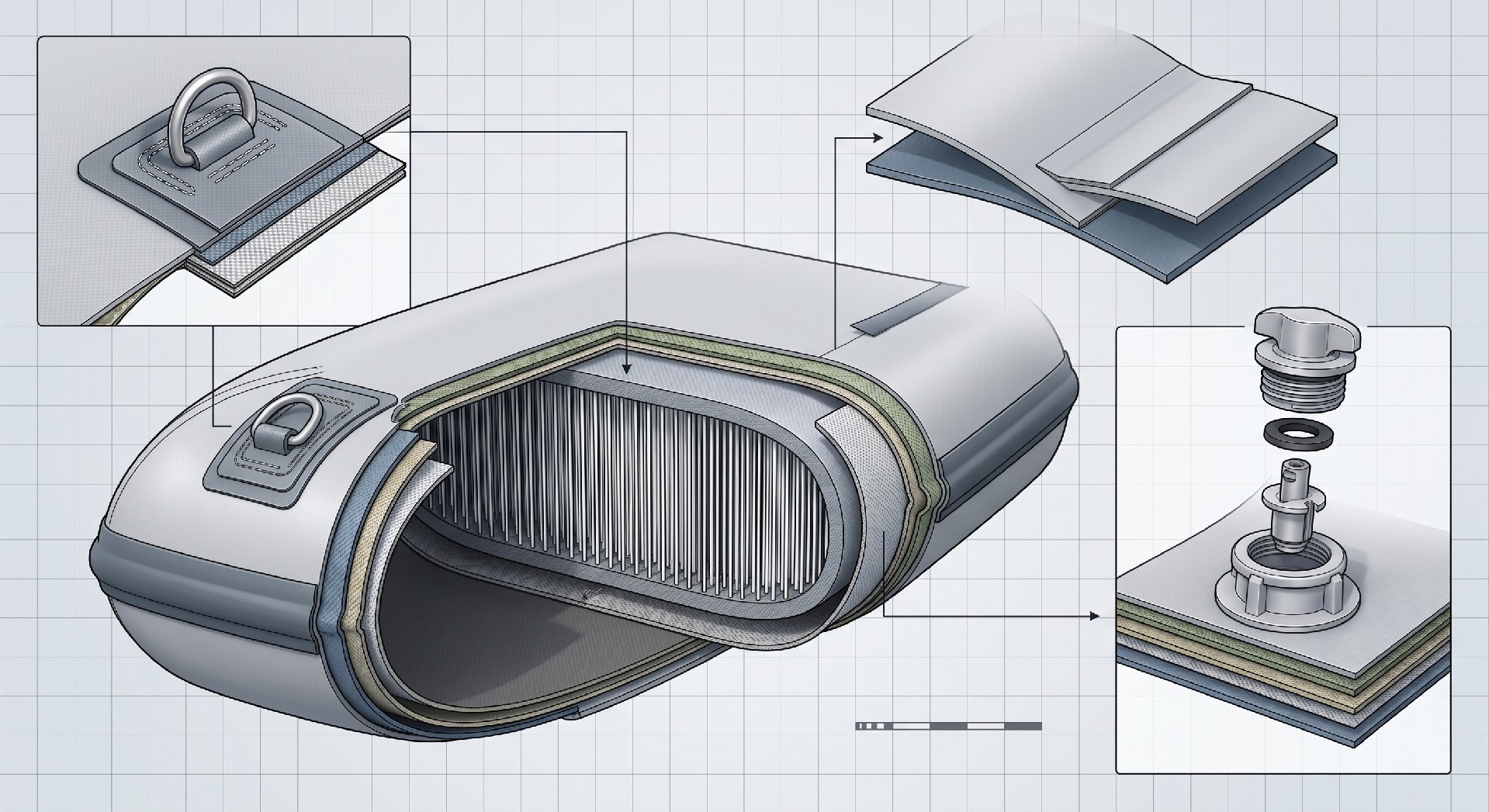
Not all water toys are constructed equally. The best commercial-grade toys use drop-stitch technology for rigid panels, such as slides and platforms, which provides a high strength-to-weight ratio and maintains shape under load. For smaller toys like rings or rafts, standard PVC with heat-welded seams is often sufficient. However, for high-use items like inflatable obstacle courses, a combination of drop-stitch for the base and traditional PVC for the walls offers a good balance between rigidity and cost.
Seam Construction: The Critical Failure Point
Heat-welded seams are preferred over glued seams for school-aged toys. Glued seams may fail under prolonged sun exposure or high temperatures, especially when the item is repeatedly inflated and deflated. Heat welding creates a molecular bond between PVC layers, which is stronger and more flexible. A typical commercial heat weld achieves a bond strength of 60-80% of the base material's tensile strength. When inspecting prototypes, check the seam width—wider seams (e.g., 3-4 cm) distribute stress better. Also, look for double-stitched or reinforced seams on high-stress zones like anchor points and grab handles. This is where many lower-quality products fail after a few rentals.
Valves and Inflation Hardware
For school parties, fast setup is essential. Valves with large diameters (e.g., 30mm) allow rapid inflation and deflation. Boston valves are common and reliable for commercial use, offering a simple, one-way design. However, check the valve seat: it should be made of a hard plastic welded into the PVC, not just glued. This prevents leakage and extends the product's life. A typical commercial valve will have a cycle life of over 1,000 inflations/deflations. For rental fleets, consider standardizing on valve types across all toys to speed up maintenance.
Engagement Strategies: Interactive Features
For school-aged children, interactivity is key. The best water toys include features that promote group play, such as climbing walls, slides, and splash zones. These features not only increase enjoyment but also reduce the risk of idle boredom, which often leads to unsafe behavior. Some advanced inflatables integrate water sprayers or blowers that create water effects, adding another layer of fun. When selecting, consider the power requirements of any blower systems. In commercial settings, a blower must have a safety lock and be secured to prevent tampering. The airflow demand for a medium-sized inflatable obstacle course is typically 1,500-2,500 CFM (cubic feet per minute), requiring a continuous-duty blower rated for commercial use.
Maintenance and Storage Considerations
After a school party, the inflatables must be cleaned, dried, and stored properly. This is often overlooked in the buying process. Heavy items that absorb moisture can become breeding grounds for mold. UV-resistant coatings help but do not eliminate the need for proper drying. Some commercial products feature a dark-colored base material that repels heat, speeding up drying. For storage, the packed size and weight matter. A large obstacle course can weigh over 100 kg and require a pallet and forklift for handling, while smaller slides may be rolled by two staff members. Buyers should calculate the storage footprint—a common issue in rental operations where warehouse space is at a premium.
Supplier Questions and Sample Checks
Before ordering, B2B buyers must audit the supplier. Here are specific questions based on the school-aged use case:
Seam reinforcement: Do you use heat-welded seams with at least 50mm overlap on high-stress zones? Ask for a sample to inspect.
Material thickness: What is the fabric weight (e.g., 500 gsm PVC) and how does it compare to your other commercial products?
Repair kit: What is included? A good supplier provides an OEM kit with matching material and adhesive.
Replacement part availability: Can we order extra valves and repair patches easily?
Packaging: How are the toys packed? Rolled or folded? What is the carton size and weight for shipping?
Demand a sample evaluation. This is a standard practice in B2B procurement. Test the sample by inflating it for 24 hours to check for pressure loss. A typical commercial unit should lose no more than 10% of its working pressure (e.g., 1 psi) over a full day. Perform a water test to ensure there are no leaks. This simple check can reveal manufacturing defects that are not obvious during a visual inspection.
Commercial Decision: Cost Per Use vs. Upfront Price
The cheapest option is rarely the lowest-cost option over a commercial lifecycle. For a rental operator, a $500 inflatable that lasts 50 rentals costs $10 per use. A $1,200 unit that lasts 150 rentals costs $8 per use, yielding better profitability. The calculation includes maintenance, repairs, and replacement. For resorts, the cost of a failure during a party—refunds, guest dissatisfaction, and staff time—far outweighs the initial savings. Therefore, evaluate the estimated number of uses per season. A typical commercial inflatable for school parties, if properly maintained, can last 3-5 seasons, with maintenance cost averaging 10-15% of the initial price per year.
Conclusion: A Structured Procurement Decision
Selecting the best water toys for school-aged pool parties is about understanding the concentrated use pattern. Buyers should prioritize safety certification (EN 14960), material durability (heat-welded seams, >0.45mm PVC), and interactive features for group play. The final decision should be based on the total cost of ownership and a thorough supplier audit. Choose a supplier who provides transparent test reports, a clear warranty (e.g., 1 year on materials and workmanship), and a solid track record with similar clients. Do not rely solely on marketing claims. Request samples, check the construction, and run a pressure test. This approach will deliver a product that ensures safety, maximizes enjoyment, and protects your commercial investment.
