

Why Standard Field Repairs Matter in Commercial Outdoor Gear
For rental fleets, guiding services, and outdoor equipment suppliers, a broken buckle on a tent or sleeping bag strap is not a minor inconvenience—it is a downtime event. When a buckle fails, the gear cannot be deployed safely, and the repair workflow directly impacts asset utilization and customer safety. This guide addresses the real search intent behind "How to Replace a Broken Buckle on a Tent or Sleeping Bag Straps" by moving beyond simple field hacks. We focus on commercial-grade repair standards, buckle specifications, and lifecycle management so that buyers and operators can make informed procurement and maintenance decisions.
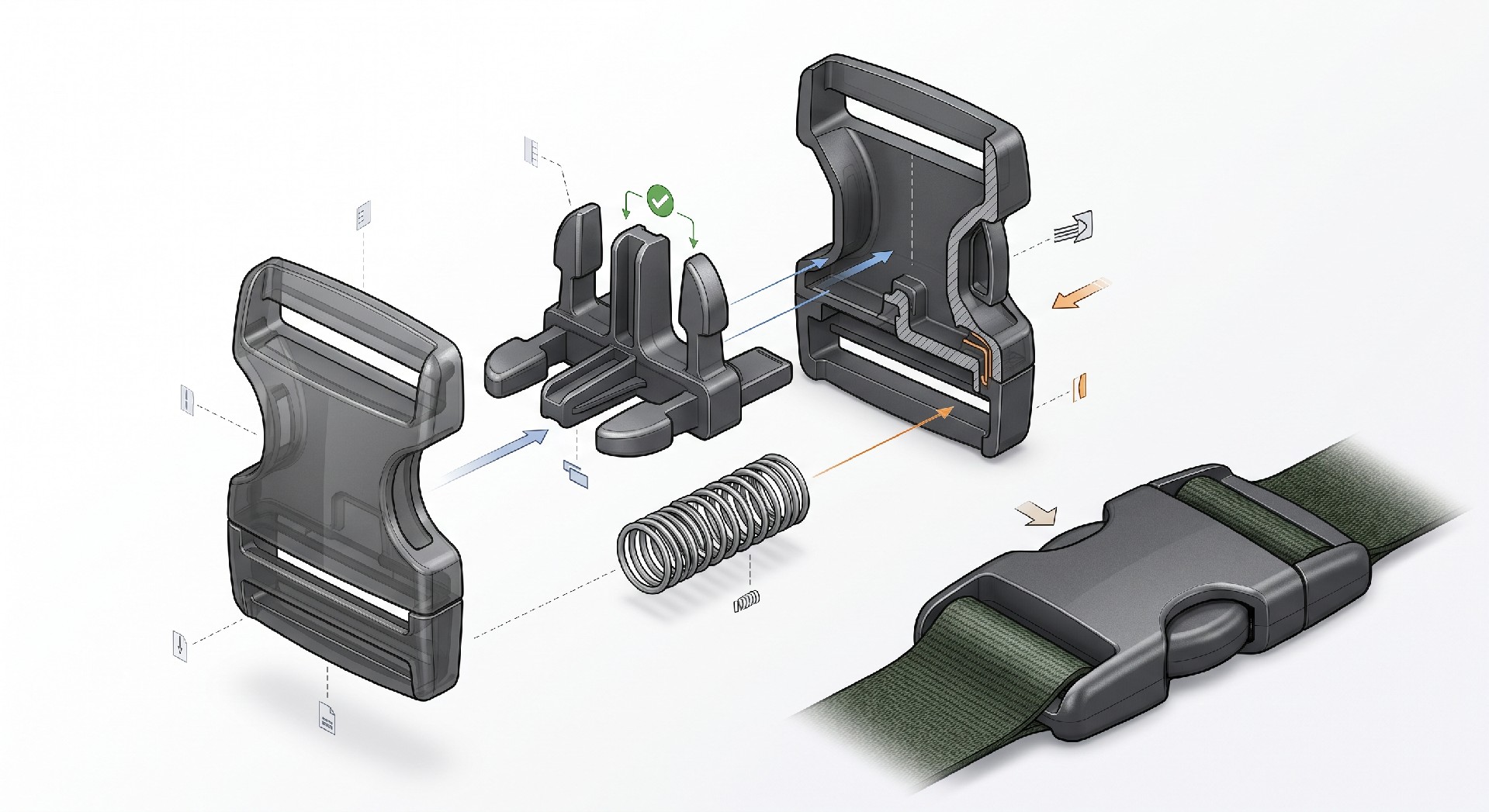
Identifying the Broken Buckle: Commercial Inspection Criteria
Before undertaking a replacement, it is critical to distinguish between a field-repairable buckle failure and a structural webbing failure. The primary failure modes we observe in commercial tent and sleeping bag straps include:
Latch spring fatigue: The spring-loaded mechanism fails to engage, often after 1,500 to 3,000 cycles in typical commercial use.
Side-release arm breakage: The flexible arms snap due to cold weather embrittlement or impact loading.
Webbing slot wall deformation: The buckle frame warps, allowing the strap to slip under load.
For a robust repair, commercial buyers should examine if the broken buckle is part of a load-bearing strap, such as a tent pole compression strap or a sleeping bag compression sack. In these cases, the replacement buckle must match or exceed the original webbing width and breaking strength. Common commercial webbing widths are 25 mm (1 inch) or 38 mm (1.5 inches). The buckle must be rated for a minimum breaking strength of 200 kgf for tent applications, though many OEM buyers target a 350 kgf break strength for critical load paths.
Specifying Replacement Hardware: Material and Sourcing Decisions
Procurement teams and repair technicians must evaluate two main material options for replacement buckles: acetal (POM) and nylon (PA). Acetal offers excellent dimensional stability and low moisture absorption, making it the typical commercial choice for outdoor straps. Nylon provides higher impact resistance but can absorb moisture, which may affect its stiffness in humid conditions. For most tent and sleeping bag strap repair applications, acetal side-release buckles dominate due to their reliable spring action and UV resistance. When sourcing replacement buckles, verify the material grade through the supplier's specification sheet, and request evidence of UV stabilizer content if the repaired gear will see high sun exposure. For B2B buyers, stocking a range of common buckle sizes (20 mm, 25 mm, and 38 mm) and both black and natural acetal colors is a standard spare-parts strategy.
| Repair Decision Factor | Commercial Target or Range | Why It Matters | Buyer Check |
|---|---|---|---|
| Webbing width | 20 mm / 25 mm / 38 mm | Determines buckle slot compatibility; mismatch causes slippage | Measure with calipers |
| Buckle break strength | Min. 200 kgf (tents), 150 kgf (sleeping bags) | Ensures the strap can hold rated loads without failure | Request supplier test data |
| Buckle material | Acetal (POM) with UV stabilizers | Resists moisture, maintains stiffness; UV stabilizers prevent embrittlement | Verify material spec and additive package |
| Stitch pattern and thread | Box-and-X with V-69 bonded polyester, 8-10 spi | Repairs must match or exceed original stitch strength | Inspect thread type and stitch density |
| Proof load test | 1.5x working load (e.g., 150 kgf for tents) | Verifies repair integrity before deployment | Document test result and date |
| Repair cost vs. replacement | Repair < 40% of new strap cost | Justifies investment in labor and parts | Compare parts cost + 5 minutes labor |
Step-by-Step Replacement Workflow for Commercial Operators
This procedure assumes a standard side-release buckle attached to a strap via a sewn loop or a tri-glide slide. In a commercial setting, the goal is a durable, permanent repair that does not reduce the strap's rated load capacity.
Step 1: Remove the Damaged Buckle
If the buckle is attached via a sewn loop, you will need to cut the original stitching. Use a seam ripper or a sharp blade to carefully open the bar-tack stitches. Avoid cutting the webbing fibers. If the buckle is threaded through a tri-glide, slide it out after releasing the strap tension. For zip ties or quick repairs used in emergency field scenarios, this guide recommends moving to a permanent repair at the earliest opportunity.
Step 2: Select the Correct Replacement Buckle
Use a caliper to measure the webbing width precisely. The new buckle's slot must match the webbing width with a tolerance of +0.5 mm to -0.0 mm to prevent slippage. Check the buckle's rated breaking strength. For a tent compression strap, a typical commercial target is 300 kgf; for a sleeping bag strap, 150 kgf is often adequate. If the original strap shows signs of UV degradation or fraying, replace the entire strap assembly rather than just the buckle.
Step 3: Attach the New Buckle
For a sewn attachment, thread the webbing through the buckle's fixed end slot and fold it back. Use a bar-tack sewing machine with a bonded polyester thread (V-69 or V-92 weight) and create a box-and-X stitch pattern. The stitch density should be 8 to 10 stitches per inch. For non-sewn field repairs, a tri-glide slider or a webbing loop with a heavy-duty zip tie can serve as a temporary fix, but these are not recommended for long-term commercial use.
Step 4: Load Test the Repair
Before returning the gear to active inventory, perform a proof load test. Apply a load equal to 1.5 times the working load limit. For a tent strap, this might be 150 kgf; for a sleeping bag strap, 75 kgf. Observe the buckle for deformation, latch engagement, and any slippage. This test is a non-negotiable step for rental and guiding operations. Document the repair and the test result in your maintenance log.
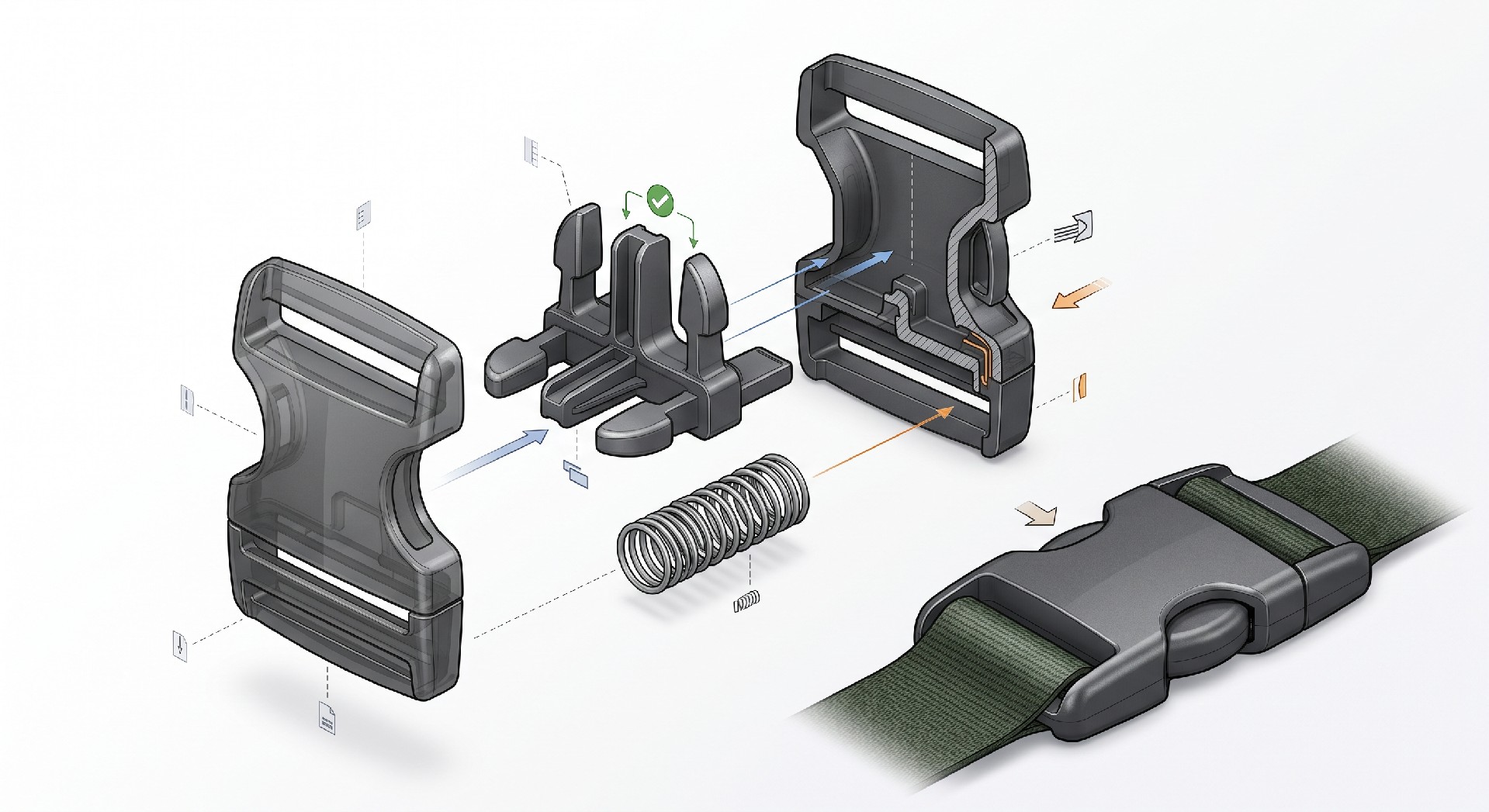
Repair or Replace: The Commercial Cost-Benefit Analysis
A broken buckle on a tent or sleeping bag strap often triggers a simple "repair" decision, but commercial buyers should consider the total cost of ownership. A single buckle replacement might cost $0.50 to $2.00 in hardware and 5 minutes of labor (approximately $2.50 at a commercial repair rate). If the rest of the strap or the tent webbing is worn, investing in a full strap assembly or a new component might be more efficient. For tents in a rental fleet, buckle failure is a leading indicator of overall wear. If you replace more than 20% of the buckles on a given tent model in a season, evaluate the supplier's material quality or consider a design change. This proactive approach prevents customer complaints and reduces emergency field repairs.
Buyer's Checklist for Buckle Sourcing and Repair Kits
For procurement and warehouse managers building a field repair kit, here is a compact checklist:
Size range coverage: Stock 20 mm, 25 mm, and 38 mm acetal side-release buckles in black.
Strength verification: Request buckle test data for breaking strength and latch cycle life (minimum 5,000 cycles).
Thread and needle stock: Maintain bonded polyester thread and appropriate needles for bar-tack repairs.
Inspection tools: Provide calipers, magnifiers, and a portable load-testing fixture for QC checks.
Standard operating procedure (SOP): Write a one-page repair SOP with images and include it in the repair kit.
Supplier communication: When ordering replacement buckles, ask the supplier about their raw material source and any ISO 9001 quality management system certification.
When to Reject a Repair and Order New Stock
Not every broken buckle situation warrants a repair. Commercial teams should reject the repair and order a new strap or tent part when:
The webbing shows visible fraying, discoloration, or stiffness indicating UV degradation.
The buckle failure occurred at a load below 50% of the rated breaking strength, suggesting a manufacturing defect that may affect other units.
The strap is a critical safety component, such as a tent guy-line tensioner on a large event tent where wind loads are significant.
The repair cost (including labor and test time) exceeds 40% of the replacement cost for a new strap assembly.
By applying this commercial discipline, outdoor equipment operators can maintain a safe, reliable inventory while managing repair budgets effectively. Understanding How to Replace a Broken Buckle on a Tent or Sleeping Bag Straps is not just a technical skill; it is a procurement and lifecycle management competency.
