

Why Shallow Water Scrapes Are a Fleet Cost Center
For any commercial kayak rental fleet, resort operation, or outdoor outfitter, the bottom of a kayak is its most vulnerable asset. In shallow rivers, rocky coastlines, or low-water lake access points, hull abrasion is not a matter of 'if' but 'when.' These scrapes and scratches are more than cosmetic: they compromise structural integrity, reduce resale value, and can lead to costly premature failure. For a B2B buyer, the true cost is measured in fleet downtime, repair labor, and shortened lifecycle, not just the price of a new hull.
Preventing scrapes and scratches on kayak bottoms in shallow waters requires a strategy that blends smart material specification, proactive field tactics, and a structured repair protocol. This guide addresses the technical and commercial decisions behind hull protection, tailored for rental fleet managers, resort buyers, and commercial operators who need their equipment to survive daily contact with abrasive substrates.
Specifying Hull Material for Abrasion Resistance
The primary defense against scrapes begins with the hull's material and construction. Three material classes dominate the commercial kayak market: high-density polyethylene (HDPE), cross-linked polyethylene, and advanced composite layups. While many assume thicker is always better, the true determinant of abrasion resistance is the material's hardness, tensile strength, and the presence of sacrificial layers.
High-Density Polyethylene (HDPE)
HDPE is the industry standard for commercial kayaks due to its excellent impact resistance and repairability. However, not all HDPE formulations are equal. The key specifications to demand from your OEM supplier are the molecular weight and density. A higher molecular weight typically correlates with better resistance to stress cracking and abrasion. You should verify the specific gravity and melt flow index (MFI) as part of your quality control, as these directly affect the hull's toughness.
Cross-Linked Polyethylene
Cross-linked polyethylene (XLPE) represents a step up in performance. By creating chemical bonds between polymer chains, XLPE offers superior resistance to abrasion and chemical attack compared to standard HDPE. It is often specified for high-wear applications, but it comes with a higher material cost. For a rental fleet operating in consistently shallow, rocky environments, this premium can be justified by a significant extension in the hull's service life. It's a classic 'buyer's choice' between initial CapEx and long-term durability.
Composite Layups and Skin Coatings
Fiberglass and carbon fiber kayaks are less common in heavy commercial use due to their higher cost and lower impact tolerance, but some premium touring or expedition fleets utilize them. If you are considering composites, focus on the gel coat thickness and the use of aramid or Kevlar reinforcements in high-wear areas. These materials can offer exceptional hardness but often fail catastrophically when impacted directly on rocks, making them less suitable for rental operations where user error is common.
Buyer Check: Always request samples or test panels from your supplier to conduct your own abrasion test or review their ISO 9001 process control for material batches. Verify the specific material grade and density against the datasheet, not just a generic 'polyethylene' claim.
| Hull Material | Abrasion Resistance | Impact Resistance | Repairability | Typical Commercial Cost |
|---|---|---|---|---|
| Standard HDPE | Moderate | Good | High (weldable) | $ |
| Cross-Linked PE | High | High | High (weldable) | $$ |
| Fiberglass/Composite | Low (gel coat is soft) | Moderate (can crack) | Low (requires resin/fiberglass) | $$$ |
| HDPE with Keel Guard | Very High (guard is first point of contact) | Good (hull protected) | Very High (replace guard or weld hull) | $ to $$ |
Implementing a Field Protection Protocol
Specifying the right hull is only the first step. The most effective prevention of scrapes and scratches on kayak bottoms occurs during the launch and retrieval process. This is where operational workflow directly impacts equipment longevity.
Designated Launch Zones
Where possible, establish and maintain designated launch zones free of sharp rocks, shells, or debris. This might involve a small investment in a floating dock, a sand/gravel beach, or a simple carpeted ramp. The goal is to eliminate the point of highest friction: the moment a loaded kayak is dragged across the substrate from the water's edge to the water itself. This is a high-ROI commercial decision that reduces the need for more intensive hull repairs.
Rigid vs. Wheeled Carts
For locations without ideal shorelines, a wheeled kayak cart is indispensable. Ensure your staff and customers use them correctly. A cart with wide, soft wheels minimizes point loading on the hull, distributing the weight and preventing localized gouging. Instructing renters to avoid dragging the kayak even a few inches on concrete or gravel is crucial. This simple operational rule can drastically reduce the frequency of shallow-water damage.
Sacrificial Skid Plates and Keel Guards
For high-use rental fleets, factory-installed or aftermarket keel guards are a proven tactical solution. These are typically thick strips of PVC, HDPE, or aluminum bonded to the center of the hull's bottom. They are designed to be the first point of contact, absorbing the abrasion and protecting the primary hull material. When they wear down, they can be replaced or repaired, a far more economical process than repairing a thin, abraded hull. This is a 'preventive maintenance' approach that pays for itself in avoided major repairs.
Repairing and Managing Scratches
Despite best efforts, scrapes will happen. A structured approach to damage assessment and repair is essential to prevent minor cosmetic issues from becoming structural failures that risk paddler safety and fleet availability.
Rapid Damage Assessment
Implement a simple daily check-in procedure for returning kayaks. Inspect the bottom for:
Cosmetic Scratches: Surface-level marks that do not penetrate the material's surface. These can be ignored or buffed out with fine sandpaper and a heat gun for aesthetic reasons.
Gouges: Deep cuts that remove material but do not completely perforate the hull. These require immediate repair to prevent water intrusion and stress concentrations.
Punctures: Holes that pass entirely through the hull. This is a critical failure requiring a robust structural repair before the kayak can be used again.
Structural Repair Techniques
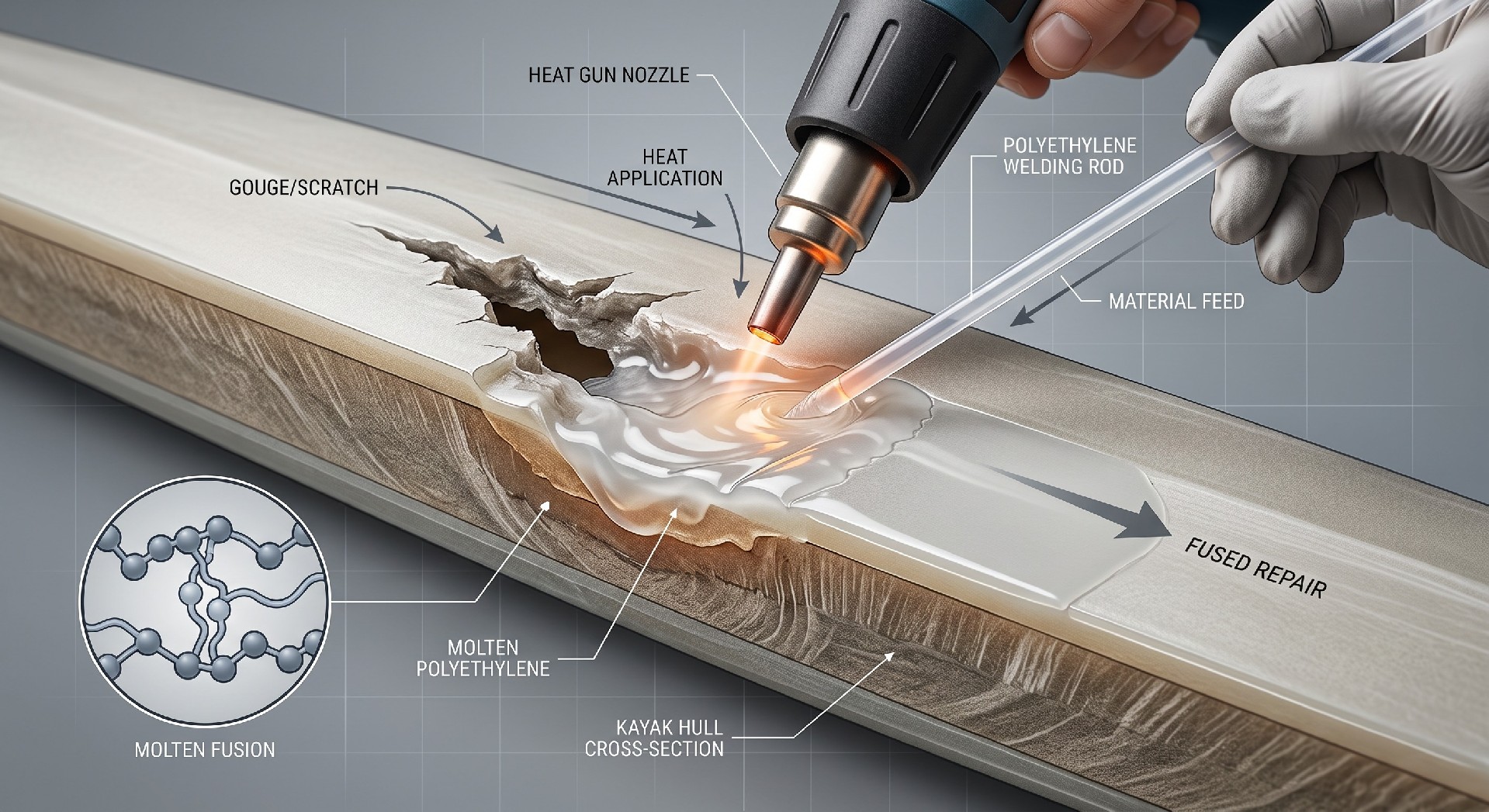
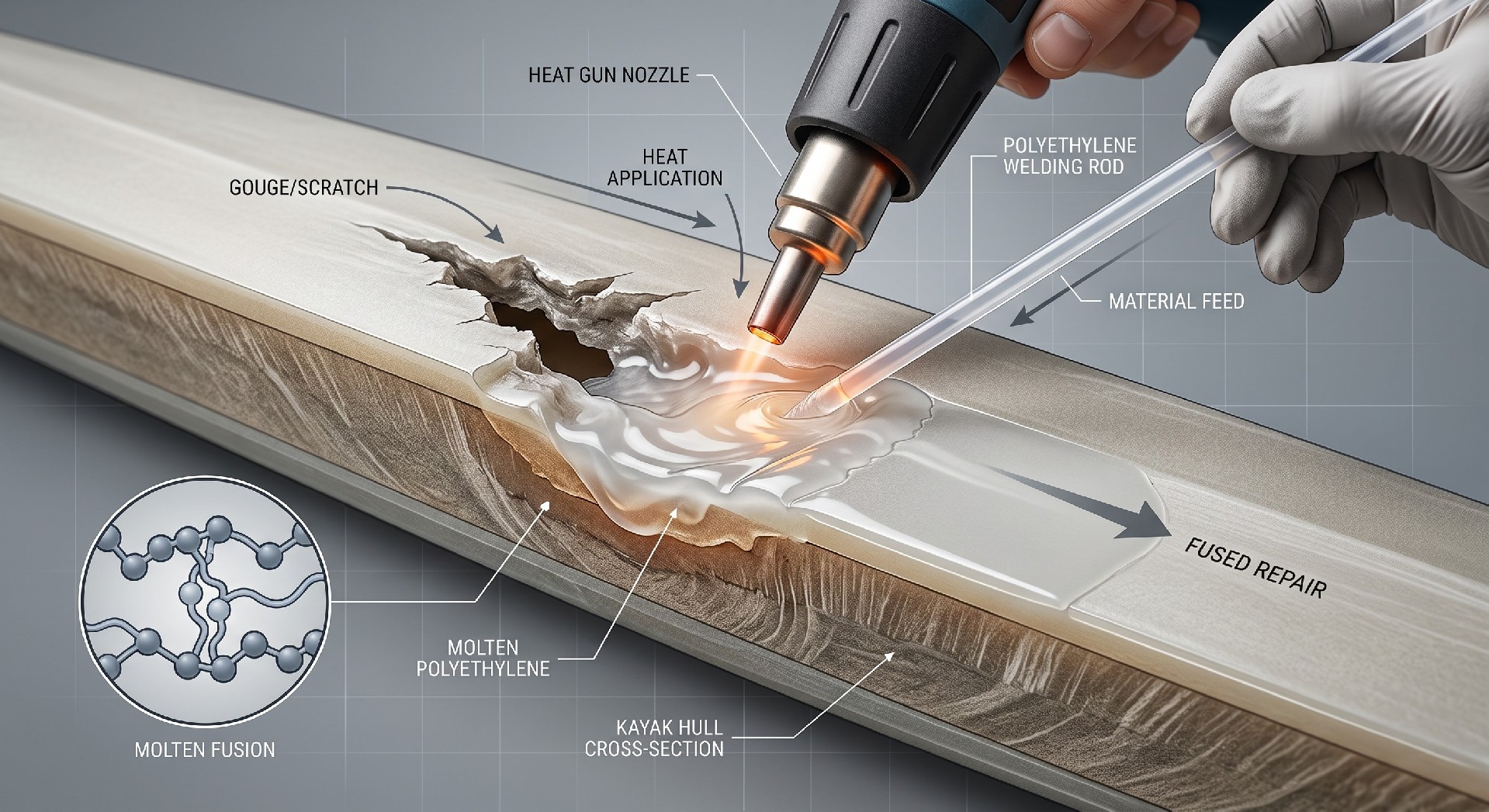
For HDPE and XLPE kayaks, a polyethylene welding rod and a high-temperature heat gun are the standard repair kit. The process involves cleaning and abrading the area, then melting the rod material to fill the gouge. A well-executed plastic weld can restore the hull to near-original structural integrity. Composite repairs involve layers of fiberglass and resin, a more labor-intensive and skill-dependent process. For fleet operations, standardizing on a polyethylene-based fleet simplifies the repair skill set and spare parts (rods) inventory.
Commercial Decision: If you operate a multi-site fleet, consider training at least one staff member per location on standard polyethylene welding. The cost of a professional welding kit and training is far lower than the cost of sending a kayak to a third-party repair shop or, worse, prematurely replacing a hull.
Your Fleet Protection Decision
Preventing scrapes and scratches on kayak bottoms is a shared responsibility between material specification and field operations. For a commercial operator, the goal is not to create a pristine fleet but to extend the serviceable life of each hull as far as possible.
Strategic Takeaways
For New Fleet Purchases: Prioritize cross-linked polyethylene or a heavy-gauge HDPE hull with a factory-installed keel guard. Question suppliers on their specific material grade and ask for comparative abrasion test results.
For Existing Fleet Management: Audit your launch and retrieval protocols. Implement mandatory cart usage and establish a simple daily inspection log to catch damage early.
For Repairs: Invest in in-house repair capability for polyethylene fleets. This turns a liability (damage) into a manageable operating cost, reducing downtime and preserving asset value.
The 'best' solution is a combination of a well-specified hull, a disciplined operational workflow, and a responsive maintenance system. By focusing on these three pillars, you can maximize the ROI of your kayak fleet, minimize unplanned downtime, and ensure your customers enjoy a safe, functional paddling experience, even when the water gets thin.
