

The Right Life Jacket Can Make or Break Your Day on the Water
For inflatable kayak anglers, the life jacket is more than just a legal requirement; it's a critical piece of fishing equipment. The choice is a constant trade-off between safety, comfort, and mobility. A bulky, restrictive PFD (Personal Flotation Device) will hinder your casting and make a long day on the water frustrating. An ultralight, minimalist vest, however, might not provide the buoyancy needed to support you and your gear in an emergency. This guide cuts through the marketing to help commercial buyers and individual anglers make the right choice.
The best life jacket for inflatable kayak anglers is a Type III, high-back PFD with at least 15.5 lbs of buoyancy, designed to stay clear of the seat back and allow for a full range of motion.
Understanding the Angler's Environment: Why Inflatables are Different
Fishing from an inflatable kayak presents a unique set of challenges that directly impact PFD selection. Unlike a sit-inside kayak or a hard-shell fishing kayak, the seating position in an inflatable is often higher and less stable. This creates a higher center of gravity, which can increase the likelihood of a capsize, especially when leaning over to net a fish. Furthermore, inflatable kayaks are more susceptible to wind and current drift, meaning an angler might find themselves farther from shore or in rougher water than anticipated. The primary search intent is ensuring the PFD provides reliable flotation without compromising the specific movements required for fishing.
Key Flotation Requirements
Minimum Buoyancy: For most adults, a USCG-approved Type III PFD offers a minimum of 15.5 pounds of buoyancy. This is the baseline. However, anglers carrying heavy tackle boxes, multiple rods, or wearing heavy clothing should consider vests with higher buoyancy ratings, often found in specialized fishing PFDs.
Turning Ability: The vest must be designed to turn an unconscious person face-up in the water. While some ultra-light vests can be uncomfortable, they must still meet this critical requirement.
Material and Durability: Inflatables are often used in shallower waters near structures like docks, rocks, and lily pads. A PFD made from durable nylon or polyester with reinforced stitching is essential to withstand snags and abrasion.
The Anatomy of an Angler's PFD: Features that Matter
An inflatable kayak angler's life jacket isn't just a block of foam. The design is highly specialized to support the repetitive motions of fishing.
High-Back vs. Standard Vests
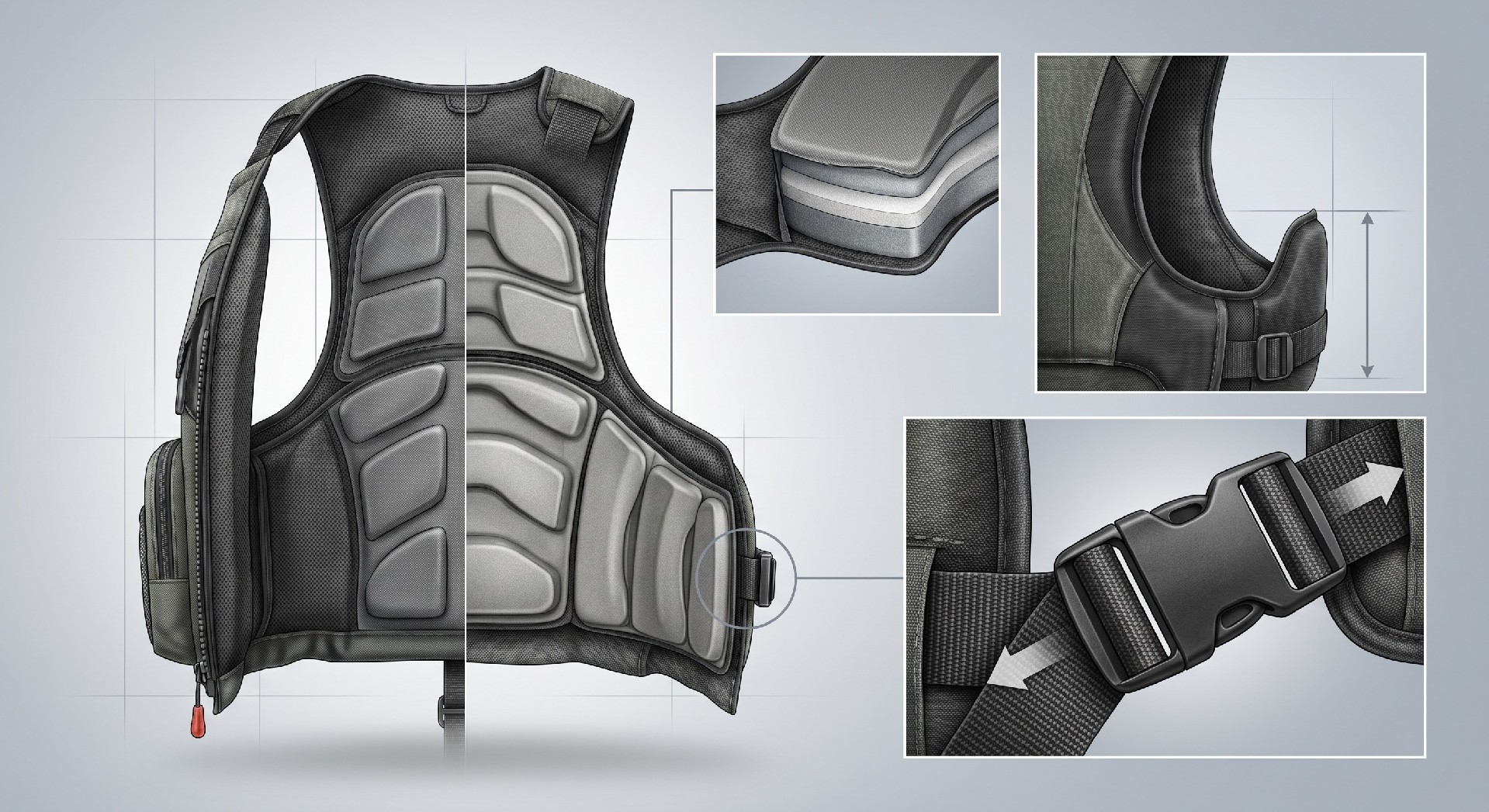
The most significant design consideration for kayak anglers is the back of the vest. A standard PFD has a full back panel of flotation foam. When worn with a typical kayak seat, this foam forces the vest upward, pushing the neckline into the back of the angler's head and causing severe discomfort. A high-back PFD features a low-profile back panel or cutout that sits below the seat back. This allows the angler to sit upright, lean back comfortably, and maintain a natural paddling stroke. For an inflatable kayak, where the seat is often a key structural component, a high-back design is not just a preference; it's a necessity for comfort on multi-hour fishing trips.
Mobility and Cut
Shoulder and Arm Clearance: Look for vests with large armholes or sleeveless designs. This reduces chafing and allows for unrestricted movement when casting overhead or side-arm. This is a commercial decision dimension of paramount importance.
Front Zippers and Buckles: Adjustability is key. Vests with front zippers and multiple side and shoulder adjustments allow for a snug fit that won't ride up. This is critical for safety, as a loose vest can slip off in the water.
Hybrid and Inflatable PFDs: A Viable Option?
The search intent often includes consideration of inflatable PFDs. These are belt packs or suspender-style vests that are very lightweight and comfortable but deploy via a CO2 cartridge when submerged or a manual pull-tab. While highly comfortable, they are generally not recommended for dedicated kayak fishing. An inflatable PFD requires a considerable pull force to activate. In a sudden capsize, a kayak angler may be disoriented and may not have the presence of mind to pull the activation cord. Furthermore, they offer no thermal protection and can be punctured by fishing hooks or other sharp gear in the boat. A Type III foam vest is universally the safer and more practical choice for this application.
| Feature | Angler Vest | Standard Kayak Vest | Inflatable PFD |
|---|---|---|---|
| Back Design | High-back cutout | Full back panel | Low profile |
| Mobility | High armholes, unrestricted casting | Restrictive armholes | Ultra-light, maximum mobility |
| Comfort | Good for 4+ hours | Poor on a kayak seat | Good for paddling, but not for casting |
| Safety for Anglers | Excellent: secure, robust, multiple buoyancy options | Good: may ride up | Poor: risk of accidental puncture, requires activation |
| Best Use Case | Kayak fishing, multi-hour trips | Recreation, boating | Stand-up paddling, sailing |
Compliance, Safety, and Testing Standards
For B2B and commercial buyers, understanding the regulatory landscape is vital. While the US Coast Guard (USCG) approval is a fundamental requirement for PFDs sold in the US, European and other international buyers must look for CE marking and the relevant EN standards. For inflatable PFDs, the relevant standard is often ISO 12402, which specifies performance requirements for lifejackets. It is crucial to distinguish between a material specification (e.g., fabric tear strength) and a finished-product test (e.g., a 24-hour flotation test, or a stability test for an unconscious person in the water). A PFD must be a complete, certified system; its individual materials are only part of the safety equation. The buyer should request a copy of the manufacturer's test report, which should be from an independent, accredited laboratory, verifying compliance with the relevant standard.
Key Compliance Terms
USCG Approval: The PFD has passed tests by the US Coast Guard for buoyancy, performance, and construction. For kayak anglers, a Type III is standard.
CE Marking: Indicates the product meets EU safety, health, and environmental protection requirements. This is a market-access requirement for Europe.
ISO 9001: This is a quality-management system certification for the manufacturer, not a product safety certificate. It indicates the factory has robust processes in place but doesn't guarantee the specific PFD will protect you in the water.
REACH & RoHS: REACH restricts certain harmful chemicals in materials, while RoHS restricts hazardous substances in electrical/electronic components, generally less relevant to a standard foam PFD.
Commercial Considerations for Fleet or Rental Operations
For rental operations or resort buyers, the selection criteria extend beyond individual comfort to fleet economics and lifecycle optimization. The key metric is not just the initial purchase price but the total cost of ownership. A more durable PFD with YKK zippers and robust webbing will withstand dozens of uses by different customers, reducing replacement frequency and rental downtime. A poor choice can lead to customer complaints about fit, which directly impacts your business's reputation and review scores.

Maintenance and Lifecycle
Regular inspection is the most effective way to extend a PFD's service life and reduce downtime. The most expensive failure pattern is typically zipper or buckle failure, not foam degradation. Inspection points should include: zipper operation, webbing fraying, seam integrity, and foam firmness (checking for waterlogging). A PFD that becomes waterlogged is retired immediately. For a fleet, establishing a maintenance reserve (e.g., $2-5 per vest per year) and a clear replacement cycle (e.g., after 3-5 years, or when visual damage is present) is a sound commercial strategy. Implement a simple checklist for your crew to inspect each vest after a customer returns it. If you operate a rental fleet, investing in a spare parts kit of common buckles and zipper pulls can save significant downtime and cost, as you can do repairs in-house instead of waiting on a supplier.
The Final Decision: Which One Is Best?
The best life jacket is the one you will wear comfortably all day. For inflatable kayak anglers, the clear winner is a Type III, high-back, fishing-specific PFD with high armholes, robust 500+ denier nylon construction, and a minimum of 15.5 lbs of buoyancy. Avoid generic, low-back vests that will push up into your head, and avoid inflatable PFDs for this specific use case. The final section of this guide answers the buyer's actual decision: Choose a vest with a front zip and side adjustments for a customizable fit. For commercial buyers or rental fleet operators, prioritize durability and ease of maintenance over the absolute cheapest option. A robust, well-designed vest will reduce customer complaints and replacement costs over its lifecycle, offering a better ROI.
