

Floating Lounge Rings Are Deceptively Simple: Here’s Where They Actually Fail
A floating lounge ring for tanning and reading seems like one of the simplest inflatable products on the market. The decision conflict for a commercial buyer, resort operator, or private-label seller is not about whether it floats—it is about why one ring remains comfortable and stable after 60 days of daily use while another begins to lose air, deform, or develop seam fatigue within the first two weeks. For a product with such low complexity, the cost of a poor choice is disproportionately high: guest disappointment, warranty returns, and a damaged brand reputation over what should be a low-maintenance item.
This guide examines the floating lounge ring from the perspective of material science, seam integrity, and real-world user behavior. We will skip the generic advice about checking for leaks in a bathtub and instead focus on the technical and commercial factors that differentiate a durable ring from a disposable one. For importers, rental operators, and resort buyers, the goal is not simply a ring that floats, but one that resists UV degradation, maintains its shape under thermal cycling, and supports a relaxed, upright reading posture without the user feeling unstable or unsupported.
The Anatomy of a Floating Lounge Ring: More Than an Air Donut
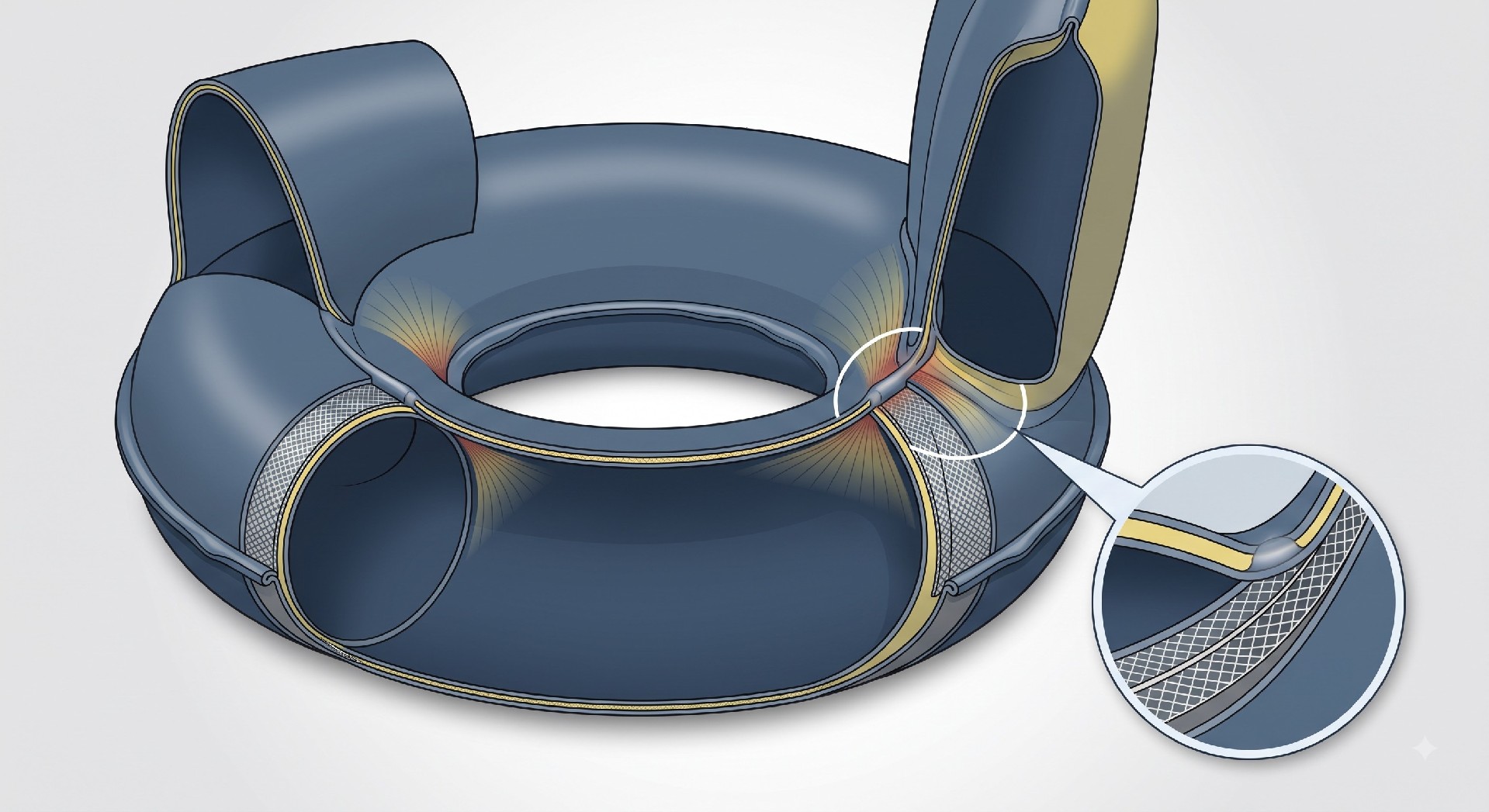
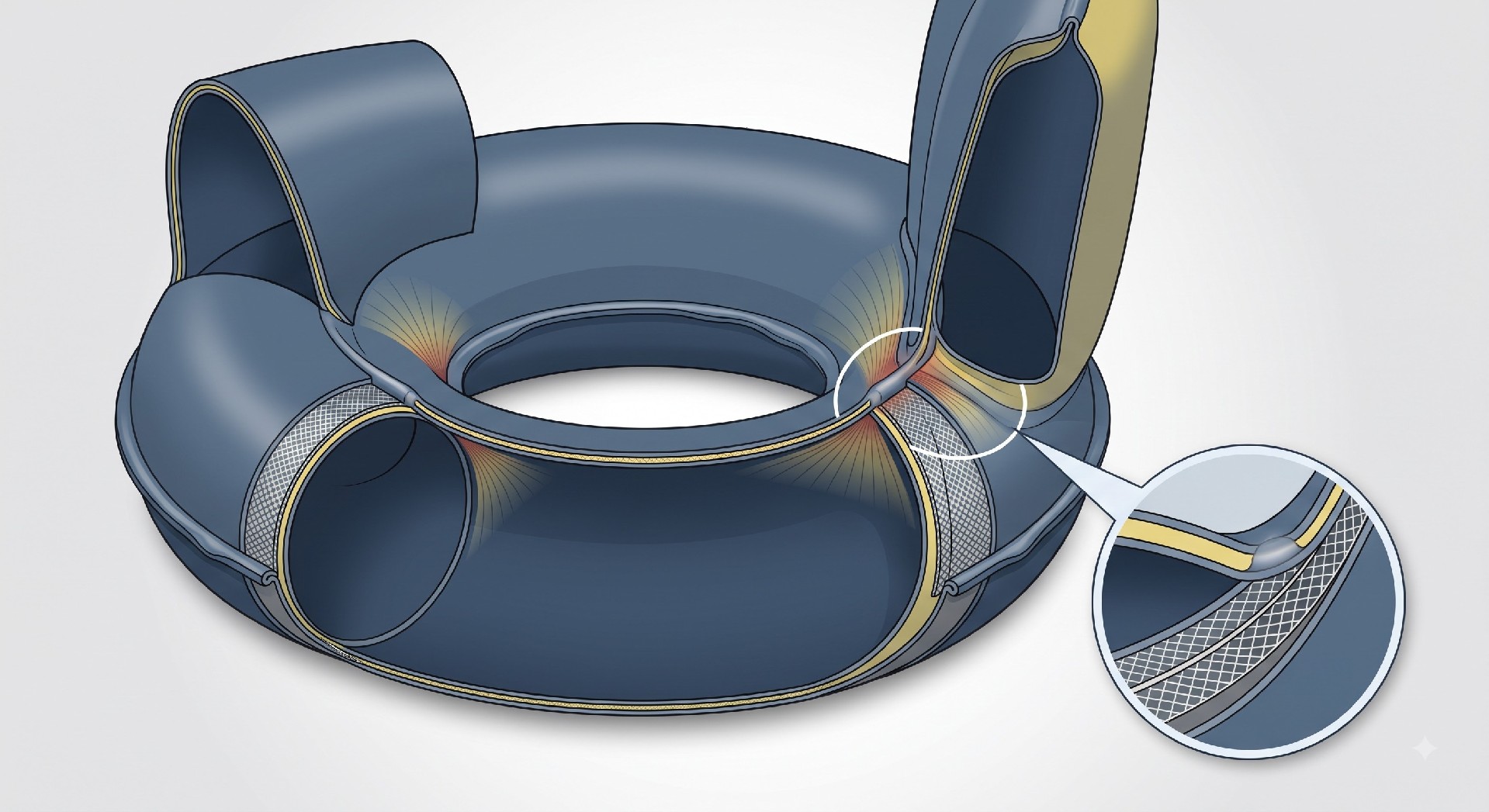
Before diving into material selection, it is helpful to define what a durable floating lounge ring actually comprises. The typical product is a toroidal, or donut-shaped, inflatable with an integrated backrest that is either a separate inflatable chamber or a contoured extension of the main body. This design is critical for its intended use: the ring supports the user's weight while floating on the water, and the backrest allows for a semi-reclined position suitable for reading or tanning.
The primary technical challenge is the product's geometry. Unlike a simple pool ring, the lounge ring features complex curves and a load-bearing backrest. This creates high-stress zones at the junctions between the main tube and the backrest, especially when a user shifts their weight to get in or out of the water. The seams in these areas must be engineered to handle dynamic loads, not just static pressure. A common failure mode is seam separation at these inflection points, which is why the manufacturing technique is a critical commercial decision, not just an afterthought.
Real-World Use & Abuse
A floating lounge ring is rarely used in a controlled environment. It is subject to:
UV Exposure: Prolonged sunlight accelerates polymer degradation, leading to cracking and loss of elasticity.
Thermal Cycling: The air inside heats up during the day, increasing internal pressure, and cools at night, causing contraction. This daily pressure fluctuation stresses the material and seams.
Abrasion: Contact with pool edges, rocks, sand, or other rigid surfaces can wear down the fabric.
Chemical Exposure: Salt water, chlorine, and sunscreen can degrade certain plastics, particularly PVC if it is not formulated for chemical resistance.
When evaluating a supplier, a commercial buyer must verify how the product is designed to withstand these specific conditions. A floating lounge ring that excels in a controlled factory test may fail catastrophically in a marine or resort environment.
Material Science: PVC vs. Other Options
While PVC (Polyvinyl Chloride) is the most common material for consumer-grade floating lounge rings, not all PVC is created equal. The distinction lies in the formulation and the manufacturing process.
For a durable commercial-grade floating lounge ring, buyers should look for a material that is often described as “heavy-duty” or “commercial-grade PVC.” This typically refers to a thicker gauge material with a weight between 0.25mm and 0.40mm. This thickness is crucial not only for puncture resistance but also for structural rigidity. A thinner ring will deform and crumple under the weight of an adult, making it uncomfortable and unstable, which defeats the purpose for tanning and reading.
However, material thickness is just one part of the equation. The coating and laminate structure are equally important. A high-quality floating lounge ring will use a material with a UV-resistant topcoat and a non-slip texture on the top surface to prevent the user from sliding off. Some premium products even use a fabric-backed PVC, where a layer of polyester mesh is laminated to the PVC. This adds tensile strength and helps the ring maintain its shape under load without becoming a rigid, uncomfortable mass.
Alternative Materials: TPU and Hypalon
While PVC is the industry standard for cost-sensitive commercial applications, some specialized or premium floating lounge rings use TPU (Thermoplastic Polyurethane) or Hypalon (CSM - Chlorosulfonated Polyethylene). TPU offers excellent abrasion resistance and is more environmentally friendly to produce, but it is significantly more expensive. Hypalon is known for its exceptional UV and chemical resistance and is often used in high-end military or whitewater applications, but it requires a solvent-based adhesive for welding, making it less common in standard leisure products. For most commercial operations, including resorts and rental fleets, a well-specified PVC ring offers the best balance of cost, durability, and performance.
Seam Construction: The Critical Failure Point
For an inflatable product like this, the seam is the most vulnerable part of the structure. There are several ways to construct seams, and the chosen method directly dictates the product's durability.
The gold standard for a durable floating lounge ring is high-frequency (RF) welding. This process uses radio waves to generate heat and fuse the PVC material at a molecular level, creating a bond that is often stronger than the surrounding material. When done correctly, RF welding creates a seamless joint that is airtight and resistant to delamination.
In contrast, the lowest-quality method is adhesive bonding or using a simple heat seal. These methods are cheaper but significantly weaker. Over time, the adhesives can degrade from UV exposure and temperature changes, causing the seams to peel apart. A commercial buyer should specifically ask the supplier for their seam technology and should request sample cross-sections or destructive test results as part of the supplier audit process.
| Seam Construction Method | Durability & Performance | Commercial Suitability | Red Flags |
|---|---|---|---|
| High-Frequency (RF) Welding | Fused at the molecular level; creates a bond stronger than the base material; excellent air retention. | Ideal for commercial, resort, and rental applications. | Absence of mention in the product spec sheet. |
| Heat Sealing | Similar to RF welding but less consistent; can create weak spots if the temperature or pressure varies. | Acceptable for low-use consumer products; not recommended for commercial fleets. | Inconsistent seal width along the seam. |
| Adhesive Bonding | The glue or solvent degrades over time, especially with UV exposure and flexing; poor air retention. | Not recommended for any product expected to last beyond one season. | Visible glue residue; the product smells strongly of chemicals; evidence of peeling at the seam edge. |
| Hybrid or Reinforced Seam | RF welding with additional hot-melt tape applied over the joint; offers the highest level of protection. | Used for premium products where maximum durability is a key selling point; can extend the useful life significantly. | Increases cost; may not be necessary for all applications but is a sign of a premium product if found. |
Commercial Specifications and Your Buyer Checklist
When you move from general interest to commercial procurement, the questions become more precise. Here are the key specifications to target and verify, along with a buyer checklist to use during your evaluation.
Pressure Retention and Valve Design
A common assumption is that a “high PSI” rating is always better. For a floating lounge ring, which is typically a low-pressure product operating between 2 and 5 PSI, the relevant metric is pressure retention. The valve must maintain this pressure over a minimum period. A simple Boston or pinch valve with a dual-chamber design (an inner one-way valve and an outer cap) is typically sufficient. The real test is how long the ring holds its shape after inflation. A durable ring should not require daily re-inflation.
Commercial Buying Checklist
Material Thickness: Verify the specified gauge (e.g., 0.30mm) and request material spec sheets to confirm the specific type of PVC.
Seam Type: Confirm that the product uses high-frequency welding, not adhesive bonding, especially at stress points.
UV Resistance: Ask if the PVC includes a UV inhibitor in the formulation. A clear yes, with test data to back it up, is a strong signal of a durable product.
Backrest Stability: Does the backrest hold the user at a comfortable angle? Does it stay inflated or require frequent re-inflation?
Sample Evaluation: Test an actual sample. Inflate it, sit in it, and leave it inflated for 24 hours to check for pressure loss.
Making the Decision: The Value of a Durable Ring
Choosing a floating lounge ring for tanning and reading is ultimately a choice about the guest or user experience. A cheap, thin ring that requires constant re-inflation or falls apart is a liability, not a product. The time and cost of handling returns, complaints, and negative online reviews will quickly outweigh the initial savings on a cheaper unit.
For rental fleets, a durable ring pays for itself quickly. A high-quality ring might cost 50% more upfront but can last 3-4 seasons, whereas a cheap ring might last a single season before becoming unusable. The cost of replacing the entire fleet each season is a significant financial drain that is easily avoided.
For resorts and hotels, the guest experience is paramount. A guest relaxing on a well-designed, stable ring in the pool is a satisfied guest who is likely to return. A guest who is frustrated by a ring that keeps deflating or tips over has a negative association with your brand.
For the end-user researching a commercial purchase, your selection criteria should prioritize long-term value over short-term cost. This means verifying the material, insisting on RF-welded seams, and carefully evaluating a production sample before placing a bulk order. By applying this technical and commercial lens, you will ensure that your floating lounge ring delivers on its promise of relaxation and durability.
