

Introduction: The Billion-Dollar Problem of Thermal Inefficiency
For B2B procurement specialists and outdoor equipment manufacturers, the performance metric that truly defines a sleeping bag's commercial success is not its packed size or weight, but its thermal efficiency. Cold air leakage is the primary culprit behind customer dissatisfaction, negative reviews, and ultimately, a dent in your brand's ROI. This comprehensive guide provides a deep technical analysis of how to engineer and source sleeping bags that excel in heat retention, focusing on the critical intersection of material science, seam engineering, and advanced design features.
Thermodynamics of Sleep: Understanding Heat Loss in Camping Environments
To effectively prevent cold air ingress, it is essential to understand the physics of heat loss. The human body constantly generates heat, which seeks equilibrium with the colder ambient air. This heat is lost through several mechanisms: conduction (direct contact with the cold ground), convection (air movement across the skin), and radiation (heat emission into the environment). As one analysis points out, the cold ground can drain up to 50% of body heat through conduction alone.
Combatting Conduction with Insulation Layers
Conduction is addressed by the insulation under the sleeper, often a combination of the sleeping bag's base and a high-R-value sleeping pad. R-value measures thermal resistance; a pad with an R-value of 3-4 is suitable for three-season camping, while winter camping demands an R-value exceeding 4.5 to prevent body heat from being pulled into the frozen ground.
Mitigating Convection through Bag Design
Convection is the primary source of cold air leakage. Cold drafts enter through unsealed seams, poorly designed zippers, and loose-fitting hoods. The efficacy of a bag is determined by its ability to trap warm air against the body and prevent it from being displaced by cold air. This is where material selection and construction standards are paramount.
Material Deep Dive: Shell, Lining, and Insulation Synergy
The selection of shell and lining fabrics is the first line of defense against cold air ingress and moisture.
The Outer Shell: A Barrier Against the Elements
Shell fabrics must be durable, wind-resistant, and water-repellent. The denier of the fabric—a measure of thread density—directly correlates to its durability and resistance to tearing and abrasion. A standard high-quality shell might feature a 190T polyester fabric, known for its tear resistance. For more demanding applications, a 210T polyester shell with a water-repellent coating provides enhanced protection against light rain and dew, ensuring that the insulation stays dry and effective.
Internal Linings: Comfort and Moisture Management
The inner lining must wick moisture away from the body while feeling comfortable against the skin. A 190T brushed polyester microfibre lining is a common choice, providing a soft touch while wicking sweat to prevent the chilling effect of dampness. For high-comfort applications, a 100% cotton flannel lining offers luxurious warmth and softness, though it may require more careful drying management.
The Core Insulation: Trapping Thermal Energy
The insulation is the heart of the sleeping bag. Synthetic fibers, such as polyester loose fiber fill, trap warm air due to their high loft and cross-sectional structure. This material maintains insulating properties even when damp, offering superior reliability in humid or wet conditions compared to natural down. The insulation must be evenly distributed to prevent cold spots, a key consideration in manufacturing.
Engineering Against Cold Air: Seam Technology and Construction
This is the core of cold-air prevention. Air will always find the path of least resistance, making seam integrity and construction methodology critical.
Structural Seam Types
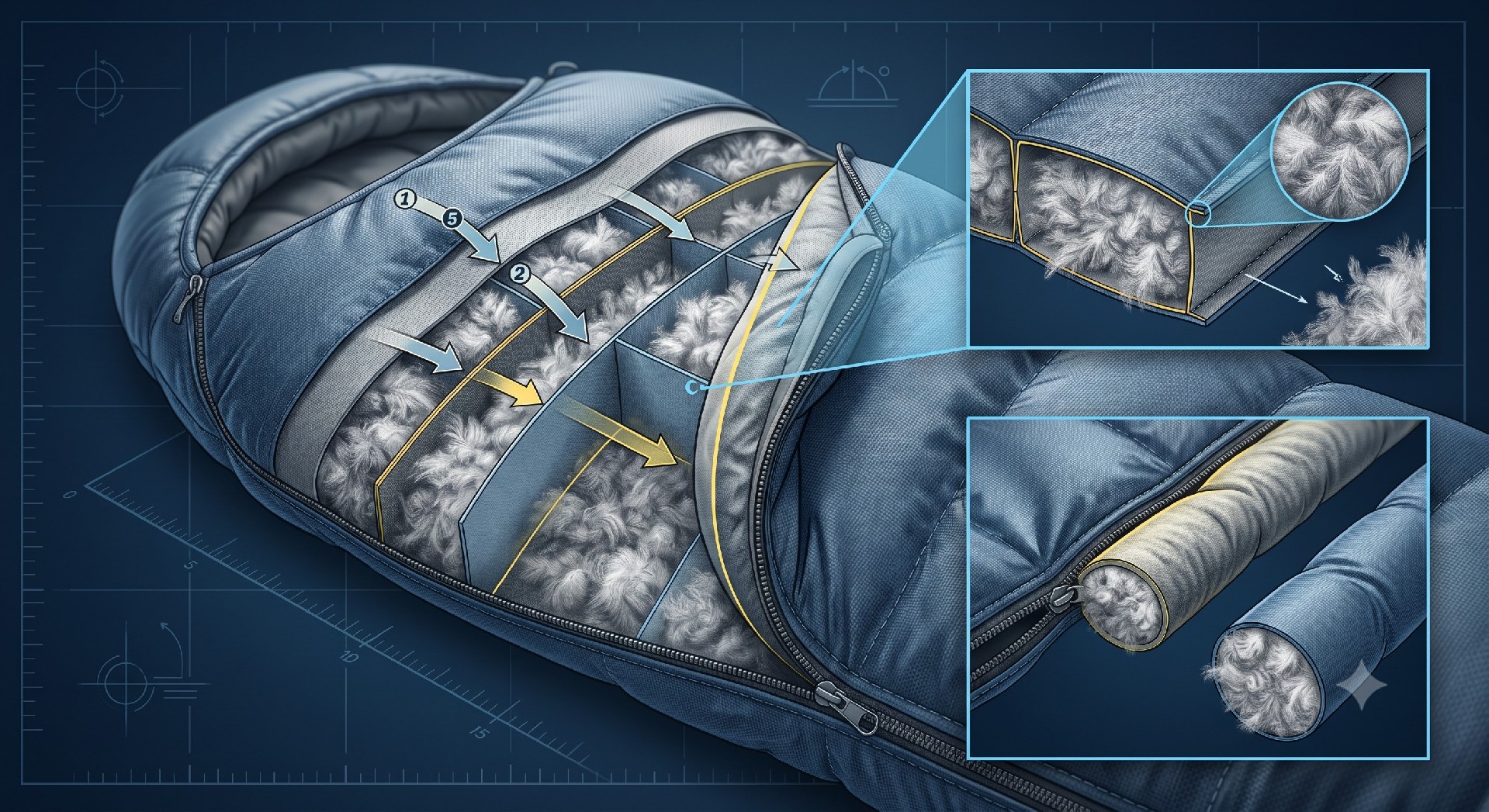
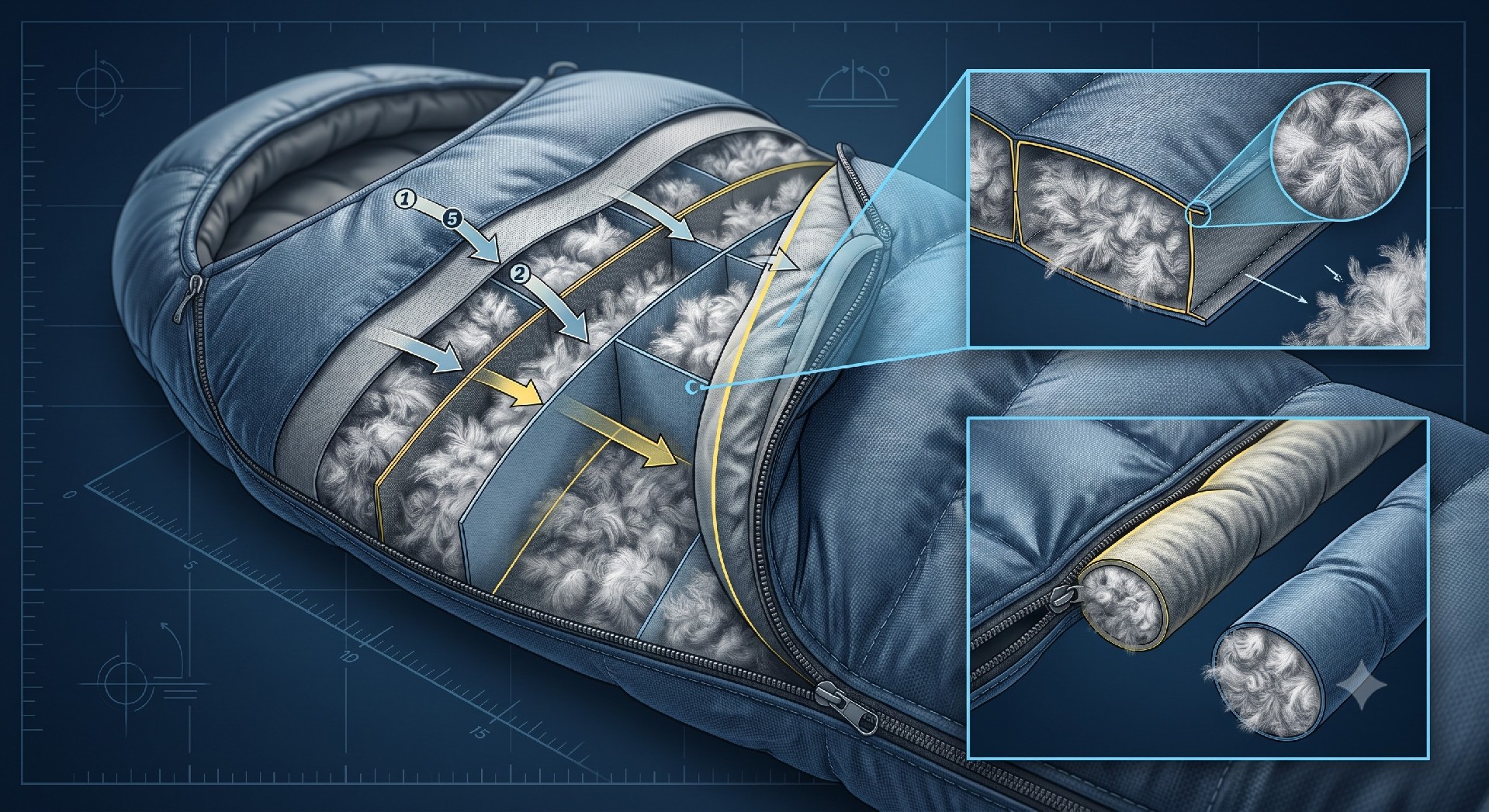
Box Wall Construction: Considered the gold standard, this method uses internal baffles to keep the shell and lining separate. This prevents the stitching from penetrating both layers, eliminating conductive cold spots and allowing the insulation to fully loft within the box[9].
Double Layer Construction: Layering insulation provides redundant thermal protection, ensuring that even if one layer shifts, the other maintains a warm barrier.
Parallel Quilting: This construction method prevents the fill from shifting and clumping, ensuring consistent warmth across the entire bag and eliminating cold spots from material migration.
Technical Zipper Design
The zipper is often the weakest point in a sleeping bag's thermal envelope. Manufacturers implement several crucial features to counter this:
Insulated Zip Baffles (Draft Tubes): A hollow tube filled with insulation runs behind the zipper. This acts as a mechanical barrier and dead air space, preventing cold air from seeping through the zipper teeth.
Auto-Lock Two-Way Zippers: These allow for independent top or bottom ventilation control and prevent the zipper from sliding open during the night, which would create a significant draft.
Zip Guards: These prevent the zipper from snagging on the lining, ensuring smooth operation and avoiding fabric damage that could lead to structural failure.
Technical Performance Specifications & Industry Compliance
To ensure repeatable, credible performance, sleeping bags should be tested to international standards.
| Key Technical Parameter | Industrial Specification | Commercial Impact |
|---|---|---|
| Material Thickness (Shell) | 190T - 210T Polyester / Nylon | Abrasion Resistance & Fabric Tear Strength |
| Insulation Type | Synthetic (e.g., 400g/m² Polyester Loose Fiber) | Warmth-to-Weight Ratio & Damp-Weather Reliability |
| Construction Method | Double-Layer / Box Wall / Parallel Quilting | Eliminates Cold Spots & Ensures Consistent Thermal Performance |
| Temperature Rating | EN ISO 23537-1:2022 Compliant (Comfort / Limit / Extreme) | Ensures Accurate, Standardized, & Verified Performance Data |
| Air Blocking Features | Insulated Zip Baffle, Auto-Lock Zipper, Zip Guard | Prevents Cold Air Ingestion & Enhances Consumer Trust |
Compliance with standards such as EN ISO 23537-1:2022 assures buyers that temperature ratings are not marketing guesswork but are based on standardized, scientific testing. These tests calculate Comfort, Lower Limit, and Extreme temperature ratings, providing objective data for both procurement and end-user selection.
Commercial Application Scenarios and B2B Sourcing Strategy
For B2B sourcing, the choice of design and material should align with the end-user's environment.
High-Volume Rental Fleets
Durability, ease of cleaning, and cost-effectiveness are paramount. Bags must feature robust shells, synthetic insulation that is easy to wash, and long-lasting zippers that can withstand heavy use. A focus on Total Cost of Ownership (TCO) is critical. Products like the Vango Stellar Single Sleeping Bag offer a good balance of these features for three-season use.
Premium Glamping & Resort Experiences
For glamping, the focus shifts to luxury, comfort, and aesthetics. Using bags with high-quality cotton flannel linings and premium synthetic fills ensures an upscale guest experience. The ability to zip bags together to create double-width sleeping arrangements, as seen with models like the KingCamp SNOWFLAKE 400+, can also be a valuable value-add for couples and families.
Conclusion: Sourcing for Success
Preventing cold air leakage is not a singular feature but a culmination of strategic design choices. B2B buyers must prioritize bags with box-wall or parallel-stitched construction, insulated zipper baffles, high-denier water-repellent shells, and verified compliance with EN ISO or similar international standards. By moving beyond superficial fabric descriptions and evaluating the engineering behind the bag, procurement specialists can source products that deliver superior thermal performance, ensuring high customer satisfaction, repeat business, and a strong commercial ROI in the competitive outdoor equipment market.
