

Introduction: The Commercial Cost of a Cold Night
For B2B buyers, outfitters, and procurement specialists, the decision of which sleeping bag to stock or rent is not merely about comfort—it is a direct calculation of customer satisfaction, equipment longevity, and return on investment (ROI). A guest who shivers through the night is unlikely to return, and a fleet of bags that fails to meet ISO standards represents a significant liability. The core of this challenge lies in understanding sleeping bag ratings. This guide moves beyond the marketing hype to provide a technical, data-driven analysis of temperature ratings, materials, and the commercial implications of your sourcing decisions. We will dissect the standards that matter, the materials that perform, and the strategies that maximize profitability in the B2B outdoor equipment sector.
Decoding the Standards: EN and ISO Temperature Ratings
The foundation of any credible sleeping bag rating is a standardized testing protocol. Prior to 2005, the market was fragmented, making comparisons difficult. The introduction of the European standard EN 13537, later superseded by the global ISO 23537 standard, provided a scientific and repeatable methodology for measuring thermal performance . Understanding these standards is non-negotiable for a professional buyer.
The ISO 23537 Testing Protocol
The ISO test involves a heated manikin, fitted with 15 temperature sensors, dressed in a base layer, socks, and a hat. This manikin is placed inside the sleeping bag on a standard foam mat within a climate-controlled chamber . As the ambient temperature drops, the energy required to maintain the manikin's surface temperature is measured. This data yields three critical metrics, each with specific commercial applications.
Comfort Rating: This is the lowest temperature at which a 'standard woman' (assumed to sleep colder) can sleep comfortably in a relaxed posture . For high-end glamping or rental operations where guest satisfaction is paramount, this is the most crucial figure.
Lower Limit Rating: This is the lowest temperature at which a 'standard man' can sleep for eight hours in a curled-up position without waking . This is the metric often cited in marketing, but it is more of a 'survival' threshold than a 'comfort' threshold.
Extreme Rating: This is a survival rating only. It indicates the temperature at which a standard woman can remain for six hours without risk of hypothermia. This is not a comfort guide and should never be used as a specification for commercial rentals or sales; it represents a serious risk of health damage .
B2B Implications of the Standards
For a procurement manager, these distinctions are critical. Selecting a bag based on its Lower Limit rating for a family camping rental will inevitably result in cold, unhappy customers. A bag rated with a Comfort temperature of +5°C and a Limit of 0°C is a summer bag. For 3-season use in the UK or Northern Europe, a bag with a Comfort rating of -5°C to 0°C is required to account for altitude and wind chill .
Material Science: The Engine of Thermal Efficiency
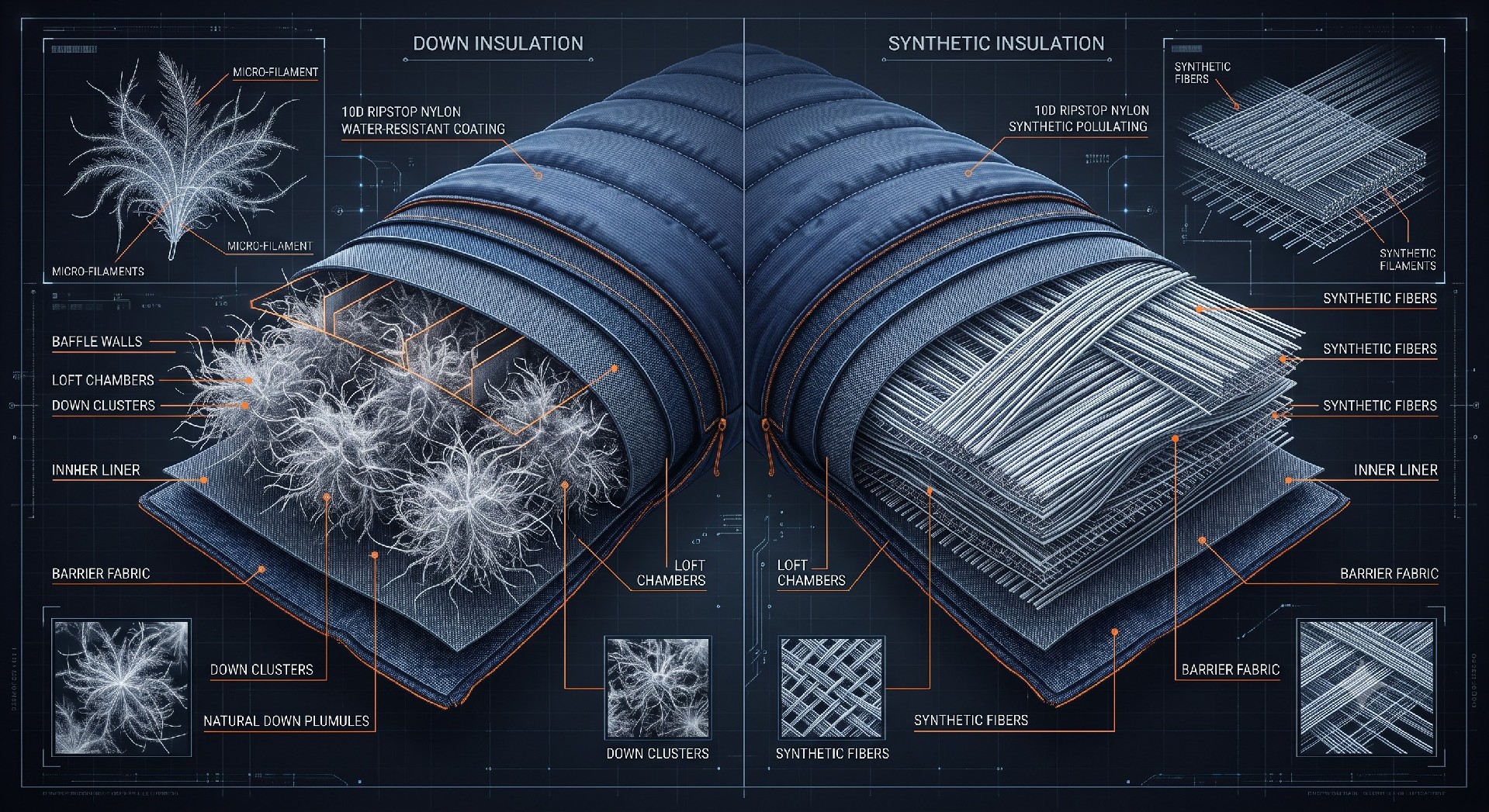
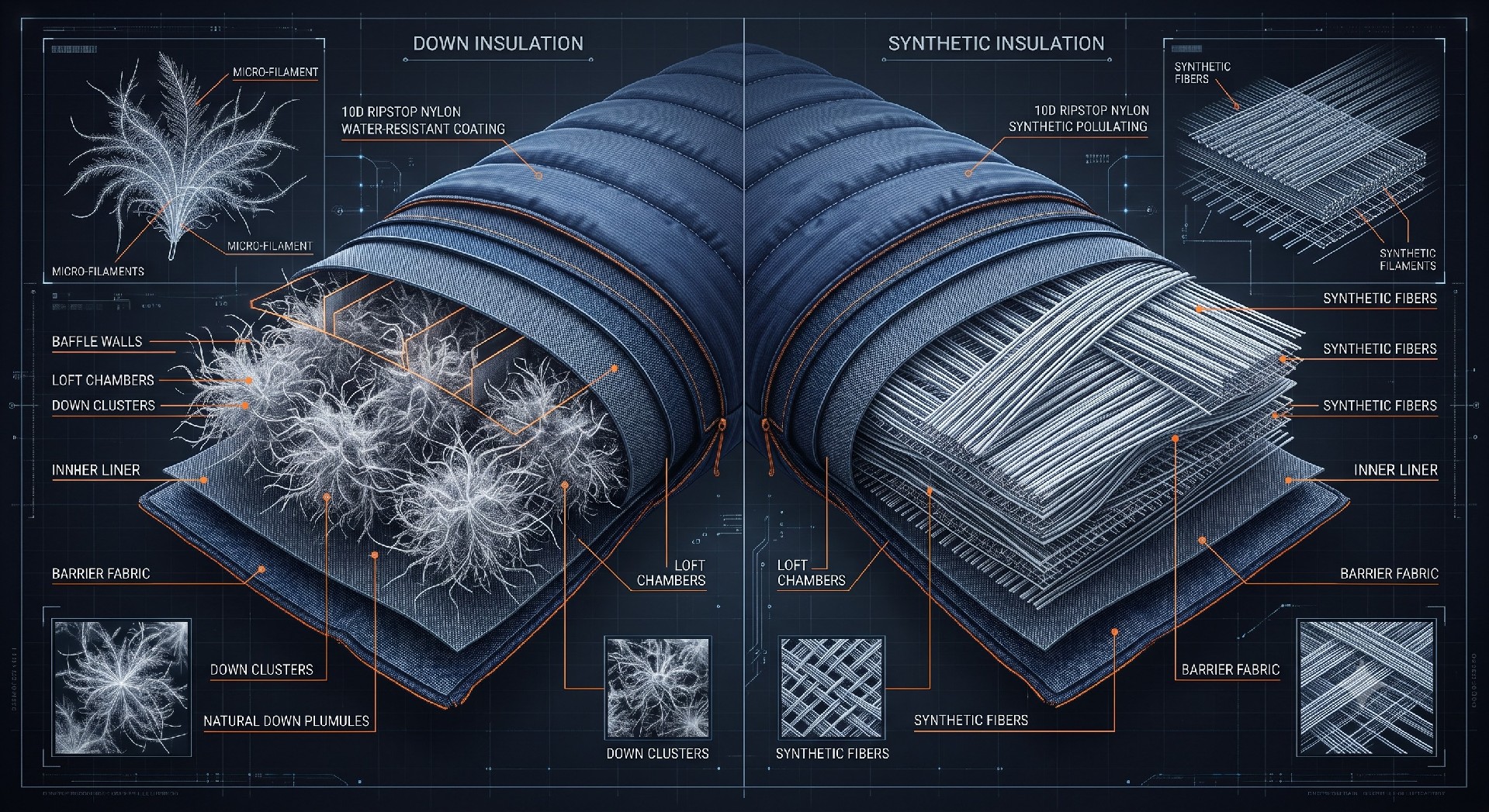
Once the temperature rating is understood, the next variable is the material composition. The choice between down insulation and synthetic insulation is a fundamental decision with profound implications for cost, performance, and logistics.
Down Insulation: The Warmth-to-Weight Champion
Down is prized for its exceptional warmth-to-weight ratio, compressibility, and durability . For expedition-grade or high-end backpacking gear, down is the industry standard. However, its performance degrades catastrophically when wet, as the loft collapses and it loses its insulating properties. For commercial rentals in humid or wet environments (e.g., river trips, coastal camping), this is a significant risk .
Synthetic Insulation: The All-Weather Workhorse
Synthetic fills, such as the 100% recycled Stratofiber or TechLoft, are engineered to provide reliable warmth even when damp . They are also generally more cost-effective, easier to clean, and more durable in high-use rental scenarios. The key trade-off is bulk and weight; a synthetic bag offering the same warmth as a down bag will be significantly heavier and larger when packed . For car-camping or resort-based glamping operations where weight is less of a concern, synthetic insulation is often the superior economic choice.
Shell and Lining Fabrics
The fabric denier count dictates durability. A 50-denier recycled polyester ripstop shell with a DWR (Durable Water Repellent) coating offers a good balance of weight and abrasion resistance for standard use . For high-traffic rental fleets, a thicker 70D or 1100D fabric may be required to withstand repeated packing, unpacking, and laundering.
| Parameter | Down Insulation | Synthetic Insulation |
|---|---|---|
| Warmth-to-Weight | Exceptional (High) | |
| Performance When Wet | Poor (Loses Loft) | |
| Compressibility | High | |
| Durability/Cleaning | Requires Professional Care | |
| Cost (B2B Scale) | High | |
| Best Use Case | Expeditions, Lightweight Backpacking | |
| Performance When Wet | Good (Retains Insulation) | |
| Compressibility | Moderate | |
| Durability/Cleaning | High, Machine Washable | |
| Cost (B2B Scale) | Moderate | |
| Best Use Case | Rentals, Glamping, Car Camping |
Commercial Applications: Matching Specs to Use Cases
The final step in the B2B buying decision is aligning the technical specifications with the intended commercial application. A one-size-fits-all approach will not maximize ROI.
Scenario 1: Glamping and Resort Operations
For premium glamping resorts, guest comfort is the primary metric. The selection should prioritize bags with a high Comfort Rating, generous dimensions (rectangular or spoon shapes for spaciousness), and high-quality materials. Here, the aesthetic of the gear and the comfort features (pillow sleeves, draft collars) are as important as the technical specs. Investing in a durable synthetic bag with a robust warranty is a sound strategy .
Scenario 2: High-Throughput Rental Fleets
Rental operations need gear that withstands abuse. Synthetic insulation is generally preferred for its resilience in damp conditions and ease of cleaning . Focus on bags with a Limit Rating that is at least 5°C lower than the expected minimum temperature to provide a buffer for variable conditions . The total cost of ownership (TCO) includes not just the purchase price but the cost of cleaning, maintenance, and replacement. A bag with a slightly higher upfront cost but superior durability will have a lower TCO.
Scenario 3: Specialty Expeditions
For technical expeditions where weight and packability are critical, premium down bags with a high fill power (e.g., 800+ fill) are the standard. These bags are a significant investment but offer the highest performance. The procurement decision here is typically driven by technical requirements rather than cost.
Conclusion: A Strategic Approach to Procurement
Understanding sleeping bag ratings is not merely an exercise in reading labels; it is a strategic business function. The distinction between Comfort, Limit, and Extreme ratings is the difference between a repeat customer and a negative review. The choice between synthetic and down is a calculation of cost, weight, and operational conditions.
For B2B buyers, the key takeaway is to purchase based on the ISO/EN Comfort Rating for premium guest experiences, and to use the Limit Rating as a safety margin for operational planning. Always verify that the manufacturer provides certified test results, and consider the total cost of ownership, which includes maintenance and replacement costs, alongside the initial purchase price. In the competitive world of outdoor equipment, informed procurement is the cornerstone of profitability and reputation.
