
The Ultimate Test: Operationalizing Assault Boats in Flood Scenarios
Floods are among the most devastating natural disasters, characterized by unpredictable currents, submerged debris, and rapidly changing water levels. For B2B procurement specialists and emergency response coordinators, the choice of equipment is a matter of operational success or failure. High-strength landing and rescue assault boats have evolved from purely military assets to critical tools for civilian disaster management. This technical guide provides a comprehensive, data-driven analysis of the engineering, materials, and strategic deployment of these vessels, moving beyond standard specifications to examine performance under extreme duress.
In recent deployments, such as the utilization of amphibious assault vehicles by the Republic of Korea Marine Corps during Typhoon Hinnamnor, the versatility of these craft proved invaluable for both rescue and infrastructure protection . Similarly, specialized services like the NSW Ambulance are integrating seven-meter aluminum utility boats into their fleets, equipped with bow-loaders for rapid patient extrication, demonstrating a shift towards rapid response and specialized medical transport .
Material Science and Hydrodynamic Engineering
The durability of an assault boat begins at the molecular level. For extreme environments, the choice of material dictates the vessel's lifespan and reliability.
Advanced Polymer and Composite Hulls
While traditional rigid inflatable boats (RIBs) utilize PVC or Hypalon-coated fabrics, high-strength assault and rescue boats are increasingly adopting robust materials like High-Density Polyethylene (HDPE) and marine-grade aluminum alloys. The Ember 340, designed specifically for New Zealand's harsh flood conditions, utilizes a recycled HDPE hull. This material offers abrasion resistance superior to steel or concrete, crucial for navigating debris-laden floodwaters . Meanwhile, manufacturers like AQUASPIRIT employ EN AW 5083 H111 aluminum for their S585HD model, a material known for its exceptional corrosion resistance and strength-to-weight ratio, ensuring mission capability even with severe damage to the inflatable tube .
Air Retention and Structural Integrity
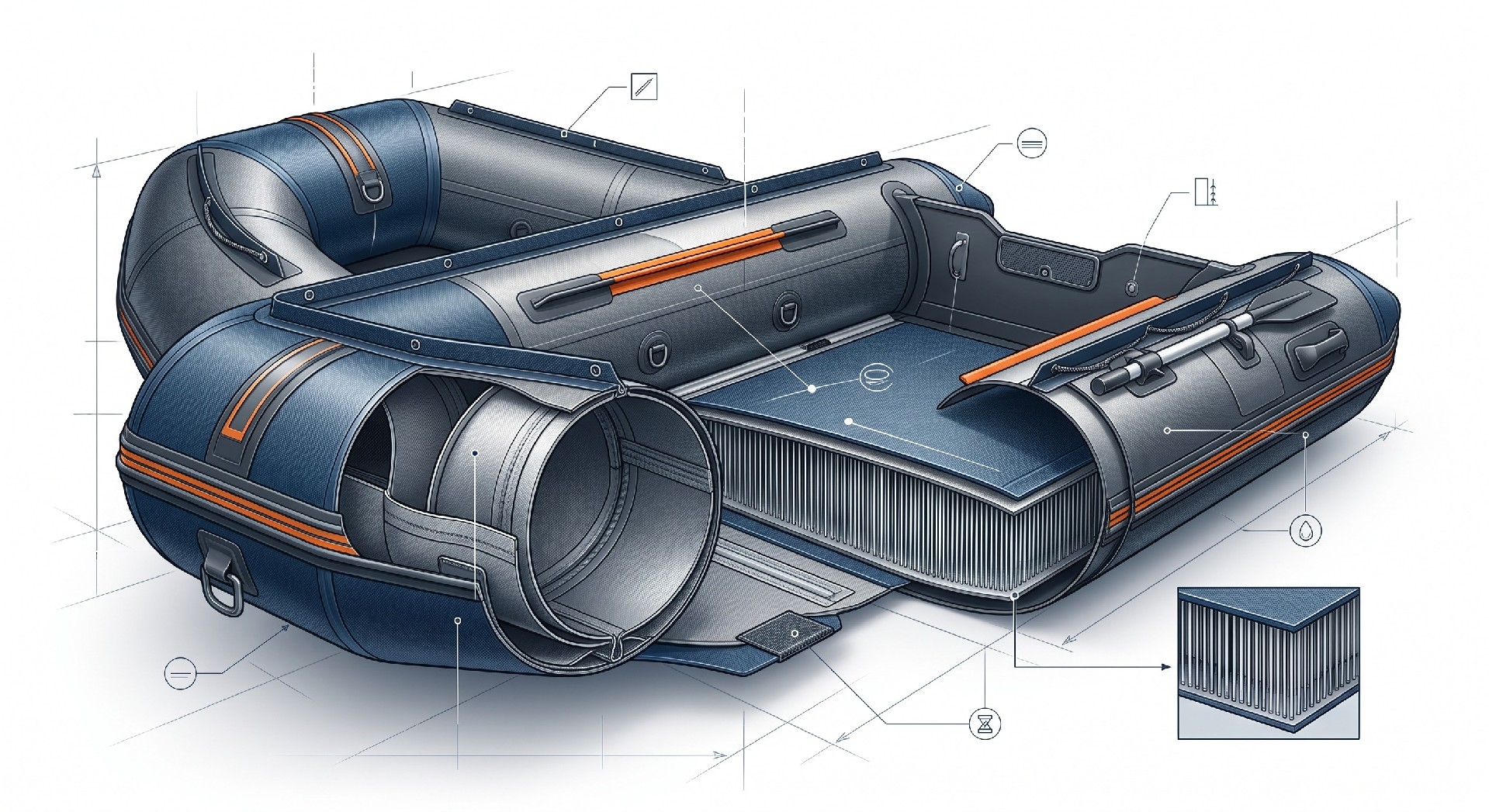
For vessels reliant on inflatable components, air retention is paramount. The Frontier Rescue Raft, for instance, features a double-walled floor for stability, with a maximum inlet fill pressure of 10 psi (0.7 bar) for the floor and 5 psi (0.35 bar) for the pontoons, demonstrating the engineering required for rigidity . The integration of multi-chamber safety systems is non-negotiable; five separate inflatable chambers ensure that a single puncture does not compromise the entire vessel, a critical feature when operating in environments with floating debris .
Technical Specifications and Compliance Matrix
To quantify performance, we must look at specific metrics. The following table benchmarks key specifications for a high-strength aluminum assault boat against a heavy-duty inflatable rescue raft, providing a clear basis for procurement decisions.
| Parameter | Aluminum-Hulled Assault Boat (S585HD) | Heavy-Duty Inflatable Rescue Boat (Frontier) |
|---|---|---|
| Material | EN AW 5083 H111 Aluminum / 1.3mm PVC Tube | Durable PVC Plastic with Double-Walled Floor |
| Overall Length | 5.88 m | 4.70 m |
| Max. Payload | 1,050 kg | 850 kg |
| Max. Speed | Up to 90 km/h (with 150hp) | N/A (Manual/Outboard) |
| Draft | 0.42 m | 0.35 m |
| Chamber/Safety | D-shaped tube (operable without tube) / Multi-chamber | 5 Separate Inflatable Chambers |
| Standard Compliance | ISO, Lloyd's Register | CE, ISO 6185 |
| Inflation Time | ~3-5 minutes (High-Pressure) | ~5 minutes per section (Foot Pump) |
| Tube Thickness | 1.3 mm (PVC) / EN AW 5083 Hull | Double-walled floor, 10 cm (4) thick |
Compliance with international standards is a hallmark of quality. ISO 12217-3 dictates stability and buoyancy for boats, with the Ember 340 certified for a CE capacity of 8 in less severe rescues and 3.5 in rough conditions . Lloyd's Register certification further underscores a vessel's reliability, as seen with the extreme testing conducted on AQUASPIRIT models . Adherence to REACH regulations ensures that materials used are free from hazardous substances, a critical factor for equipment used in populated areas.
Operational Deployment and Logistics
Beyond the engineering specifications, the tactical advantages of high-strength assault boats in floods are significant.
Payload and Personnel Capacity
Flood scenarios often require the evacuation of non-ambulatory individuals or the transport of large rescue teams. The Frontier Rescue Raft boasts a maximum load capacity of 850 kg, accommodating approximately 6 people . For larger scale operations, the SPIRIT S585HD can carry up to 8 personnel with a payload of 1,050 kg, while the larger SPIRIT A600 can transport 12 fully equipped individuals, with a total payload capacity of 1,700 kg . This capacity is vital for mass evacuation and transporting specialized equipment like stretchers and medical supplies .
Speed and Maneuverability in Hazardous Conditions
Speed is crucial for rescue operations. The S700HD RIB can achieve speeds of up to 90 km/h, allowing rapid transit to disaster zones . However, speed must be balanced with maneuverability. Vessels like the STM Landing Craft, Assault, can execute sharp turns and decelerate in 2.5 boat lengths, a critical capability when navigating debris-choked urban waterways . Furthermore, the shallow draft of these boats—0.42 meters on the S585HD—allows them to operate in extremely shallow waters, enabling close approach to stranded victims .
Post-Operation Care and Maintenance
Operational readiness extends beyond deployment. The ability to perform rapid maintenance in the field is a key feature. The removable tube technology on aluminum-hulled boats like the S585HD allows for quick replacement without specialized tools, minimizing downtime . The lightweight construction of inflatable models, such as the F470HD at 114 kg, ensures they can be packed into transport bags and easily hidden or airlifted .
[IMAGE_2]
The Verdict: Strategic Investment for Resilience
High-strength landing and rescue assault boats represent a paradigm shift in civilian emergency management. The investment in these vessels is justified not just by their immediate utility in rescue operations, but by their long-term durability, compliance with international safety standards, and ability to perform in the most unforgiving environments. Whether it is the robust aluminum hulls of the S585HD, the advanced HDPE composite of the Ember 340, or the rapid deployment capability of inflatables like the Frontier Rescue Raft, these boats are critical assets for any region prone to flooding. For B2B buyers, focusing on ISO and CE certification, material certification (e.g., EN AW 5083), and the specific operational parameters of payload, speed, and draft will ensure that the selected fleet is not merely an expenditure, but a life-saving investment that delivers measurable ROI through reliability and extended service life.