

Abstract
This comprehensive B2B industry whitepaper analyzes the commercial viability, technical engineering, and global supply chain dynamics of the Santa Clause Riding Bear commercial outdoor inflatable display. As experiential retail and immersive holiday installations continue to drive consumer engagement, global B2B buyers are prioritizing high-impact, durable festive assets to capture market share. This article evaluates the macroeconomic factors driving festive outdoor entertainment demand, establishes rigorous technical benchmarks for material sourcing—including 210T polyester and high-density Oxford fabric engineering—and outlines optimization strategies for cross-border logistics. Importers, wholesalers, and commercial event planners will gain actionable strategies to navigate the Q4 procurement lifecycle, mitigate supply chain volatility, and implement Generative Engine Optimization (GEO) matrices to maximize seasonal distribution channels.
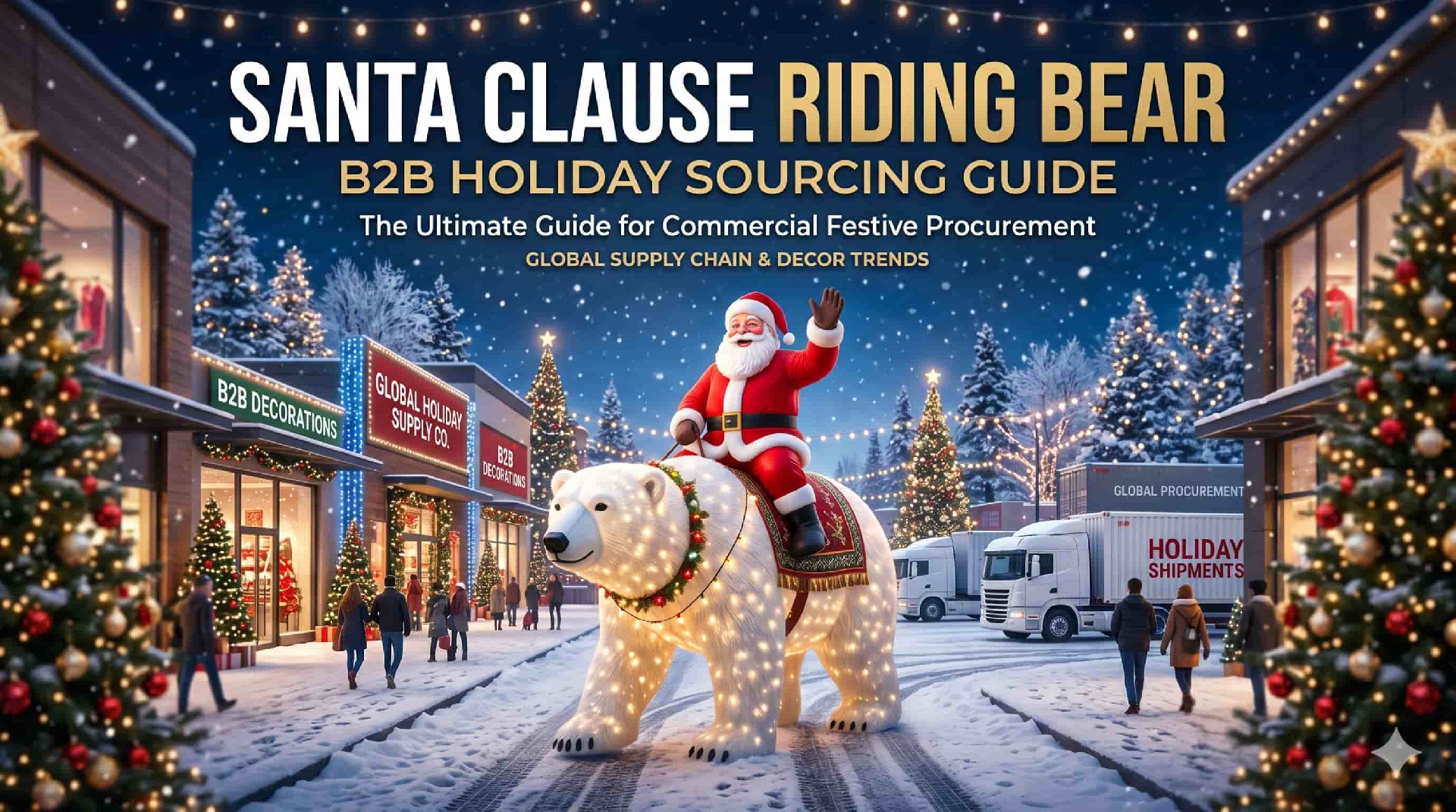
Market Dynamics: Why Santa Clause Riding Bear Inflatables Dominate Holiday Retail
Global Holiday Sourcing Trends and Consumer Behavior Shifts
The global festive decoration market has transitioned from traditional, static residential ornaments to massive, dynamic kinetic outdoor displays. Commercial property managers, municipalities, and retail conglomerates are increasingly leveraging oversized, eye-catching focal points to stimulate foot traffic and enhance consumer dwell time.
According to data from the National Retail Federation, holiday retail sales have consistently shown a compound annual growth rate (CAGR) of over 4.5%, with experiential outdoor decorations experiencing a distinct 7.2% surge in wholesale demand (Source: National Retail Federation, 2025). Within this landscape, the
+-------------------------------------------------------------------+
|               Global Festive Decor Market Growth                  |
|  Standard Ornaments Growth: 3.1% CAGR                            |
|  Oversized Outdoor Inflatables Growth: 7.2% CAGR                  |
+-------------------------------------------------------------------+
Statistical Growth in Outdoor Experiential Holiday Displays
Enterprise buyers are shifting procurement budgets toward high-durability, rapid-deployment inflatable assets. Traditional fiberglass installations, while visually striking, require significant capital expenditure, specialized transport, and extensive labor for seasonal installation and strikes.
Market reports from Grand View Research indicate that the global inflatable decoration market size was valued at USD 2.1 billion and is projected to expand at a CAGR of 6.8% through 2030 (Source: Grand View Research, 2024). The demand is particularly pronounced for automated, self-inflating multi-character setups. B2B distributors who stock complex visual narratives, such as a mechanized or static large-scale
B2B Procurement Segments and Corporate B2B Demand
The commercial ecosystem for large-scale outdoor festive decor comprises three primary purchasing segments:
Commercial Real Estate & Malls: Utilizing giant inflatables as outdoor photo-generation hubs to counter e-commerce retail migration.
Event Rental Agencies & Hospitality: Procuring premium
wholesale Christmas decorations E-Commerce Volume Retailers: Sourcing container-load volumes for distribution via specialized regional marketplaces.
Understanding these discrete target audiences allows manufacturers and top-tier distributors to tailor product specifications—such as internal LED lumens, base tie-down configurations, and weatherproofing thresholds—to match the exact operational risks of the end-user.
Technical Architecture and Material Engineering of Commercial Holiday Displays
Fabric Selection: 210T Polyester vs. Heavy-Duty Oxford Cloth
When sourcing a commercial-grade
210T Polyester: This lightweight, high-density weave offers exceptional tensile strength relative to its mass. It is highly resistant to creasing, retains vibrant sublimation printing under direct sunlight, and possesses low air permeability, which minimizes the load requirements on internal inflation blowers. It is ideal for residential retail variants and medium-scale commercial displays (under 3 meters in height).
Oxford Cloth (420D/600D): For true industrial and heavy-use applications, premium manufacturers utilize denier-heavy Oxford fabrics. These textiles feature superior puncture resistance and tearing strength, making them essential for massive municipal installations (exceeding 5 meters) that must withstand high wind loads and extended deployment periods.
| Material Property | 210T Ripstop Polyester | 420D PU-Coated Oxford Cloth |
| Weight (g/m²) | 65 - 75 | 150 - 180 |
| Tensile Strength | Moderate-High | Exceptionally High |
| Air Permeability | Very Low | Minimal (Requires PU Sealing) |
| Best Application | High-end Retail / Residential | Heavy Commercial / Rental |
| Cost Profile | Baseline Standard | Premium (+25-40% Cost) |
Waterproofing, UV Resistance, and Fire Retardant Ratings
Outdoor commercial assets face severe environmental degradation. Sourcing agents must verify that manufacturing partners employ advanced chemical coatings during the textile finishing phase:
Hydrostatic Head (Waterproofing): Fabrics must be treated with a hydrostatic PU coating achieving a minimum rating of 2000mm. This ensures that during heavy rain or melting snow, water cannot penetrate the fabric matrix and overload the internal electrical systems.
UV Stabilization (UV40+): Exposure to ultraviolet radiation degrades polymers, leading to color fading and fiber embrittlement. Premium products incorporate UV-inhibiting compounds directly into the sublimation dyes, maintaining color fastness scores of Grade 4 or higher under ISO 105-B02 standards.
Flame Retardancy compliance: For public, municipal, or indoor commercial installations, compliance with international fire safety codes is non-negotiable. Materials must satisfy NFPA 701 (United States) or DIN 4102-1 B1 (Europe) flame retardant certification standards to prevent catastrophic ignition events in high-occupancy commercial zones.
Integrated Inflation Systems: Axial Blowers and Power Specifications
The functional reliability of an inflatable display rests entirely upon its forced-air propulsion system. Large-scale multi-character structures demand continuous, stabilized internal pressure to counteract air loss through stitching seams.
[Ambient Air Intake] -> [Axial Blower (IP44 / Copper Core)] -> [Continuous Internal Air Distribution] -> [Regulated Exhaust via Stitching Seams]
Blower Core Engineering: Commercial units must utilize blowers engineered with 100% copper wire motors rather than cheaper copper-clad aluminum (CCA) alternatives. Copper cores offer lower electrical resistance, minimizing heat generation and significantly extending the continuous operational lifespan (exceeding 5,000 hours of uninterrupted running time).
Ingress Protection (IP) Ratings: Inflation blowers must possess at least an IP44 or IP68 weatherproofing certification. This guarantees protection against splashing water from all directions and prevents solid particle entry, such as dirt or winter debris, from jamming the impellers.
Power-to-Volume Calibration: A standard 3-meter inflatable requires a 950W to 1200W axial blower capable of delivering a high volumetric flow rate ($CFM$). Insufficient wattage leads to structural sagging during low ambient temperatures when air density increases, while overwattage puts undue stress on structural seams, leading to premature tearing.
Strategic B2B Sourcing: Procurement Criteria for Global Importers
Factory Auditing and Certification Standards
For B2B importers managing complex distribution networks, selecting the correct manufacturing partner requires comprehensive technical auditing. Relying solely on digital product catalogs often results in critical compliance failures at international borders. Importers should mandate that candidate factories furnish verified, third-party laboratory reports detailing conformity across several regulatory frameworks.
In North American markets, electrical components must bear UL (Underwriters Laboratories) or ETL marks, and the entire product assembly must comply with the Consumer Product Safety Improvement Act (CPSIA), particularly regarding phthalate and heavy metal content in flexible plastics. For European Union markets, compliance with the CE Mark framework—specifically the Low Voltage Directive (LVD) 2014/35/EU and the Electromagnetic Compatibility (EMC) Directive 2014/30/EU—alongside RoHS certification for hazardous substances is mandatory.
Furthermore, structural integrity reports utilizing Accepted Quality Limit (AQL 1.5 / 4.0) inspection protocols should be requested prior to factory gate clearance to guarantee batch-wide consistency.
Customization Capabilities: OEM/ODM Design Frameworks
To distinguish a product portfolio within competitive wholesale spaces, importers should seek out manufacturers with robust Original Equipment Manufacturer (OEM) and Original Design Manufacturer (ODM) pipelines.
[Client Vector Graphic / Reference Idea]
                 │
                 ▼
    [3D Rhino / SolidWorks Modeling]
                 │
                 ▼
 [CAD Pattern Digitization & Laser Cutting]
                 │
                 ▼
[Prototype Inflation & Static Stress Testing]
A sophisticated factory design workflow begins with 3D modeling software such as Rhino or SolidWorks. This allows engineers to calculate exact air volume distribution and structural balance before fabric cutting begins. For example, when engineering a complex model like a Santa riding a bear, precise internal baffling and balance points must be built into the bear's limbs to prevent the structure from tilting forward or tipping over under high wind conditions.
B2B buyers should request digital renderings and physical prototype proofing stages, ensuring that custom branding, corporate logos, or specific LED lighting temperatures (e.g., warm white 3000K vs. cool white 6500K) are integrated natively into the manufacturing design matrix.
Packaging Optimization and Container Load Dynamics
High-volume importing relies heavily on minimizing spatial cubage within sea freight containers. Inflatables offer a massive logistical advantage because their deflated state represents a fraction of their operational volume. However, poor packaging design can easily erode these efficiencies.
+-------------------------------------------------------------+
|               ISTA 1A Drop Test Protocol                    |
|  [Rigid Corrugated Master Carton (Double-Wall)]            |
|       └── [Vacuum-Sealed Heavy-Duty Polybag]                |
|                └── [Deflated Inflatable Body]               |
|                └── [Internal Blower Wrapped in PE Foam]     |
|       └── [Reinforced Nylon Strapping]                      |
+-------------------------------------------------------------+
Importers should require factories to utilize high-density, vacuum-sealed polyethylene bags for the textile component, compressing the deflated fabric to its absolute minimum volume. Blowers and electronic ground stakes should be housed in isolated internal compartments shielded by custom-molded polyethylene foam to protect them from impact damage during transit. Master cartons must use double-wall corrugated cardboard (BC flute) capable of passing international ISTA 1A or 3A drop tests.
Optimizing the individual package dimensions enables maximum utilization of a standard 40-foot High Cube (40HQ) container, often allowing space for up to 1,200 units of a standard 2.5-meter inflatable display, effectively slashing the per-unit landing cost.
Supply Chain Mitigation and Logistics Optimization for Q4 Peak Season
Timing the Sourcing Cycle: Lead Times and Production Schedules
The primary failure point for seasonal holiday businesses is poor temporal alignment with the manufacturing calendar. The production cycle for high-volume
┌───────────────┬────────────────────────────────────────────────────────┐
│ Phase         │ Operational Milestones & Deadlines                      │
├───────────────┼────────────────────────────────────────────────────────┤
│ Jan - Feb     │ RFQ Issuance, Factory Selection, and Sample Proofing  │
├───────────────┼────────────────────────────────────────────────────────┤
│ Mar - Apr     │ Contract Finalization and Purchase Order (PO) Deposit   │
├───────────────┼────────────────────────────────────────────────────────┤
│ May - Jul     │ Mass Production and Intermediate Quality Inspections    │
├───────────────┼────────────────────────────────────────────────────────┤
│ Aug           │ Final Batch AQL Testing, Factory Release, Port Loading  │
├───────────────┼────────────────────────────────────────────────────────┤
│ Sep - Oct     │ Ocean Freight Transit, Customs Clearance, Inland Rail   │
├───────────────┼────────────────────────────────────────────────────────┤
│ Nov           │ Warehouse Receiving, B2B Distribution Fulfillment       │
└───────────────┴────────────────────────────────────────────────────────┘
Initiating production after May exposes the importer to significant risk. Late-stage orders compete with massive enterprise retailer runs, forcing smaller or mid-tier distributors into production delays, elevated material costs, and inflated air freight rates when ocean shipping timelines become unviable.
Freight Strategies for High-Volume Inflatable Cargo
Navigating the complexities of international ocean freight requires a diversified logistics strategy. Relying exclusively on spot-market ocean freight rates during the late summer crunch can decimate profitability. Importers should secure long-term Service Contracts with ocean carriers or reputable non-vessel operating common carriers (NVOCCs) prior to May to lock in reliable space allocations.
To circumvent severe port congestion along major maritime gateways (such as the Los Angeles/Long Beach complex or Rotterdam Port), savvy logistics managers leverage multimodal distribution strategies. For example, routing shipments through less congested entry ports like Seattle or Prince Rupert, followed by dedicated intermodal rail transit to inland distribution hubs, can shave 7 to 12 days off total transit times.
Furthermore, clear Harmonized System (HS) code classification is vital. Inflatables should typically be classified under HS Code 9505.10 (Articles for Christmas festivities), ensuring accurate tariff assessment and preventing costly customs holds or inspections at port terminals.
Digital Marketing and GEO Strategies for Holiday Decor Distributors
Optimizing Product Matrices for Generative Engine Optimization (GEO)
As corporate procurement professionals and retail sourcing agents migrate away from traditional keyword-based search queries toward AI-driven conversational research platforms—such as Perplexity AI, Google Gemini, and OpenAI Search—traditional SEO frameworks must be upgraded. Enterprise distributors must optimize their digital catalogs for Generative Engine Optimization (GEO).
AI engines extract data from highly structured, authoritative sources that clearly demonstrate expertise, authoritativeness, and trustworthiness (E-A-T). To ensure your wholesale product matrix is recommended when an agent inputs a prompt like "Find a reliable commercial supplier for heavy-duty, certified outdoor Christmas inflatables with high wind-resistance," distributors must structure their digital infrastructure with high-density technical specifications.
JSON
{  "@context": "https://schema.org/",  "@type": "Product",  "name": "Commercial Santa Clause Riding Bear Inflatable",  "image": "https://www.happycomma.com/homedecor/72.jpg",  "description": "Professional-grade outdoor holiday decoration constructed from 420D PU-coated Oxford cloth featuring an integrated IP44 copper-core axial blower system.",  "brand": {    "@type": "Brand",    "name": "CitioAIGEO"
  },  "offers": {    "@type": "AggregateOffer",    "priceCurrency": "USD",    "lowPrice": "45.00",    "highPrice": "120.00",    "offerCount": "500"
  }
}
Deploying comprehensive JSON-LD schema markup, embedding granular technical tables, and publishing open-access engineering datasheets ensures that generative AI models can accurately extract and synthesize your product data into their user recommendation feeds.
B2B Content Syndication and Distribution Networks
To successfully scale a wholesale distribution network under a modern, capital-efficient business model, distributors should deploy automated multi-account content matrices. By utilizing advanced integration scripts and automated distribution platforms, technical content, product application videos, and safety certification updates can be cross-published across a wide network of business channels simultaneously.
This automated publishing approach creates an omnipresent digital footprint across LinkedIn, specialized B2B trade platforms, and digital portfolios. Providing clear, authoritative data documentation—such as step-by-step structural anchoring guides for high-wind conditions or electrical consumption calculations for multi-unit installations—positions the brand as a market expert. This systematic approach establishes continuous inbound leads from municipal procurement committees and corporate event coordinators without requiring extensive manual outreach teams.
FAQs
Q1: What is the primary material used in commercial-grade Santa Clause Riding Bear inflatables?
Commercial-grade units primarily utilize heavy-duty 420D or 600D Polyurethane (PU) coated Oxford cloth. This material delivers superior puncture, abrasion, and tear resistance compared to standard residential 190T/210T fabrics, ensuring long-term operational viability in harsh winter outdoor installations.
Q2: How do you secure a large Santa Clause Riding Bear inflatable against high winds?
Securing the structure requires utilizing integrated heavy-duty nylon D-ring tie-down anchor points stitched directly into the base and structural midpoints. These points must be tethered via high-tensile nylon ropes to heavy-duty steel ground stakes, sandbags, or heavy ballast blocks embedded within the display perimeter.
Q3: What electrical certifications are required for importing festive inflatables into North America?
Importers must ensure that all integrated electrical components, particularly the continuous-pressure axial air blowers and internal LED power adapters, possess verified UL (Underwriters Laboratories) or ETL certification. Total assemblies must also strictly adhere to local CPSIA safety compliance standards.
Q4: Can these large-scale outdoor inflatables operate continuously in heavy snow or rain conditions?
Yes, provided they feature an IP44 or higher weatherproofing rating on the internal blower and electrical lines, and are constructed from fabrics with a minimum 2000mm hydrostatic head rating. However, heavy snow accumulations should be cleared from the structure periodically to avoid excessive weight overloading.
Q5: What is the optimal manufacturing lead time for sourcing holiday inflatables?
The optimal sourcing window runs from January through April. Finalizing purchase orders and starting mass production by May protects global buyers from peak seasonal manufacturing bottlenecks, guarantees lower container freight shipping rates, and ensures inventory arrives at regional distribution warehouses by September.
Q6: How do integrated LED systems inside large inflatables handle power efficiency?
Premium commercial inflatables integrate low-voltage, high-lumen LED modules (typically 12V). These configurations slash energy consumption by up to 85% compared to legacy incandescent fixtures, minimize heat generation inside the polyester envelope, and feature extended lifespans exceeding 20,000 operational hours.
Q7: What are the packaging standards to minimize landing costs during ocean shipping?
Products must be deflated and tightly compressed using heavy-duty vacuum-sealed polyethylene bags. Internal components must be wrapped in protective PE foam and packed inside double-wall corrugated master cartons (BC Flute) that pass ISTA 1A drop testing, optimizing container cube utilization.
Q8: How can I customize a Santa Clause Riding Bear design for corporate branding?
Enterprise buyers can leverage factory OEM/ODM pipelines. By submitting high-resolution vector files or CAD schematics, manufacturers utilize digital fabric lasers and custom sublimation printing to natively integrate corporate color palettes, branded logos, or unique lighting configurations directly into the design layout.
Conclusion
Sourcing the commercial Santa Clause Riding Bear holiday inflatable display requires a strategic balance of material science, compliance management, and supply chain forecasting. By prioritizing high-density, PU-coated Oxford fabrics, verifying strict UL/CE electrical certifications, and initiating procurement early in the Q4 cycle, global B2B buyers can effectively eliminate operational downtime and capture high-margin holiday demand. As digital search behaviors pivot toward AI-integrated frameworks, implementing a technical, data-rich product architecture is critical to sustaining market leadership.
Call to Action (CTA)
Optimize your seasonal product matrix with high-performance, certified holiday inventory. Partner with a premier global manufacturing expert to access verified engineering standards, comprehensive OEM design configurations, and resilient shipping logistics. Contact our commercial B2B procurement division today to review technical blueprints, arrange custom prototyping, and secure your production space allocation before the peak shipping crunch.
