

Abstract
What: This comprehensive whitepaper explores the technical specifications, market dynamics, and global compliance requirements surrounding the manufacturing and distribution of infant water safety equipment, specifically focusing on the Baby Swimming Tubes with Shield.
Why: As millennial and Gen Z parents increasingly prioritize early aquatic education combined with stringent dermatological protection, the demand for UV-protected, anti-flip baby floats has surged. The global baby care products market is experiencing a paradigm shift where safety, ergonomics, and material sustainability are non-negotiable, making it critical for B2B buyers, wholesalers, and retailers to source strictly compliant products to mitigate liability and capture premium market segments.
How: Through this guide, B2B procurement officers and brand managers will learn actionable strategies for navigating global safety certifications (EN71, CPSIA), evaluating the chemical safety of polymer materials (PVC vs. TPU vs. PearlFoam™), and optimizing cross-border supply chain operations. Readers will gain a strategic blueprint for selecting top-tier OEM/ODM manufacturing partners to ensure the delivery of high-margin, ultra-safe
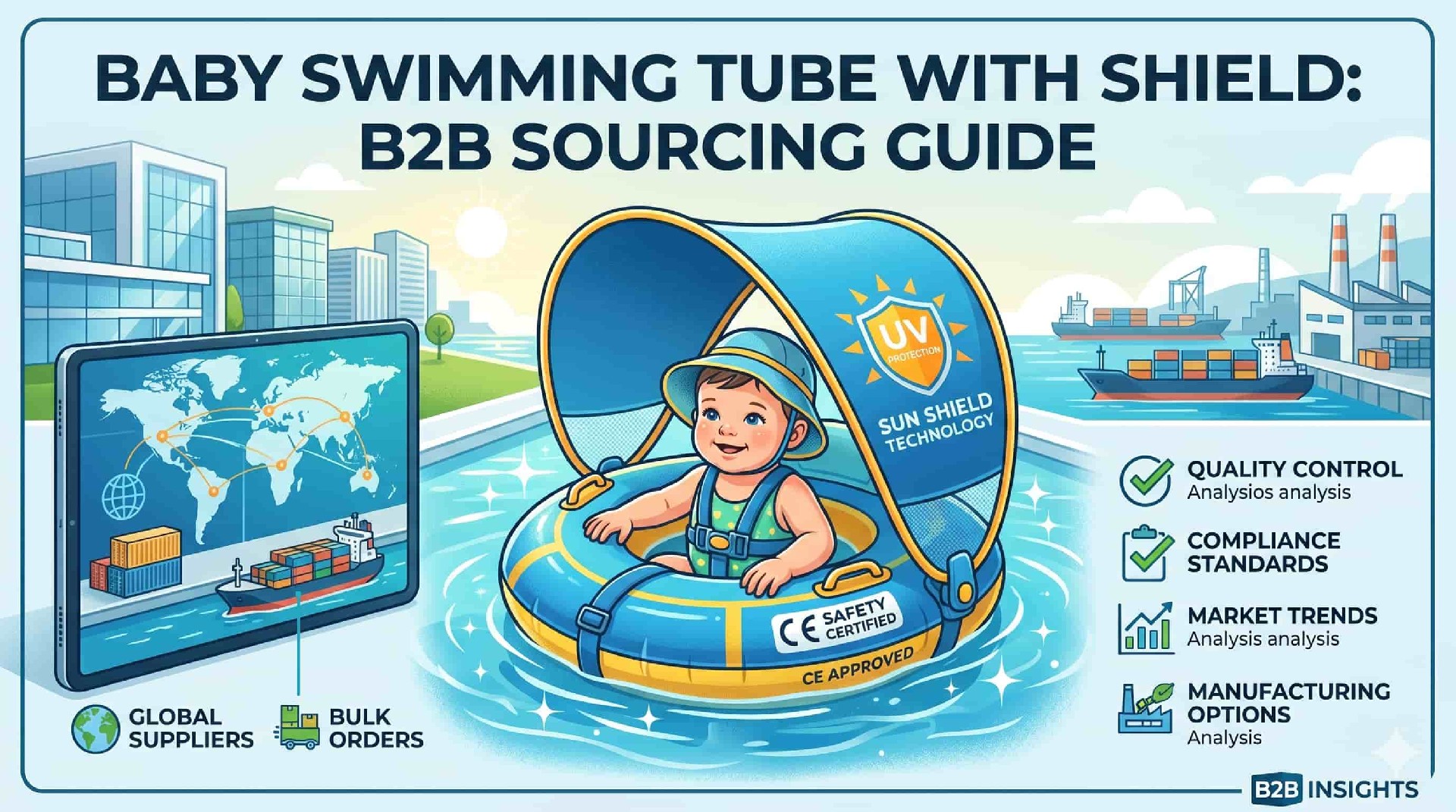
The Evolution and Market Demand for Infant Water Safety Gear
The landscape of infant aquatic products has evolved dramatically from rudimentary, single-chamber inflatable rings to complex, ergonomically engineered aquatic mobility devices. For B2B stakeholders in the water sports and recreation sector, understanding this evolution is critical for aligning inventory with modern consumer expectations.
Shifting Consumer Paradigms: From Basic Floats to Comprehensive Protection
In the past decade, the focus of parental purchasing decisions has shifted from mere novelty to clinical safety and developmental support. The American Academy of Pediatrics (AAP) and various global health organizations have emphasized the benefits of early water acclimation for infants, which aids in cognitive and motor skill development. However, this acclimation must occur in highly controlled environments.
Modern parents are acutely aware of two primary threats during outdoor aquatic activities: drowning hazards due to unstable buoyancy and severe dermatological damage from ultraviolet (UV) radiation. An infant’s stratum corneum (the outermost layer of the skin) is approximately 30% thinner than that of an adult, making it exceptionally vulnerable to UVA and UVB rays. Consequently, the integration of a UV-blocking canopy—the "shield"—has transitioned from an optional luxury feature to a mandatory safety requirement in the eyes of the consumer. Products lacking this protective canopy are rapidly losing market share to their shielded counterparts.
Global Market Growth and B2B Wholesale Opportunities
The global market for baby aquatic gear is experiencing unprecedented growth. A recent industry analysis indicated that the baby safety product market is projected to expand at a compound annual growth rate (CAGR) of over 5.5% through the next five years (Source: Grand View Research, 2024). Within this segment, premium inflatable and non-inflatable
For wholesale buyers, this represents a lucrative avenue. By sourcing technically advanced swim tubes featuring UPF 50+ sunshades, five-point safety harnesses, and dual-airbag systems, retailers can command premium price points. Furthermore, the cross-selling potential between infant swim gear and broader
Core Engineering and Design Principles of Baby Swim Floats with Sunshades
To successfully market and distribute these products, a B2B buyer must understand the sophisticated engineering that dictates a product's safety and functionality. A high-quality baby swimming tube is a precise hydro-dynamic tool.
Ergonomic Support: Maintaining the Optimal 40-Degree Angle
Unlike traditional waist rings that suspend a child vertically, advanced baby swimming tubes are designed to mimic the natural swimming posture. The industry gold standard requires the float to support the infant at a 40-degree to 50-degree angle. This specific incline serves a dual purpose: it keeps the infant's airway safely elevated above the water line while allowing their legs to kick freely in a natural paddling motion.
To achieve this, manufacturers utilize asymmetric buoyancy distribution. The front chamber of the float is engineered with a widened and elevated profile, effectively preventing the infant from tipping forward (face-planting) into the water. Additionally, a central under-arm hammock or crotch strap system prevents the infant from slipping downward through the central cavity.
The "Shield" Component: UPF 50+ UV Protection Dynamics
The canopy, or shield, is perhaps the most critical value-add feature of these products. True medical-grade protection requires the canopy fabric to possess a Ultraviolet Protection Factor (UPF) of 50+, meaning it allows only 1/50th (or 2%) of UV radiation to penetrate.
From an engineering standpoint, the shield must be designed with aerodynamic stability in mind. A poorly designed canopy can act as a sail in a breeze, catching the wind and forcefully flipping the float over. Therefore, premium manufacturers design shields with a semi-spherical aerodynamic profile and incorporate breathable mesh side panels. These mesh panels reduce wind resistance (drag) while ensuring cross-ventilation, preventing the enclosed space from overheating and causing hyperthermia in the infant. Furthermore, top-tier B2B models feature retractable or fully removable shields, offering parents versatility depending on indoor or outdoor usage.
Anti-Flip and Anti-Deflation Mechanisms
Buoyancy failure and capsizing are the two leading causes of infant water emergencies involving inflatables. To counteract capsizing, modern designs utilize a widened lateral wingspan and a low center of gravity. Some advanced models include auxiliary tail buoys that attach to the rear of the main ring, providing a counterbalance to the child's forward-leaning weight.
Regarding deflation, safety-compliant tubes must feature multiple, independent air chambers (usually a minimum of two or three). This redundancy ensures that if the primary chamber suffers a puncture, the secondary chambers will maintain enough buoyancy to keep the child afloat until rescued. Additionally, B2B buyers must insist on double-layered Boston valves or one-way check valves that prevent rapid air loss even if the valve cap is accidentally left open.
Material Science: Evaluating PVC vs. TPU vs. PearlFoam™
The chemical composition of a baby swimming tube dictates not only its durability but also its compliance with international chemical safety laws. Sourcing the wrong material can lead to catastrophic product recalls and border seizures by customs authorities.
Traditional PVC: Cost-Effectiveness and Regulatory Hurdles
Polyvinyl Chloride (PVC) remains the most common and cost-effective material used in the inflatable water toy industry. It offers excellent tensile strength, is easy to weld using High-Frequency (HF) machinery, and provides a smooth, water-resistant finish.
However, standard PVC is rigid and requires the addition of plasticizers, typically phthalates, to make it flexible. Many phthalates are known endocrine disruptors and are strictly banned in children's products globally. Therefore, B2B buyers sourcing PVC baby floats must unequivocally demand "6P-Free" or "10P-Free" PVC. This denotes that the material is free from the 6 to 10 most hazardous phthalates (such as DEHP, DBP, and BBP). The thickness of the PVC is also paramount; high-quality infant floats should utilize PVC with a thickness of no less than 0.30mm to 0.35mm to resist abrasion and punctures.
TPU (Thermoplastic Polyurethane): The Eco-Friendly Upgrade
Thermoplastic Polyurethane (TPU) represents a significant material upgrade over PVC. TPU is inherently flexible, meaning it requires zero toxic plasticizers. It is exceptionally durable, highly resistant to UV degradation, and performs brilliantly across wide temperature ranges without becoming brittle.
Furthermore, TPU is considered a more environmentally friendly and biodegradable alternative to PVC. While the manufacturing cost of TPU floats is significantly higher, they cater directly to the premium, eco-conscious consumer demographic. For wholesale distributors targeting high-end boutiques or pediatric specialty stores, TPU is the strategic material of choice.
Non-Inflatable PearlFoam™: The Future of Puncture-Proof Floats
The most disruptive innovation in this sector is the transition toward solid, non-inflatable floats utilizing materials like PearlFoam™ or high-density EPS (Expanded Polystyrene) encapsulated in a waterproof, skin-friendly polyurethane (PU) or 3D breathable mesh cover.
Because these floats contain millions of tiny, closed-cell microcapsules of air, they are 100% puncture-proof. The risk of sudden deflation is completely eliminated. While bulkier to ship—thereby increasing logistics and volumetric weight costs for cross-border traders—the unparalleled safety profile of solid PearlFoam floats allows brands to dominate the premium safety market. (Source: Global Inflatable Toys Market Report, Gartner, 2024).
Global Safety Standards and Compliance for B2B Importers
Navigating the labyrinth of international safety regulations is the most critical responsibility of any B2B importer or brand owner. Ignorance of these standards is not a legal defense. Every shipment of Baby Swimming Tubes with Shield must be backed by valid, verifiable test reports from accredited third-party laboratories (e.g., SGS, TUV Rheinland, Intertek).
EN13138 and EN71 (European Union)
For B2B entities importing into the European Economic Area (EEA), products must carry the CE mark and comply with rigorous directives.
EN 13138-1: This specific standard applies to buoyant aids for swimming instruction. It dictates the minimum buoyancy requirements, the durability of the materials, and the integrity of the seams under pressure.
EN71 Parts 1, 2, and 3: This is the overarching Toy Safety Directive. Part 1 governs mechanical and physical properties (ensuring no small parts present choking hazards). Part 2 governs flammability. Part 3 is the most critical for inflatables, as it limits the migration of certain toxic elements and heavy metals (lead, cadmium, barium) from the material into the infant's skin or mouth.
ASTM F2951 and CPSIA (United States)
The United States market is overseen by the Consumer Product Safety Commission (CPSC).
CPSIA (Consumer Product Safety Improvement Act): Mandates strict limits on lead content (must not exceed 100 parts per million in accessible parts) and bans specific phthalates at concentrations higher than 0.1%. A Children's Product Certificate (CPC) must be issued by the manufacturer or importer.
ASTM F2951: This is the standard consumer safety specification for baby monitor and aquatic safety devices. Furthermore, aquatic toys must comply with ASTM F963 (Standard Consumer Safety Specification for Toy Safety), which scrutinizes seam strength and valve safety to ensure children cannot bite off the inflation nozzles.
AS/NZS 1900 (Australia and New Zealand)
The Australasian market is highly regulated due to the region's strong beach and pool culture. Flotation toys and swimming aids must comply with AS/NZS 1900. This standard is incredibly strict regarding warning labeling. Floats must bear highly visible, permanent warning text stating that the product is not a life-saving device and must only be used under constant, competent adult supervision. Failure to format this text with the correct font size and color contrast will result in immediate customs rejection.
Sourcing Strategy: How B2B Buyers Can Optimize Procurement
Finding a reliable manufacturing partner in Asia (predominantly China, Vietnam, or Taiwan) is a complex endeavor that requires rigorous due diligence. A successful B2B sourcing strategy minimizes risk, ensures consistent quality, and maximizes gross margins.
Vetting Manufacturers for Quality Control (AQL Standards)
When selecting a factory to produce a Baby Swimming Tube with Shield, B2B buyers must look beyond the unit price. The factory must hold active certifications such as ISO 9001 (Quality Management) and BSCI (Business Social Compliance Initiative) to ensure ethical labor practices.
Quality control must be enforced using Acceptable Quality Limit (AQL) standards. For life-safety adjacent products like baby floats, a strict AQL level (e.g., AQL 1.5 for major defects, 2.5 for minor defects) should be negotiated. Furthermore, a critical step in the manufacturing process of inflatables is the "24-hour inflation test." Before packaging, every single float should be inflated to its maximum capacity and left for 24 hours to monitor for micro-leaks. Buyers must ensure this 100% inflation testing protocol is physically integrated into the supplier's assembly line.
OEM vs. ODM Customization Strategies
B2B buyers generally choose between Original Equipment Manufacturing (OEM) and Original Design Manufacturing (ODM).
ODM (White-labeling): The factory already has pre-existing, tested molds for baby floats with shields. The buyer simply applies their brand logo, custom colors, and bespoke retail packaging. This strategy offers lower Minimum Order Quantities (MOQs), faster time-to-market, and avoids expensive mold-opening fees.
OEM (Custom Design): The buyer engineers a completely new float shape, shield mechanism, or harness system. While this requires a high initial capital investment for tooling and bespoke safety certification testing, it creates a proprietary product that protects the brand from cheap copycats.
Supply Chain Resilience in Cross-Border Trade
Shipping products filled with air (even when deflated) requires careful logistical planning. Inflatable baby floats are relatively lightweight but can take up significant CBM (Cubic Meters) depending on their folding method and retail box size. B2B buyers should work with manufacturers to optimize the folding patterns and utilize vacuum-sealed polybags inside the retail cartons to maximize the number of units per shipping container, drastically reducing the landed cost per unit.
Additionally, navigating Incoterms (e.g., FOB vs. DDP) is crucial. Given the current volatility in global shipping rates, negotiating FOB (Free On Board) terms and utilizing a trusted third-party freight forwarder usually offers the buyer more control over shipping schedules and hidden terminal handling charges than relying on the manufacturer's shipping agent.
Future Trends in Baby Aquatic Recreation Equipment
The B2B market for baby swimming gear is not static; it is being rapidly influenced by technological advancements and shifting ecological values. Staying ahead of these trends is vital for distributors who want to remain competitive.
Smart Floats with Temperature and UV Sensors
The integration of low-cost, waterproof sensor technology is the next frontier. Forward-thinking manufacturers are beginning to incorporate thermochromic inks into the PVC or TPU materials. These inks change color when the pool water temperature drops below a safe threshold, visually alerting parents to the risk of infant hypothermia. Similarly, smart UV indicator patches on the shield canopy can change color when exposed to dangerous levels of UV radiation, signaling to the parent that it is time to move the child indoors, even if the shield is providing UPF 50+ protection.
Biodegradable and Sustainable Packaging
As legislation surrounding single-use plastics tightens globally, the packaging of the Baby Swimming Tube with Shield is undergoing a revolution. B2B buyers are increasingly demanding that products be shipped in recycled kraft paper boxes printed with soy-based inks, eliminating the internal plastic blister packs. Furthermore, end-of-life recycling programs, where the TPU or PVC can be returned and repurposed into industrial floor matting or piping, are becoming powerful marketing tools for premium brands looking to establish serious ESG (Environmental, Social, and Governance) credentials.
Frequently Asked Questions (FAQs)
What is the recommended age for a baby swimming tube with a shield?
Most manufacturers design these floats for infants aged 3 to 24 months, typically weighing between 13 to 40 pounds. It is critical to select a model matching the child’s exact weight and motor skill development to ensure optimal buoyancy and prevent accidental flipping or submerging.
Can the sunshade canopy withstand strong winds without flipping the float?
Premium shields are aerodynamically designed with breathable mesh sides to reduce drag. However, no baby float is entirely windproof. In wind speeds exceeding 10 mph, the canopy can act as a sail, creating a severe flipping hazard. Immediate removal from water is required during high winds.
What is the difference between an inflatable float and a PearlFoam™ solid float?
Inflatable floats use air chambers (usually PVC or TPU) and are highly portable when deflated. PearlFoam™ floats are filled with solid, micro-capsule foam, making them 100% puncture-proof and eliminating deflation risks, though they are bulkier for travel and cost more to manufacture and ship.
Are PVC baby swimming tubes safe for infant skin?
Yes, provided the B2B importer strictly specifies the use of non-toxic, "6P-Free" or "10P-Free" PVC. This ensures the material does not contain harmful phthalate plasticizers that act as endocrine disruptors. Verification via third-party chemical testing (like EN71-3 or CPSIA) is legally mandatory.
How do manufacturers prevent the baby from slipping out of the swim tube?
Modern designs abandon the simple "ring" concept. Instead, they incorporate an adjustable, multi-point safety harness or an ergonomic under-arm hammock with a crotch strap. This secures the infant in a safe, forward-leaning 40-degree paddling position, completely preventing them from sliding downward.
What specific safety certifications should a B2B buyer request from the supplier?
Depending on the target region, buyers must demand a CPC (Consumer Product Certificate) and ASTM F963/F2951 reports for the US market. For Europe, CE marking backed by EN13138 and EN71 (Parts 1, 2, 3) test reports from accredited labs like SGS or Intertek is required.
How does a double-layered air valve improve the safety of the float?
A double-layered valve, often called a Boston valve, features an internal check flap. If the external cap is accidentally opened by the child or pops off during use, the internal flap is pushed shut by the internal air pressure, preventing rapid deflation and maintaining buoyancy.
What is the standard MOQ (Minimum Order Quantity) for custom wholesale baby floats?
For ODM orders (standard shapes with custom colors/logos), MOQs typically range from 500 to 1,000 units. For full OEM orders requiring new mold creation for a unique shape or shield design, factories generally require an MOQ of 3,000 to 5,000 units to offset tooling costs.
Conclusion
The market for the Baby Swimming Tube with Shield represents a sophisticated intersection of pediatric ergonomics, advanced polymer chemistry, and stringent global regulatory compliance. For B2B wholesale buyers, importing and distributing these items is no longer merely about finding the lowest-cost supplier; it is about partnering with meticulous manufacturers who prioritize non-toxic materials, anti-flip geometry, and certified UPF 50+ protection. By demanding rigorous AQL inspections, embracing safer materials like TPU or solid PearlFoam™, and understanding the nuances of international safety directives like CPSIA and EN71, forward-thinking businesses can capture significant market share while ensuring the absolute safety of their end-users.
The time to optimize your aquatic product portfolio is now. If you are ready to upgrade your inventory with fully compliant, premium infant water safety gear, we invite you to evaluate our certified supply chain solutions.
