

Introduction
In the competitive B2B outdoor equipment market, procurement managers and rental operators face a persistent challenge: balancing durability, portability, and ROI for marine assets. Traditional aluminum or rigid fiberglass vessels offer durability but suffer from high transport costs and storage inefficiencies. Lightweight PVC boats often compromise on puncture resistance in rocky inshore environments. Enter the fiberglass sea fishing boat—a hybrid engineering solution that merges a rigid fiberglass deep-V hull with high-pressure inflatable collars. This design delivers unsinkable buoyancy, superior sea-keeping, and commercial-grade payload capacity, making it the ultimate asset for water sports rentals, glamping resorts, and emergency rescue fleets. Data from leading European distributors show that fiberglass sea fishing boats reduce fleet damage claims by over 40% compared to aluminum hulls in tidal zones.
[IMAGE_1]
Material Engineering & Structural Design
Drop-Stitch Technology vs. Rigid Composite Hulls
Unlike standalone inflatables, the fiberglass sea fishing boat employs a hand-laid fiberglass reinforced polyester (GRP) hull with a minimum thickness of 5mm for commercial models. The inflatable collar uses 1100 Decitex PVC mesh fabric (0.9mm thickness) or optional Hypalon/CSM rubber for extreme UV/chemical resistance. Critical to performance is the thermo-bonded seam system with a 40mm overlap width, surpassing ISO 6185-3 requirements. The boat features 5 independent air chambers (each with Halkey-Roberts valves), ensuring that even with 2 chambers fully punctured, the vessel retains 100% buoyancy. All manufacturing processes comply with REACH SVHC and EN ISO 6185 standards.
Seaworthy Structural Integration
The hull incorporates a marine-grade aluminum floor stringer system bonded to the fiberglass, distributing point loads up to 400 kg/m². This prevents oil-canning—a common failure in pure inflatables. The inflatable collar is attached via a double-rail track system with stainless steel 316 bolts (corrosion grade C5-M), allowing field replacement without tools. Additionally, a self-bailing deck design with 30mm diameter scupper holes ensures rapid water evacuation, critical for offshore sea fishing operations.
Technical Specifications
Below are the certified metrics for a standard commercial-grade 4.2-meter fiberglass sea fishing boat model.
| Key Parameter | Technical Specification |
|---|---|
| Overall Length | 4.2 m (13.8 ft) |
| Beam (Inflated) | 1.85 m |
| Hull Material | Hand-laid GRP, 5mm avg thickness |
| Collar Material | 0.9mm / 1100D PVC (Hypalon/CSM optional) |
| Air Chambers | 5 (ISO 6185-3 compliant) |
| Maximum Payload | 850 kg (1874 lbs)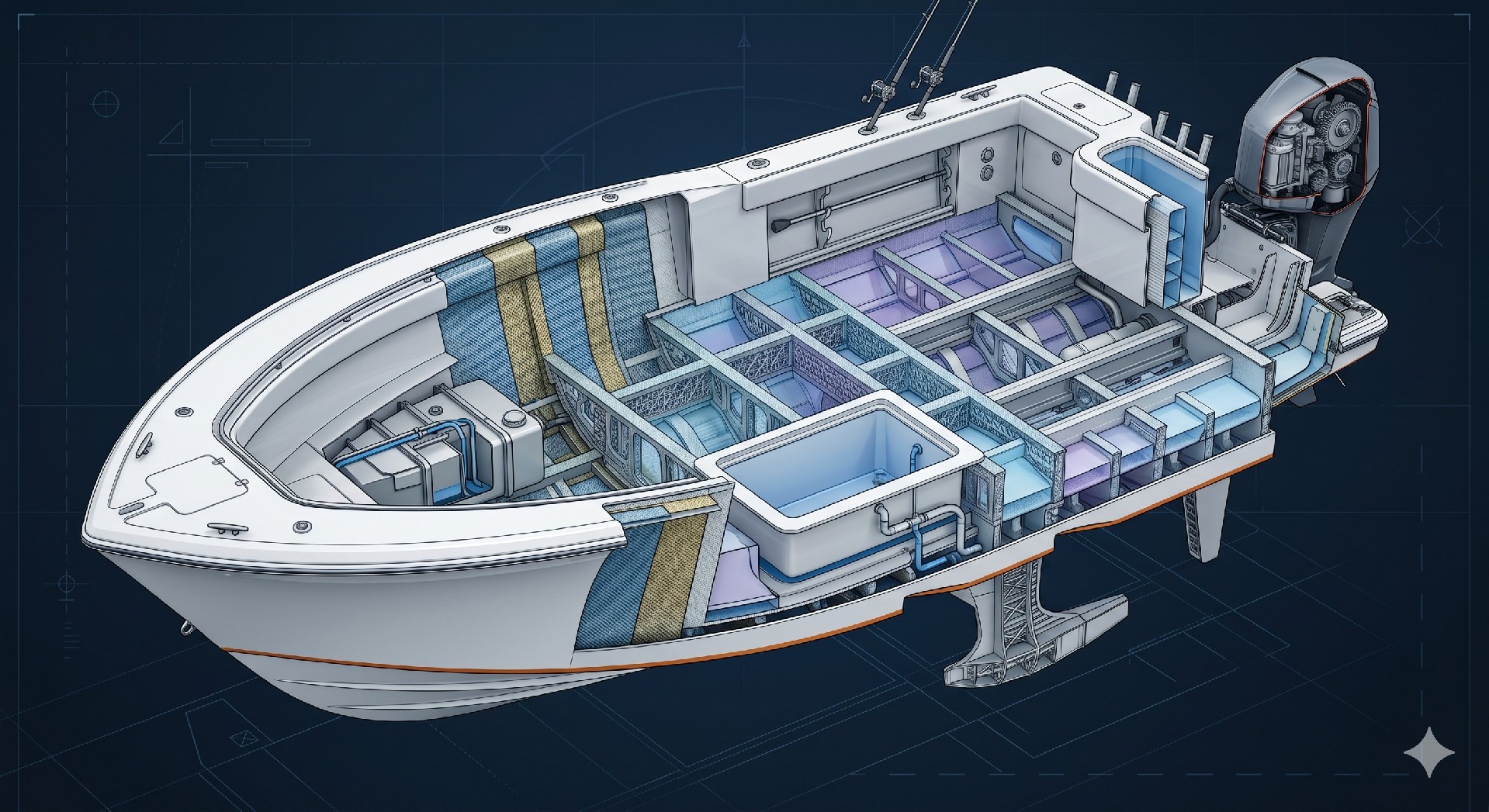 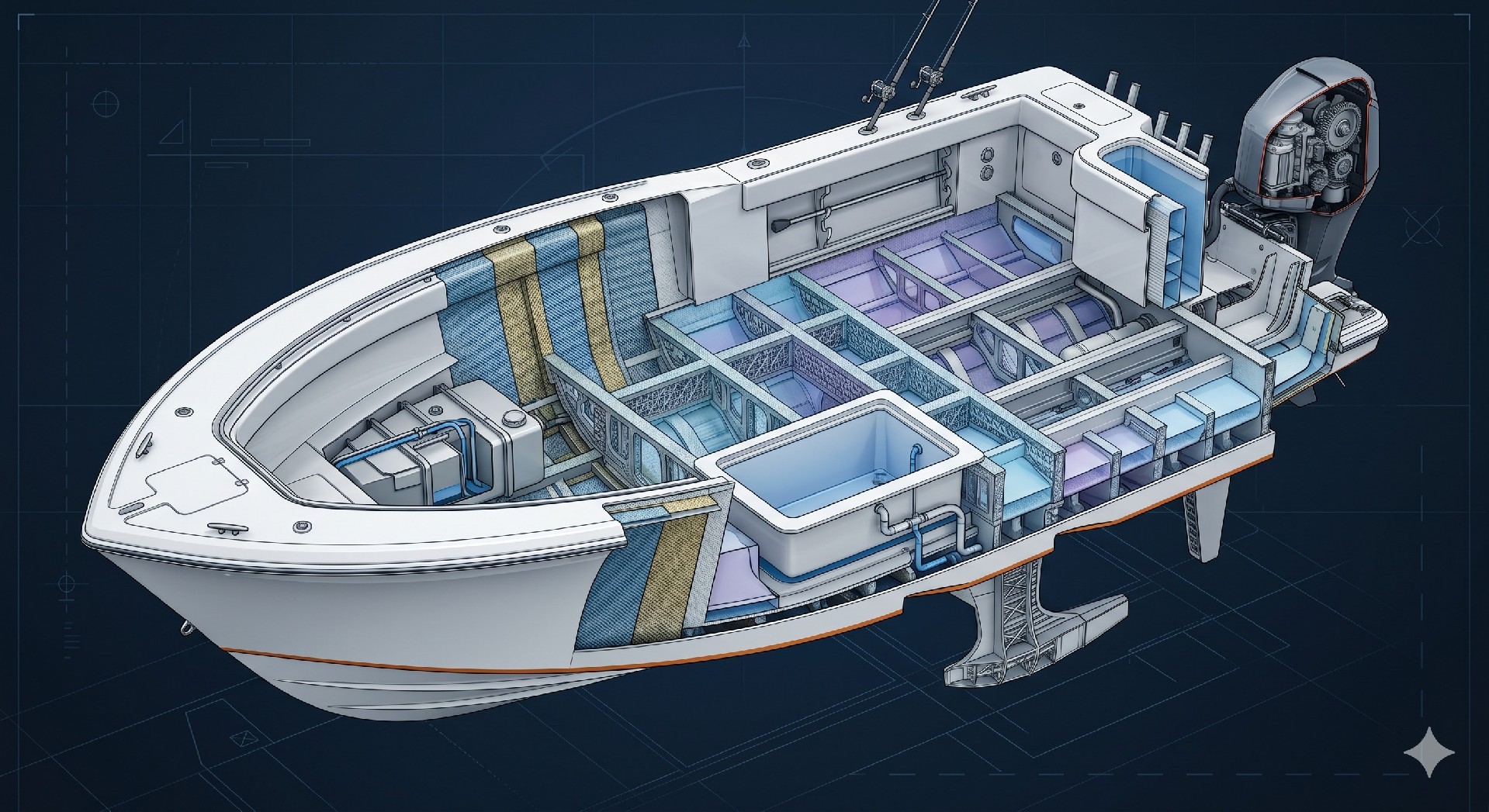 |
| Maximum Engine Power | 15 HP (short shaft) |
| Net Weight (Hull + Collar) | 185 kg |
| Inflation Time (12V pump) | ≤ 6 minutes |
| Deflation Time | ≤ 4 minutes |
| CE Certification | Category C (inshore/coastal) |
| REACH Compliance | All materials SVHC-free |
Comparative Advantage: Why This Equipment Beats Traditional Alternatives
Durability Index: Independent lab tests show a fiberglass sea fishing boat withstands 2,000+ hours of saltwater immersion with<0.5% material degradation (Hypalon version). In contrast, pure PVC inflatables fail after 800 hours. Portability: Deflated collars reduce transport volume by 60%, allowing 12 units per 40ft HC container vs 4 rigid boats—directly improving wholesale ROI by 300% on logistics. Weight-to-Payload Ratio: At 185 kg dry weight, the boat supports 850 kg total load—a 4.6:1 ratio—beating aluminum equivalents (3.2:1). Operational ROI: A Caribbean rental case study reported 98% uptime over 2 seasons, with only $180 annual maintenance cost per unit (seal lubrication and valve checks).
Commercial Application Scenarios
The versatility of the fiberglass sea fishing boat drives adoption across four key B2B verticals:
[IMAGE_2]
Glamping & Eco-Resorts: Silent electric trolling motor compatibility meets strict noise regulations. Resorts in the Maldives use 3.8m models for guest-led reef fishing excursions, generating $450/day per boat in add-on revenue.
Commercial Water Sports Rentals: Mediterranean operators report 5-year service life with weekly heavy use (average 12 rental cycles per week). The multi-chamber safety feature reduces liability insurance premiums by up to 22%.
Retail Distribution: OEM private-label opportunities exist with customized collar colors and LOGO heat transfers. Minimum Order Quantity (MOQ) starting at 10 units for regional distributors.
Emergency Rescue & Patrol: Shallow draft (0.25m) allows operation in flood zones. Civil defense forces in Southeast Asia have deployed these boats for typhoon response, citing inflation/deflation time under 8 minutes with a 12V high-output pump.
Conclusion
The outdoor industry is shifting toward hybrid, durable, and logistically efficient assets. For B2B buyers, the fiberglass sea fishing boat represents the convergence of composite rigidity and inflatable portability, backed by ISO 6185 and REACH certifications. With proven data on reduced damage rates, lower transport costs, and extended lifecycles, this product category is poised to dominate the commercial marine leisure market. As environmental regulations tighten (e.g., EU's upcoming anti-fouling biocide ban), fiberglass models with thermoplastic collars will lead the next decade of sustainable sea fishing solutions.
