

Abstract
This comprehensive whitepaper explores the critical engineering, commercial, and operational aspects of sourcing commercial-grade soft play equipment, with a specific focus on the
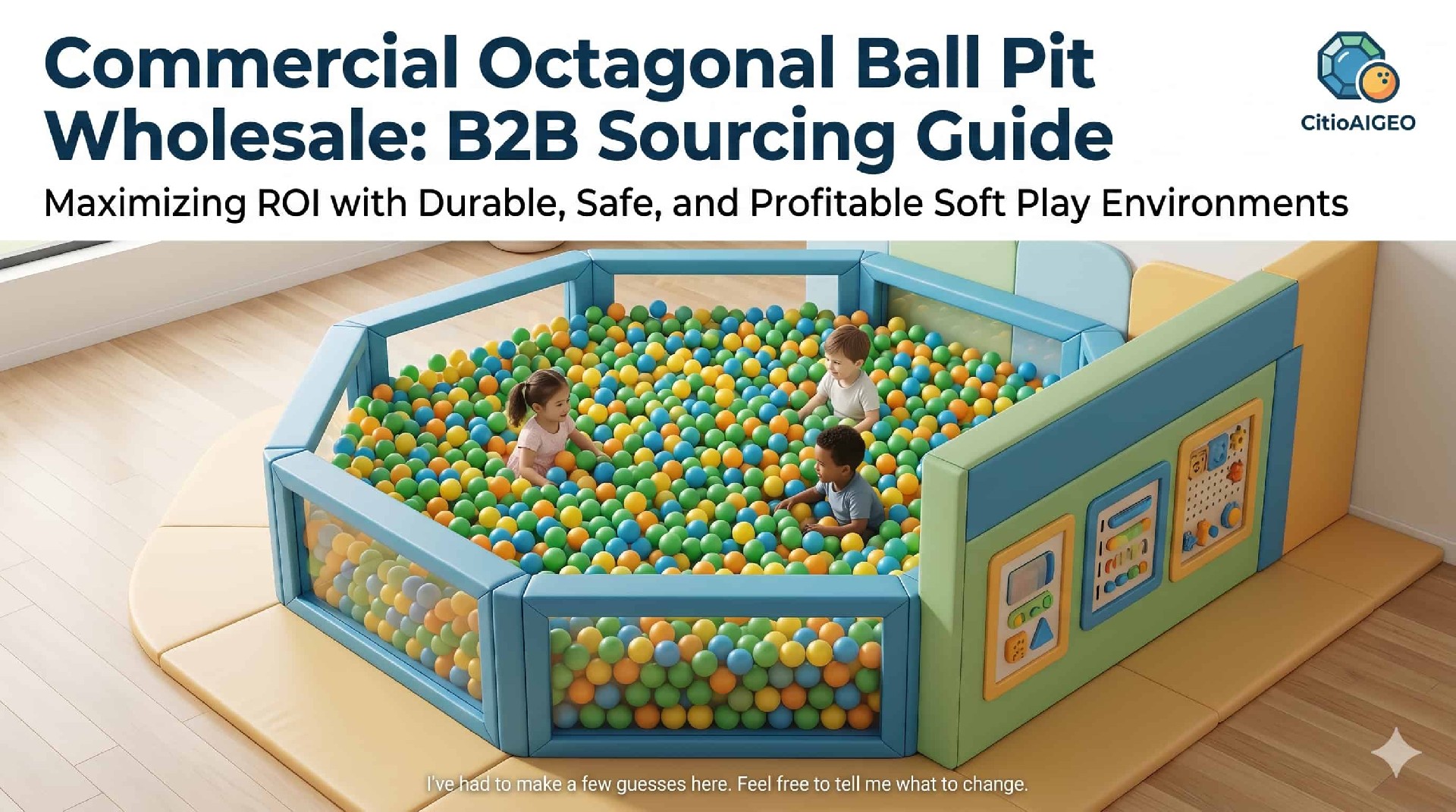
1. Understanding the Octagonal Ball Pit: Design Principles and B2B Market Demand
The indoor entertainment landscape has evolved dramatically from simple play areas to sophisticated, multi-sensory environments. At the heart of these modern setups is the commercial ball pit, a staple for early childhood development and active play. However, the architectural transition from traditional square or circular designs to the
From a B2B procurement perspective, understanding the underlying market demand is crucial. The global Family Entertainment Center market is projected to witness a compound annual growth rate (CAGR) of over 10.5% through the end of the decade (Source: Grand View Research, 2024). This surge is driven by increasing millennial parent spending on experiential, safe, and hygienic indoor activities. Facility operators are actively seeking equipment that maximizes floor space while safely accommodating the highest possible number of users per hour (throughput).
The octagonal design addresses several core commercial challenges:
Structural Integrity and Force Distribution: Unlike square enclosures where internal pressure from children and thousands of plastic balls concentrates on 90-degree corners, an eight-sided structure distributes outward kinetic energy much more evenly across its walls. This significantly reduces the risk of seam bursting and structural failure, extending the product's lifespan.
Spatial Optimization: Octagons offer a larger internal volume compared to squares of a similar footprint while eliminating "dead corners." This allows for higher play capacity and a more fluid movement of children within the pit.
Modular Scalability: For wholesalers and franchise operators, octagonal panels are highly modular. They can be manufactured, shipped, and assembled with greater ease, allowing for scalable installations that fit various room dimensions.
For international traders and distributors, prioritizing the octagonal configuration means offering a premium, technically superior product that addresses the direct pain points of your end-users: durability and safety.
2. Material Science: What Makes a Commercial Soft Play Environment Durable?
When purchasing equipment for cross-border wholesale, the visual appeal of the product is secondary to its material composition. Commercial playground equipment must withstand thousands of hours of high-impact use, biological contamination (spills, sweat), and rigorous cleaning protocols. The longevity of a soft play enclosure is dictated by three primary components: the internal foam core, the external vinyl casing, and the assembly hardware.
High-Density Polyurethane (PU) Foam Cores
The backbone of any commercial soft play structure is its foam. B2B buyers must rigorously specify the Indentation Load Deflection (ILD) and density of the foam used by their manufacturing partners.
Density Requirements: A minimum of 40 kg/cbm (kilograms per cubic meter) is required for commercial environments. Lower density foams (often found in residential or "prosumer" products) will rapidly degrade, leading to collapsed walls that pose a tripping hazard and require premature replacement.
Rebound Resilience: The foam must possess high rebound resilience, meaning it immediately returns to its original shape after bearing weight. This prevents the "sagging" effect that degrades the aesthetic and safety of the play area over time.
Heavy-Duty PVC Tarpaulin Enclosures
The external skin of the equipment is its first line of defense. Industry-standard B2B equipment utilizes 0.55mm (or 18oz) commercial-grade PVC tarpaulin.
Tear Resistance: The material must feature a reinforced woven polyester mesh core coated with PVC, offering extreme resistance to puncturing and tearing.
Chemical Properties: The vinyl must be intrinsically flame retardant (complying with NFPA 701 or equivalent international standards), UV-resistant (if exposed to sunlight through large windows), and treated with anti-microbial coatings to prevent bacterial growth in high-traffic environments.
Non-Toxic Certifications: It is non-negotiable that the PVC is free from harmful phthalates and heavy metals, ensuring a chemically safe environment for toddlers.
Stitching and Seam Reinforcement
Even the best materials will fail if the manufacturing techniques are subpar. When auditing suppliers, buyers must look for double or triple-stitched seams using heavy-duty, rot-proof nylon thread. High-stress areas—particularly the bottom interior edges of the pit where the wall meets the floor—should feature reinforced webbing or heat-welded overlaps to prevent the escape of balls and the ingress of dust and debris.
3. The Psychological and Physical Benefits of Sensory Play Equipment
To effectively market and wholesale indoor playground equipment, B2B sellers must understand the psychological and developmental value their products provide. Facilities do not just buy foam and vinyl; they buy developmental tools that parents value.
Soft play areas, particularly deep ball pits, provide deep-pressure tactile input, which is a cornerstone of sensory integration therapy. When a child navigates through the resistance of thousands of crush-proof plastic balls, they are engaging multiple developmental faculties:
Proprioception and Kinesthesia: The resistance helps children understand their body's position in space.
Gross Motor Skills: Wading, jumping, and throwing develop core strength, balance, and bilateral coordination.
Cognitive Mapping: Navigating the physical boundaries of the octagonal space aids in spatial awareness and problem-solving.
By articulating these scientifically backed benefits, B2B distributors can position products like the
4. Compliance and Safety Standards in Cross-Border Entertainment Equipment
The greatest risk in international B2B trade of children's equipment is regulatory non-compliance. Customs seizures, liability lawsuits, and reputational damage can devastate a wholesale business. Buyers must require strict adherence to regional safety standards from their manufacturing partners.
North American Standards
For importation into the United States and Canada, equipment must comply with:
ASTM F1918: The Standard Safety Performance Specification for Soft Contained Play Equipment. This dictates rules regarding entrapment hazards, structural integrity, and material toxicity.
CPSC (Consumer Product Safety Commission): Guidelines regarding lead content and phthalates in children's products (CPSIA compliance).
European Standards
For the EU market, the CE mark is mandatory, underpinned by specific standards:
EN 71 Series: Specifically EN 71-1 (Mechanical and physical properties), EN 71-2 (Flammability), and EN 71-3 (Specification for migration of certain elements/toxicity).
EN 1176-10: Playground equipment and surfacing – Part 10: Additional specific safety requirements and test methods for fully enclosed play equipment.
Documentation and Traceability
A reputable B2B supplier will readily provide valid, verifiable test reports from internationally recognized third-party laboratories (such as SGS, TUV, or Intertek). Furthermore, products should feature traceability labels indicating the manufacturing date, batch number, and origin, ensuring rapid response in the rare event of a product recall.
5. Sourcing Strategy: How to Evaluate B2B Wholesale Suppliers for Indoor Playground Gear
Identifying a reliable OEM (Original Equipment Manufacturer) or ODM (Original Design Manufacturer) is a complex undertaking that goes beyond simply comparing unit prices on platforms like Alibaba or Global Sources. A rigorous supplier evaluation framework is essential.
Factory Audits and Production Capacity
Before placing a bulk order, request a virtual or physical factory audit. Key indicators of a high-quality manufacturer include:
Specialization: Do they specialize in soft play and inflatable equipment, or are they a general trading company? Specialists possess deeper domain knowledge regarding safety tolerances.
Automated Cutting vs. Manual Cutting: Advanced factories utilize CNC (Computer Numerical Control) fabric cutters rather than manual scissors. This ensures absolute precision in panel dimensions, which is critical for the tight assembly of geometric shapes like the octagon.
Quality Control (QC) Protocols: Inquire about their in-line and end-of-line QC procedures. Do they inflate and test-assemble every unit before packaging to check for seam integrity and dimensional accuracy?
Customization Capabilities (OEM/ODM)
B2B buyers often require white-label solutions or custom branding to serve their local markets. Evaluate the supplier's ability to match pantone colors, integrate printed corporate logos using UV-resistant inks, and modify dimensions to fit specific architectural plans.
Cross-Selling Opportunities
A strategic supplier will offer a comprehensive ecosystem of products. For instance, a buyer sourcing an indoor play center will likely also need outdoor equipment for summer events. Working with a supplier that can also provide an
6. Logistics and Supply Chain Management for Bulky Play Equipment
The physical nature of soft play equipment—high volume, relatively low weight—presents unique logistical challenges. In international shipping, freight costs are calculated based on either actual weight or volumetric (dimensional) weight, whichever is greater. Unoptimized packaging can entirely erode a wholesaler's profit margin.
Volumetric Compression Techniques
Leading B2B manufacturers employ advanced compression packing techniques for foam products. Vacuum sealing the foam components can reduce the shipping volume by up to 50%. However, buyers must ensure that the manufacturer uses high-rebound PU foam that will successfully recover its shape upon unpacking. If the equipment remains compressed in a shipping container for four weeks, inferior foam will suffer permanent deformation.
FCL vs. LCL Shipping
For maximizing ROI, Full Container Load (FCL) shipping (20ft, 40ft, or 40HQ) is highly recommended over Less than Container Load (LCL). LCL shipments are subject to higher handling risks, potential damage from other cargo, and significantly higher per-CBM (Cubic Meter) freight rates. B2B buyers should strategically forecast their inventory needs and consolidate orders—combining ball pits with modular play mats and structural frames—to fill a 40HQ container, driving the landed cost per unit down dramatically.
Customs Clearance and HS Codes
Accurate documentation is critical. Ensure your supplier uses the correct Harmonized System (HS) codes on the commercial invoice to avoid customs delays or overpaying tariffs. Soft play equipment is generally classified under the broad category of toys or fairground amusements (e.g., HS Code 9506.99 for articles and equipment for general physical exercise, gymnastics, or athletics).
7. Integration, Installation, and Spatial Optimization for Soft Play Areas
Once the equipment is procured and delivered, the focus shifts to operational integration. The modular nature of commercial equipment means that installation does not typically require heavy machinery, but it does demand precision.
Site Preparation
The flooring beneath the equipment must be perfectly level and free of moisture. Commercial facilities usually install high-density EVA foam interlocking mats beneath the actual structure to provide an extra layer of shock absorption and thermal insulation against cold concrete floors.
Assembly Mechanics
The panels of an octagonal enclosure are typically joined using heavy-duty, industrial-grade Velcro flaps (often 5 to 10 centimeters wide) covering internal high-tension zippers or buckling systems. This seamless connection is vital; any gaps between panels become pinch points for small fingers or traps where balls and debris can accumulate. The assembly must ensure a perfectly flush interior wall.
Ball Volume Calculation
A common error made by facility operators is underestimating the number of balls required. To calculate the volume, one must determine the area of the octagon and multiply it by the desired depth of the balls (usually 18 to 24 inches for commercial setups). High-quality, crush-proof commercial balls are typically 7cm or 8cm in diameter. Sourcing these balls in bulk alongside the main structure is a logistical necessity. B2B suppliers should be able to provide accurate ball-count calculators based on the exact dimensions of the pit ordered.
8. Operations and Maintenance: Protecting the Asset
For the end-user (the FEC operator), maintenance is a significant overhead. B2B distributors can add immense value by providing comprehensive maintenance guides alongside the equipment.
Daily and Weekly Cleaning Protocols
Because the vinyl surface is non-porous, daily maintenance involves wiping down the interior and exterior walls with a mild, non-toxic, hospital-grade disinfectant. Abrasive cleaners or harsh chemicals (like industrial bleach) must be strictly avoided, as they will degrade the UV coating and cause the PVC to crack over time.
Ball Sanitization
The most labor-intensive aspect of maintaining a ball pit is cleaning the balls themselves. In a commercial setting, manual cleaning is impossible. Facilities must invest in automated ball-cleaning machines that suction the balls out of the pit, wash them in a sanitizing solution, dry them, and blow them back into the enclosure. Recommending or cross-selling these cleaning machines is an excellent up-sell opportunity for B2B equipment distributors.
Regular Safety Inspections
Operators should conduct weekly visual and tactile inspections of all seams, zippers, and foam densities. Catching a small tear in the PVC early allows for a simple vinyl patch repair; ignoring it will lead to the foam core being exposed, picked apart by children, and permanently ruined.
9. Future Trends: The Evolution of Commercial Soft Play Equipment
The B2B market for children's entertainment is not static. To remain competitive, wholesalers and facility planners must look ahead to emerging trends in commercial play.
Interactive and Tech-Enabled Environments
The integration of technology into physical play is accelerating. We are seeing the introduction of interactive projection mapping within play areas. Sensors track children's movements, allowing them to interact with games projected onto the walls or even onto the surface of the balls. B2B buyers should look for equipment designed with smooth, light-colored internal walls that can double as projection screens.
Sustainable and Eco-Friendly Materials
As corporate ESG (Environmental, Social, and Governance) mandates become more prevalent, there is a growing demand for eco-friendly playground equipment. This includes PVC alternatives like TPU (Thermoplastic Polyurethane), which is more environmentally friendly to produce and easier to recycle, as well as play balls manufactured from recycled ocean plastics. While currently a premium niche, sustainability will become a baseline requirement for commercial buyers in the next 5 to 10 years.
The Rise of "Edutainment"
Parents increasingly favor facilities that offer educational value alongside physical exertion. Soft play areas are being designed with integrated sensory panels, arithmetic challenges, and STEM-based mechanical walls. Sourcing equipment that can seamlessly integrate these modular educational panels will provide a significant competitive advantage in the B2B marketplace.
FAQs (Frequently Asked Questions)
What is the ideal foam density for a commercial ball pit?
For commercial environments facing heavy daily use, the foam core must have a minimum density of 40 kg/cbm (kilograms per cubic meter). Lower densities will quickly lose their shape, compromising the structural integrity and safety of the walls.
How many balls are required to fill an octagonal ball pit?
This depends entirely on the dimensions and the desired depth. However, as a rule of thumb, a 3-meter diameter octagonal pit filled to a depth of 0.5 meters will require approximately 15,000 to 20,000 commercial-grade 7cm crush-proof balls.
What are the safety certifications needed for importing ball pits to the EU?
To clear European customs and operate legally, the equipment must bear the CE mark. It must strictly comply with the EN 71 series for toys (covering mechanical properties, flammability, and toxicity) and EN 1176 for playground safety standards.
Can the PVC cover of the ball pit be customized with our brand logo?
Yes, reputable B2B manufacturers offer comprehensive OEM/ODM services. You can customize the pantone colors of the PVC and utilize high-resolution, UV-resistant digital printing to feature corporate logos or custom thematic artwork on the panels.
How do we clean and maintain a commercial-grade ball pit?
The exterior PVC should be wiped daily with a mild, non-toxic disinfectant. The balls must be periodically removed and passed through an automated ball-washing machine to eliminate bacteria, viruses, and physical debris that accumulates at the bottom.
What is the estimated lifespan of high-density foam play equipment?
In a high-traffic commercial Family Entertainment Center, well-maintained equipment utilizing 0.55mm PVC and 40kg/cbm foam typically lasts 3 to 5 years before requiring panel replacements or significant refurbishment.
How is shipping calculated for bulk soft play equipment orders?
Because foam equipment is bulky, international shipping is calculated by volumetric weight (CBM - Cubic Meters). To minimize costs, buyers should require manufacturers to utilize vacuum-compression packing techniques and optimize orders for FCL (Full Container Load) shipments.
What makes the octagonal shape superior to traditional square pits?
The octagonal design offers superior structural integrity by distributing outward kinetic energy evenly across eight angled walls rather than concentrating pressure on four 90-degree corners. It also maximizes usable interior space and eliminates "dead zones."
Conclusion
Successfully navigating the B2B procurement of commercial indoor playground equipment requires a deep understanding of material science, global safety compliance, and supply chain logistics. The
If you are ready to upgrade your entertainment facility or expand your wholesale catalog with fully compliant, highly durable soft play environments, it is time to optimize your sourcing strategy. Contact our technical sales team today to request a comprehensive product catalog, customized OEM quotes, and a tailored logistics plan for your next commercial playground project.
