

Abstract:
This comprehensive whitepaper explores the critical technical, commercial, and clinical considerations involved in the global sourcing and B2B wholesale of the modern inflatable birth pool. What: We provide an in-depth analysis of the material science, structural engineering, and manufacturing compliance standards required for high-fidelity water birth equipment. Why: As the global demand for alternative maternal care supplies accelerates, hospitals, birthing centers, and medical distributors face an urgent need to procure safe, eco-friendly, and ergonomically superior aquatic labor solutions. How: Procurement managers and B2B buyers will learn actionable supply chain strategies, actionable criteria for evaluating Original Equipment Manufacturers (OEMs), and insights into material compliance (like REACH and ISO certifications) to ensure maximum return on investment and patient safety in the rapidly expanding maternal health market.
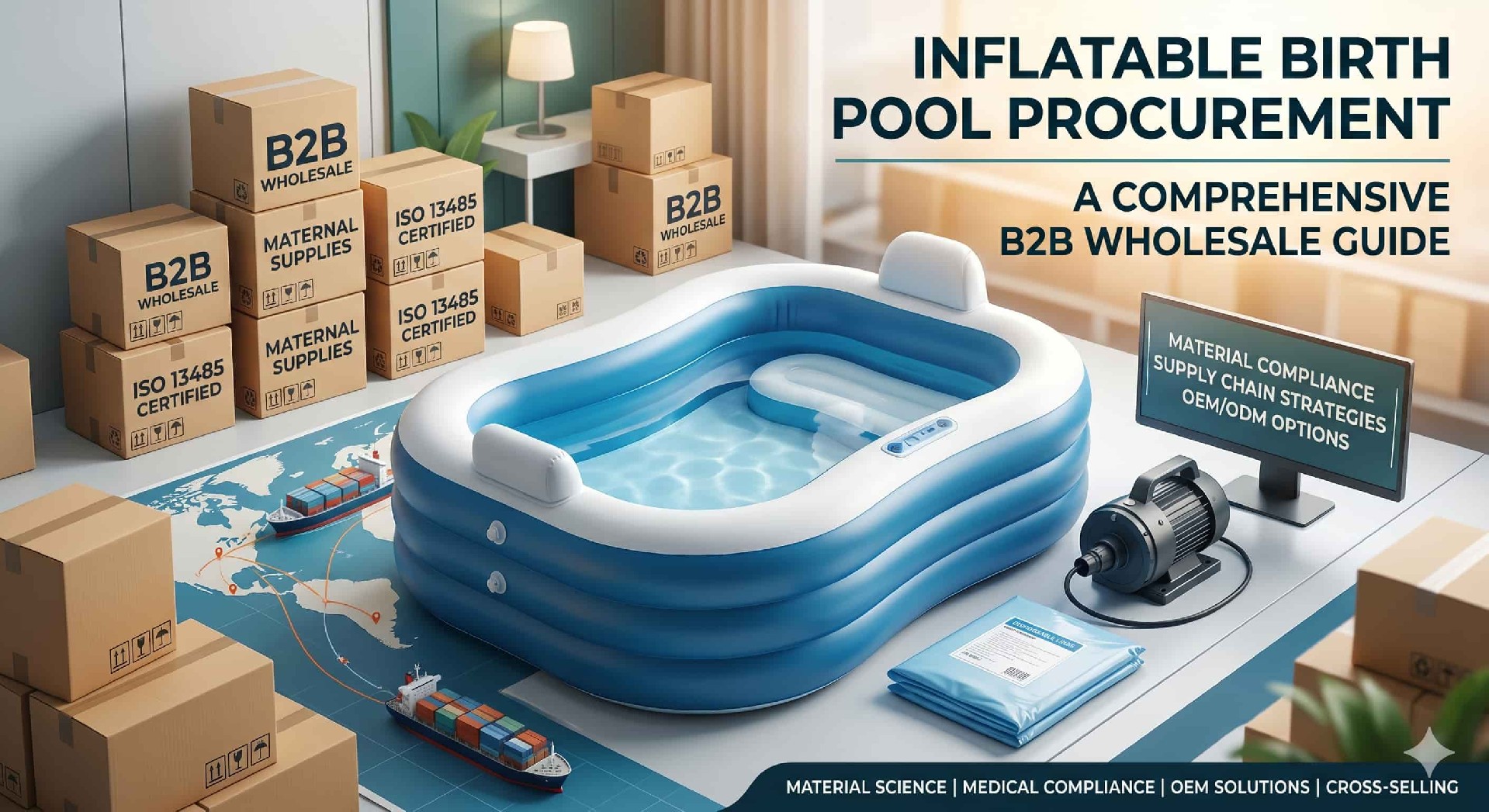
1. Understanding the Medical and Ergonomic Mechanics of Water Birth Equipment
The transition toward holistic, patient-centered maternity care has fundamentally elevated the status of the Inflatable Birth Pool from a niche alternative to a mainstream clinical requirement. For B2B distributors and healthcare procurement officers, understanding the underlying physiological benefits and structural ergonomics is paramount when evaluating product lines for widespread clinical or home use.
1.1 The Clinical Physiology of Aquatic Immersion
The efficacy of an inflatable birth pool is rooted in established biomechanical and physiological principles. When a laboring mother is submerged in warm water, buoyancy effectively negates the forces of gravity. This hydrostatic pressure creates a state of weightlessness that significantly reduces musculoskeletal strain. According to clinical evaluations, deep water immersion facilitates optimal fetal positioning by allowing the mother unencumbered mobility. Furthermore, the gate control theory of pain suggests that the sensory stimulation of warm water on the skin outcompetes pain signals traveling to the brain, reducing the necessity for pharmacological analgesics. (Source: Cochrane Database of Systematic Reviews, 2023).
1.2 Ergonomic Engineering for Practitioners and Patients
A well-designed inflatable birth pool must serve two distinct user groups: the laboring mother and the attending midwife or obstetrician.
Maternal Ergonomics: The internal architecture of a premium pool features inflatable floors and integrated seating or kneeling pads. These elements are not merely for comfort; they provide vital traction and positional support during the pushing phase. The wall height must be precisely engineered—typically around 26 to 28 inches—to ensure water covers the mother’s abdomen completely while she is seated, maximizing the hydrostatic effect.
Practitioner Ergonomics: For the attending medical staff, the external dimensions and wall rigidity are critical. The walls must utilize reinforced I-beam or multi-chamber construction, allowing a midwife to lean over or sit safely on the edge without causing the pool to collapse or spill. The width of the outer rim is specifically calculated to serve as an armrest or observation post, minimizing lumbar strain for practitioners during prolonged labors.
1.3 The Role of Portability in Modern Maternity Care
Unlike static, hard-shelled hospital tubs, the inflatable variant offers unparalleled logistical flexibility. This is a massive selling point for B2B buyers supplying independent midwifery practices and doula agencies. These units can be rapidly deployed in home environments, sterilized, and packed away into compact carrying cases. This portability democratizes access to water birth facilities, transforming any standard bedroom or clinic room into a fully functional hydrotherapy delivery suite within minutes.
2. Core Material Specifications for Eco-Friendly Maternal Care Supplies
In the realm of medical and maternal supplies, material science is the ultimate differentiator. B2B buyers must scrutinize the polymer chemistry of the inflatable birth pool to ensure strict compliance with international medical and environmental safety regulations.
2.1 Advanced PVC Formulation and Phthalate-Free Mandates
The foundational material for most high-quality inflatable pools is Polyvinyl Chloride (PVC). However, traditional PVC relies heavily on phthalates—chemical plasticizers that increase flexibility. Given that phthalates are known endocrine disruptors, their use in maternity and pediatric products is heavily regulated and often banned.
Top-tier OEMs now utilize exclusively eco-friendly, 6P-free or 10P-free PVC (meaning it is free from the 6 to 10 most hazardous phthalates). Procurement teams must demand comprehensive chemical testing reports, ensuring the material meets the European Union’s REACH (Registration, Evaluation, Authorisation and Restriction of Chemicals) regulations and US CPSIA (Consumer Product Safety Improvement Act) standards.
2.2 Material Thickness and Puncture Resistance
In a clinical or home birthing environment, structural failure is not an option. The durability of an inflatable birth pool is directly correlated to the gauge (thickness) of the PVC.
Standard Consumer Grade: 0.25mm to 0.30mm (Unacceptable for labor applications).
Mid-Range/Single Use: 0.38mm to 0.45mm (Suitable for budget-conscious home births, often requiring a robust liner).
Hospital/Professional Grade: 0.55mm to 0.65mm (Essential for multi-use pools deployed by hospitals and rental agencies).
Advanced manufacturing techniques also involve laminating the PVC with a polyester mesh core to create a rip-stop barrier, drastically reducing the risk of catastrophic punctures from dropped medical instruments or environmental hazards. This is similar to the robust drop-stitch technology utilized in heavy-duty Inflatable SUP Boards, though adapted for softer tactile feedback.
2.3 High-Frequency (HF) Welding Technologies
The integrity of the seams is the most critical structural component of any inflatable vessel. Traditional heat sealing is insufficient for the dynamic hydrostatic loads exerted by 100+ gallons of warm water and a moving human body. Premium OEMs utilize High-Frequency (HF) welding (also known as Radio Frequency welding). This process uses electromagnetic energy to excite the molecules within the PVC, causing them to melt and fuse at a cellular level. The resulting seam is often stronger than the surrounding material, ensuring airtight and watertight reliability even under extreme pressure.
3. Global Market Trends and Demand for B2B Wholesale Birthing Pools
To build a profitable B2B distribution network, it is essential to understand the macroeconomic forces driving the adoption of water birth technologies. The market is experiencing a profound paradigm shift, presenting lucrative opportunities for proactive wholesale buyers.
3.1 The Surge in Alternative Maternity Care
The global maternal health market is witnessing a distinct pivot away from highly medicalized, intervention-heavy hospital births toward holistic, patient-led care models. Driven by extensive advocacy for maternal rights and a growing body of evidence supporting natural birth modalities, the demand for water birth facilities has skyrocketed. The global water birth equipment market is projected to grow at a CAGR of approximately 6.5% over the next five years. (Source: Grand View Research Market Analysis, 2024). This growth is heavily concentrated in North America, Western Europe, and increasingly, affluent urban centers in the Asia-Pacific region.
3.2 Post-Pandemic Shifts in Birthing Preferences
The COVID-19 pandemic catalyzed a lasting behavioral shift in maternity care. Fear of hospital-acquired infections and restrictive visitation policies prompted a massive resurgence in home births and freestanding birthing centers. Consequently, the demand for portable, clinical-grade inflatable pools surged. Midwives and doulas rapidly expanded their mobile infrastructure, driving unprecedented B2B bulk orders for reliable, easily sanitized inflatable units.
3.3 The Economics of Hospital Retrofitting
For large-scale medical institutions, retrofitting existing labor and delivery wards with permanent, plumbed-in fiberglass water birthing tubs represents a massive capital expenditure, often requiring extensive plumbing and architectural renovations. In contrast, the adoption of an inflatable birth pool provides an immediate, highly cost-effective alternative. Hospitals can purchase these units in bulk, deploying them on-demand in standard delivery suites. This economic reality makes inflatable pools an incredibly compelling B2B pitch for medical equipment distributors targeting hospital procurement boards.
4. Strategic Procurement: Evaluating OEMs for B2B Wholesale
Navigating the cross-border supply chain for medical-adjacent products requires rigorous due diligence. B2B buyers must implement strict vendor evaluation criteria to ensure they are partnering with capable, compliant, and reliable manufacturers.
4.1 Assessing Factory Certifications and Quality Assurance (QA)
When sourcing an inflatable birth pool, the factory’s baseline certifications are non-negotiable.
ISO 9001 (Quality Management): Demonstrates consistent manufacturing processes.
ISO 13485 (Medical Devices): While an inflatable pool may sometimes be classified as a Class I medical device or a consumer wellness product depending on the jurisdiction, partnering with an ISO 13485 certified factory ensures the manufacturer adheres to strict medical-grade hygiene, traceability, and risk management protocols.
Buyers must audit the factory's QA procedures. A reputable OEM will mandate a 100% inflation test protocol, where every single unit is inflated and left to stand for 24 to 48 hours to detect micro-leaks before deflation and packaging.
4.2 Customization: OEM and ODM Capabilities
Different regional markets have unique preferences regarding aesthetics, dimensions, and functionality. A strong manufacturing partner must offer robust Original Equipment Manufacturer (OEM) and Original Design Manufacturer (ODM) services.
Private Labeling: Printing distributor logos, specific safety warnings in local languages, and custom color-matching (Pantone) to align with a medical brand's visual identity.
Structural Modifications: The ability to add specific features, such as reinforced handles, cup holders for hydration, custom valve placements (e.g., Halkey-Roberts valves for rapid inflation/deflation), or specialized interior floor texturing to prevent slipping.
4.3 Navigating MOQs, Lead Times, and Logistics
Successful B2B wholesale relies on optimized inventory management. Buyers must negotiate Minimum Order Quantities (MOQs) that align with their cash flow and storage capacities. For custom-branded inflatable pools, standard MOQs typically range from 200 to 500 units to offset the cost of custom tooling and HF welding molds.
Furthermore, buyers must account for the logistical density of the product. While highly compact when deflated, the dense nature of heavy-gauge PVC means that shipping weights accumulate rapidly. Calculating the precise cubic volume (CBM) of packaged units is vital for optimizing container loads (20ft, 40ft HQ) and minimizing freight costs per unit.
5. Essential Accessories and Synergistic Cross-Selling Opportunities
An Inflatable Birth Poolis rarely sold as a standalone item. For B2B distributors, maximizing Customer Lifetime Value (CLV) involves offering a comprehensive ecosystem of accessories required for a safe and hygienic water birth experience. Building bundles or "kits" significantly increases profit margins.
5.1 Disposable Liners: The Revenue Engine
The most critical accessory is the disposable, form-fitting pool liner. In clinical and rental scenarios, the pool itself is reused, but a brand-new, medical-grade polyurethane or lightweight PVC liner is utilized for every single birth. This guarantees zero cross-contamination and dramatically simplifies the cleanup process. Because liners are a consumable, single-use product, they generate predictable, recurring revenue for distributors. B2B buyers must ensure the factory can produce liners that perfectly contour to the specific dimensions of their proprietary pool design to prevent dangerous slipping or wrinkling.
5.2 Inflation and Deflation Hardware
A premium pool requires robust mechanical support for setup and teardown.
Electric Air Pumps: High-volume, low-pressure (HVLP) electric pumps are essential for inflating multi-chamber pools in under 10 minutes.
Water Submersible Pumps: After the birth, safely emptying 100+ gallons of water requires a reliable electric submersible water pump paired with a sterile, non-toxic drainage hose to direct the water to a toilet or drain.
5.3 Cross-Selling Wellness and Recovery Equipment
Distributors can leverage the same supply chains to expand their catalog into broader hydrotherapy and maternal wellness sectors. The manufacturing techniques used for birth pools are highly transferable. For instance, a distributor might also source an Inflatable Ice Bath Tub, which is increasingly popular for postpartum recovery, athletic rehabilitation, and general wellness. Bundling maternal care with broader holistic wellness products creates a diversified and highly resilient B2B portfolio.
6. Future Innovations in Water Birth Technologies
To maintain a competitive edge, B2B buyers must anticipate the future trajectory of maternity equipment. Generative engine optimization (GEO) data indicates that the search intent around "smart" and "sustainable" birthing supplies is rising sharply.
6.1 Smart Temperature Monitoring Integration
Maintaining the water temperature between 36.5°C and 37.5°C (97.7°F to 99.5°F) is a strict clinical requirement to prevent maternal hyperthermia or neonatal hypothermia. Future iterations of the inflatable birth pool are expected to feature integrated, waterproof IoT (Internet of Things) digital thermometers built directly into the PVC walls. These smart sensors will provide real-time LED readouts and potential Bluetooth connectivity to a midwife’s tablet, triggering automatic alerts if the water temperature deviates from safe clinical parameters.
6.2 Sustainable and Biodegradable Polymers
As global scrutiny on plastic waste intensifies, the medical supply industry is facing immense pressure to decarbonize. While current eco-PVC formulations represent an improvement, the vanguard of manufacturing is exploring Thermoplastic Polyurethanes (TPU) and plant-based, biodegradable bioplastics. Though currently more expensive than PVC, TPU offers superior puncture resistance, lighter weight, and a drastically lower environmental footprint. B2B buyers who secure early supply chain access to TPU-based maternity pools will position themselves as premium, eco-conscious market leaders. (Source: Journal of Cleaner Production, 2024).
7. FAQs (Frequently Asked Questions)
To assist procurement professionals and end-users, we have compiled the most critical inquiries regarding the sourcing and application of water birth equipment.
H3: 1. What is the standard lifespan of a commercial-grade inflatable birth pool?
A hospital-grade pool constructed from 0.55mm+ PVC, when used correctly with disposable liners and properly maintained, can withstand 30 to 50 uses. However, consumer-grade pools (thinner PVC) are generally recommended for single-use or very limited personal reuse to guarantee structural integrity.
H3: 2. How do disposable liners impact infection control?
Liners are the primary defense against pathogen transmission. They act as an impermeable, sterile barrier between the maternal fluids and the pool's permanent surface. They ensure compliance with strict medical hygiene protocols, allowing safe, rapid turnaround of the equipment between different patients.
H3: 3. What is the difference between 6P-free PVC and standard PVC?
Standard PVC utilizes phthalates to achieve flexibility, some of which are toxic. 6P-free PVC is formulated without the six most harmful, heavily regulated phthalates (DEHP, DBP, BBP, DINP, DIDP, DNOP), making it medically safe, non-toxic, and compliant with international maternal and infant safety regulations.
H3: 4. Can an inflatable birth pool be used with a standard home water heater?
Yes, most pools hold roughly 100 to 120 gallons. A standard 40-to-50-gallon residential hot water tank, mixed appropriately with cold water, is usually sufficient to fill the pool to the required 37°C. However, rapid-recovery water heaters are recommended for optimal clinical efficiency.
H3: 5. What is the recommended Minimum Order Quantity (MOQ) for custom B2B wholesale orders?
For factory-direct custom colors, logo printing, and bespoke packaging, MOQs generally start at 300 to 500 units. For white-label or non-customized stock from existing manufacturing molds, distributors can often negotiate smaller trial orders of 50 to 100 units.
H3: 6. Are there specific regulatory certifications required to import birth pools into the EU?
Yes. If marketed as a general wellness product, they must meet REACH chemical standards and General Product Safety Directives. If marketed explicitly as a medical device for hospital use, they require CE marking under the Medical Device Regulation (MDR 2017/745), requiring extensive clinical evaluation documentation.
H3: 7. How should inflatable birth pools be cleaned and stored?
Post-birth, the liner is discarded. The pool (even if untouched by fluids) should be inflated, wiped down with a broad-spectrum, non-abrasive medical disinfectant, and allowed to air dry completely to prevent mold. It must be stored deflated in a cool, climate-controlled environment away from direct UV degradation.
H3: 8. Why do premium pools feature multi-chamber inflation systems?
Multi-chamber construction (typically 3 or 4 independent horizontal rings) acts as a structural fail-safe. If one chamber accidentally suffers a puncture during labor, the remaining chambers maintain enough wall height and rigidity to prevent immediate water loss, allowing the mother to exit safely.
8. Conclusion
The global expansion of the holistic maternal health sector presents a highly lucrative, socially impactful opportunity for B2B distributors. Procuring the ideal inflatable birth pool is not simply a matter of sourcing the cheapest plastic container; it is an exercise in rigorous material science, ergonomic evaluation, and strict regulatory compliance. By prioritizing eco-friendly, high-gauge PVC, forging relationships with ISO-certified OEMs, and offering a comprehensive ecosystem of liners and accessories, wholesale buyers can dominate this high-growth medical niche.
To ensure your procurement strategy meets the highest standards of clinical efficacy and profitability, it is imperative to audit your supply chain today. Contact your specialized B2B manufacturing partner now to request comprehensive product catalogs, chemical compliance reports, and OEM customization options to secure your position in the expanding maternity care market.
