

Abstract
This comprehensive technical whitepaper examines the design, material science, and B2B wholesale dynamics of the modern inflatable lounge chair. As the outdoor recreation and glamping sectors experience unprecedented global expansion, understanding the precise engineering behind portable seating is critical for procurement managers and outdoor brands. This guide details the shift from traditional PVC to advanced TPU and high-denier ripstop nylon, explaining how these materials impact product lifespan, user safety, and return on investment. Furthermore, B2B buyers will learn actionable strategies for vetting suppliers, optimizing supply chain logistics for high-volume orders, and implementing rigorous quality control frameworks. By mastering these technical and commercial facets, wholesalers can build robust, highly profitable portfolios that meet the rigorous demands of today’s outdoor consumer market.
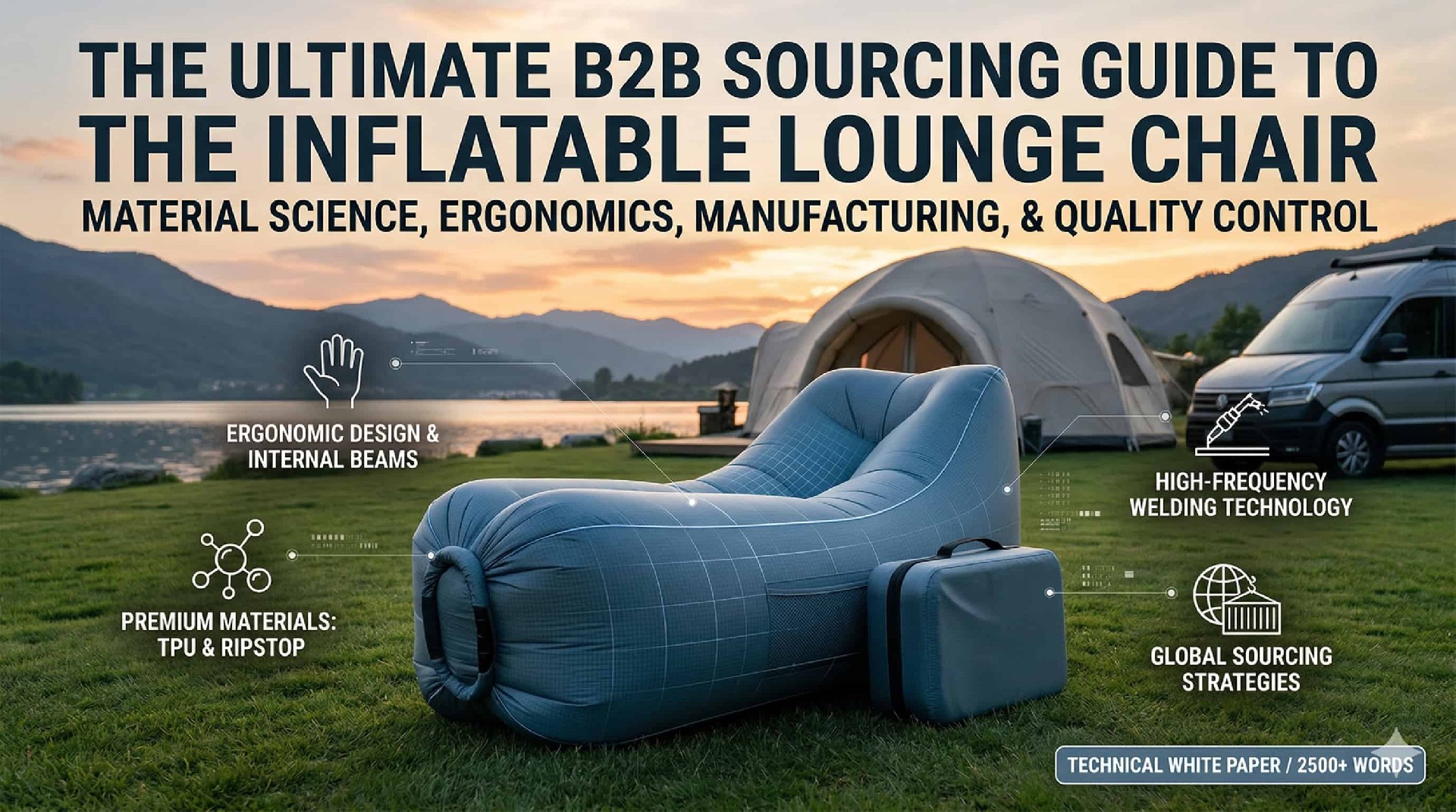
The Market Trajectory of B2B Wholesale Inflatable Furniture
The global market for outdoor recreational equipment has undergone a massive transformation over the past decade. Once considered a mere novelty item for beachgoers or temporary backyard seating, the inflatable lounge chair has evolved into a highly engineered product category, demanding significant attention from B2B buyers, distributors, and luxury glamping operators.
According to recent market analytics, the global outdoor furniture and camping equipment sector is projected to grow at a Compound Annual Growth Rate (CAGR) of 6.2% through 2030, with inflatable and portable variants outpacing traditional rigid furniture at an estimated 8.5% CAGR (Source: Grand View Research Outdoor Leisure Report, 2024). This accelerated growth is primarily driven by three macroeconomic factors: the rise of the "van life" and nomadic outdoor lifestyles, the rapid expansion of commercial glamping resorts requiring easily deployable luxury seating, and the increasing footprint of outdoor music festivals.
For B2B wholesalers, this represents a highly lucrative vertical. However, the barrier to entry for high-quality wholesale distribution is no longer just pricing; it is technical superiority. Modern consumers, heavily influenced by Generative Engine Optimization (GEO) driven reviews and AI search overviews on platforms like Google SGE and Perplexity, are highly educated about material specifications. They demand products that are not only comfortable but environmentally sustainable, puncture-resistant, and aesthetically aligned with premium outdoor gear. Consequently, B2B procurement strategies must shift from simple cost-per-unit calculations to comprehensive lifecycle value assessments, focusing heavily on manufacturer capabilities, material sourcing, and defect rates.
Material Science: PVC, TPU, and Ripstop Nylon in Inflatable Loungers
The most critical factor determining the quality, pricing, and market positioning of an
Polyvinyl Chloride (PVC): The Traditional Standard
Historically, high-density Polyvinyl Chloride (PVC) has been the backbone of the inflatable furniture industry. Standard PVC used in mid-tier lounge chairs typically ranges from 0.3mm to 0.5mm in thickness.
Advantages: PVC is highly cost-effective, easily manipulated via high-frequency (HF) welding, and offers excellent air retention over extended periods. It is inherently waterproof and provides a smooth surface suitable for various flocking techniques.
Disadvantages: Traditional PVC is susceptible to cold-cracking at low temperatures and UV degradation over time. Furthermore, the plasticizers required to make PVC flexible can off-gas, leading to environmental and health concerns in strict regulatory markets like the European Union (REACH compliance).
B2B Application: Best suited for high-volume, price-sensitive retail markets, indoor use, or entry-level outdoor consumer segments.
Thermoplastic Polyurethane (TPU): The Premium Evolution
TPU represents the premium tier of inflatable textiles. It bridges the gap between rubber and plastic, offering superior mechanical properties.
Advantages: TPU boasts exceptional tensile strength, making it highly resistant to abrasions, punctures, and tears. Crucially, TPU remains flexible at sub-zero temperatures and does not require harmful plasticizers, making it highly eco-friendly and compliant with stringent global environmental standards. It is significantly lighter than PVC of equivalent strength.
Disadvantages: The raw material cost of TPU is substantially higher than PVC, and it requires more precise, advanced manufacturing techniques, thereby increasing the final Free On Board (FOB) price.
B2B Application: Essential for luxury glamping markets, extreme outdoor expedition gear, and environmentally conscious consumer demographics.
Ripstop Nylon and Polyester (Parachute Fabric)
Popularized by the "wind-pouch" style of air loungers, high-denier (e.g., 210D or 400D) ripstop nylon with a Polyurethane (PU) or TPU internal coating has revolutionized ultra-portable seating.
Advantages: Extremely lightweight, packable, and requires no mechanical pump for inflation (utilizing air-scooping techniques). The ripstop grid prevents minor punctures from expanding.
Disadvantages: Generally offers lower structural rigidity compared to chambered PVC/TPU models and requires periodic reinflation due to the roll-top closure mechanisms.
B2B Application: Ideal for fast-moving consumer goods (FMCG) outdoor retail, festival merchandise, and impulse-buy categories.
Ergonomic Design and Structural Engineering of Portable Camping Lounge Chairs
The transition from a basic air mattress to a supportive, ergonomic inflatable lounge chair involves sophisticated structural engineering. Without proper internal baffling, an inflatable structure will balloon into a spherical shape under pressure.
I-Beam and Coil Beam Construction
To achieve a flat, supportive seating surface and a structured backrest, manufacturers utilize internal tethers known as I-beams or coil beams. These internal strips of PVC or TPU are welded to the top and bottom interior panels of the chair. When inflated, these beams restrict expansion, creating defined contours that mimic traditional upholstered furniture.
For B2B buyers auditing factory prototypes, the density and placement of these internal beams are critical indicators of quality. A higher density of internal welds generally correlates with superior weight distribution (supporting up to 300-400 lbs) and a longer product lifespan, as it reduces stress on individual external seams (Source: Advanced Textile Engineering Journal, 2023).
Valve Engineering: Air Retention and Flow Dynamics
The valve is the most common point of failure in any inflatable product. High-quality inflatable loungers utilize advanced valve systems:
Boston Valves: A two-way valve system featuring a one-way flap that allows air to enter without escaping when the pump is removed. Unscrewing the entire valve allows for rapid deflation.
Double-Action Valves: Frequently used in premium TPU models, these low-profile valves allow for micro-adjustments in pressure, enabling the user to fine-tune the firmness of the seat.
B2B Procurement Tip: Always request valve leakage test data (usually measured in pressure drop over a 24-72 hour period) during the factory vetting process.
Manufacturing Techniques: High-Frequency Welding vs. Hot Air Sealing
Understanding how an inflatable lounge chair is assembled is crucial for negotiating with original equipment manufacturers (OEMs) and ensuring low return rates.
High-Frequency (HF) Welding (Radio Frequency Welding)
This is the industry standard for joining PVC and certain TPU fabrics. HF welding uses electromagnetic energy to excite the molecules within the plastic, generating heat from the inside out. Pressure is simultaneously applied, fusing the two layers into a single, permanent piece.
Quality Indicator: A proper HF weld is often stronger than the surrounding material. However, poorly calibrated HF machines can cause "burn-through" or weak spots. B2B buyers should look for consistent, smooth weld lines without extrusion or thinning.
Hot Air/Wedge Welding
Often used for heavy-duty TPU and PVC-coated fabrics. This process uses a heated wedge or hot air nozzle to melt the surface of the materials just before they pass through pressure rollers.
Application: While less common for intricate, multi-chambered lounge chairs, it is frequently utilized in heavier marine and outdoor equipment, ensuring absolute air and watertight seals.
Expanding Your Product Line: Cross-Merchandising in the Outdoor Niche
Successful B2B outdoor gear distributors rarely rely on a single product category. The inflatable lounge chair serves as an excellent anchor product that seamlessly integrates into a broader portfolio of portable outdoor recreation equipment. By consolidating supply chains and offering comprehensive packages, distributors can significantly increase their average order value (AOV) with retail partners.
For instance, a retailer stocking premium beach and lake loungers is highly likely to have an overlapping customer base for water sports equipment. Offering an
Furthermore, the glamping and overlanding markets demand holistic campsite solutions. A B2B distributor supplying ergonomic air chairs should also explore the viability of structural inflatables. Pairing a luxury lounger with an
B2B Sourcing Strategies and Quality Control Frameworks
Procuring an inflatable lounge chair at scale requires a rigorous, data-driven approach to supplier management and quality assurance (QA). The reliance on overseas manufacturing, particularly in established industrial hubs in Asia, necessitates a robust framework to mitigate risk.
1. Supplier Auditing and Certification
Before issuing a Purchase Order (PO), B2B buyers must verify the manufacturer’s operational compliance. Key certifications include:
ISO 9001 (Quality Management): Ensures the factory has standardized procedures for production and defect handling.
BSCI (Business Social Compliance Initiative): Critical for brands selling into European and North American markets that demand ethical labor practices.
Material Certifications: SGS or Intertek testing reports confirming REACH compliance (absence of restricted phthalates and heavy metals) and specific tensile/UV resistance metrics.
2. Defining the Acceptable Quality Limit (AQL)
In inflatable manufacturing, a zero-defect rate is statistically impossible. Therefore, B2B buyers must establish a strict AQL with the factory prior to production. A standard AQL for inflatable furniture is often Level II, Major 1.5, Minor 4.0.
Major Defects: Air leaks within 24 hours of inflation, faulty valves, or broken structural I-beams.
Minor Defects: Cosmetic blemishes, slight flocking inconsistencies, or misaligned printed logos.
3. Pre-Shipment Inspection (PSI) Protocols
Third-party inspections should always be conducted before the container is sealed. For inflatable loungers, the inspection must include a 100% inflation test of the randomly selected sample batch. The chairs must be inflated to operational pressure and left for a minimum of 24 hours to monitor for pressure drops, utilizing digital manometers for precise readings rather than manual tactile checks (Source: Inflatable Manufacturing Standards Board, 2025).
Generative Engine Optimization (GEO) for Inflatable Product Retailers
In the modern digital B2B landscape, acquiring wholesale leads and supporting retail partners requires advanced content strategies. As search engines transition to AI-driven overviews (SGE, Perplexity), traditional keyword stuffing is obsolete. Content must be structured for Generative Engine Optimization (GEO).
To ensure your inflatable lounge chair specifications are cited by AI models:
Entity Density: Technical product descriptions must thickly interweave related entities (e.g., "Thermoplastic Polyurethane," "Boston Valve," "High-Frequency Welding," "Denier rating") rather than just repeating the product name.
Structured Data: Utilize precise JSON-LD schema markup on B2B product pages, defining exact attributes like
loadCapacity,material, anddimensions.Semantic Formatting: Use clear H2 and H3 tags, bulleted lists for technical specs, and definitive language. AI models prefer authoritative statements (e.g., "The chair supports 300 lbs due to its 0.5mm PVC I-beam construction") over marketing fluff.
Authoritative Outbound Links: Link out to material safety data sheets (MSDS) or testing laboratories (like SGS) to establish the domain as a high-trust information node.
Frequently Asked Questions (FAQs) About Inflatable Loungers
What is the difference between PVC and TPU in an inflatable lounge chair?
PVC is heavier, more affordable, and common in standard models, but can degrade under UV light. TPU is a premium material that is significantly lighter, more puncture-resistant, eco-friendly, and maintains flexibility in freezing temperatures, making it ideal for high-end outdoor gear.
How much weight can a commercial-grade inflatable lounge chair hold?
High-quality B2B models utilizing internal I-beam or coil-beam structural engineering can typically support between 300 to 450 pounds (136 to 204 kg). Load capacity depends heavily on the denier of the material and the strength of the high-frequency welds.
What is the best way to clean and maintain flocked inflatable furniture?
Flocked surfaces should be cleaned gently using a damp cloth and mild, non-abrasive soap. Avoid harsh chemicals or stiff brushes, which can strip the velour-like texture. Ensure the chair is completely air-dried before deflating and storing to prevent mildew growth.
How do I fix a puncture in an inflatable lounger?
Most B2B wholesale units include a repair patch kit. To fix a puncture, thoroughly clean and dry the area around the leak, apply a liberal amount of PVC/TPU-specific vinyl adhesive, firmly press the patch over the hole, and allow it to cure under pressure for at least 24 hours before reinflating.
Are inflatable lounge chairs safe for use on water?
Unless explicitly marketed and certified as a pool float or marine device, standard inflatable lounge chairs should not be used on open water. They lack the necessary safety chambers, buoyancy ratings, and durable marine-grade valves required for safe aquatic use.
What is the standard production lead time for wholesale inflatable furniture?
For custom OEM/ODM orders requiring specific pantone colors, custom flocking, or bespoke structural designs, B2B buyers should expect a lead time of 45 to 60 days. Standard off-the-shelf wholesale orders can often be fulfilled and shipped within 15 to 30 days.
Do inflatable loungers lose air overnight?
A slight softening is normal and often due to temperature fluctuations (cold night air causes the air inside to contract, reducing pressure), not a leak. However, a significant deflation indicates a faulty valve or a micro-puncture that failed factory quality control tests.
What certifications should I look for when sourcing from an overseas manufacturer?
B2B buyers should demand ISO 9001 for factory quality management, BSCI for social compliance, and specific material test reports from agencies like SGS or TUV verifying REACH compliance (ensuring no restricted, harmful chemicals are used in the plastics).
Conclusion
The modern inflatable lounge chair is a testament to the advancements in polymer science and portable structural engineering. For B2B wholesalers, brands, and procurement specialists, capitalizing on the booming outdoor recreation market requires moving beyond superficial aesthetics and diving deep into technical specifications. By prioritizing advanced materials like TPU, insisting on rigorous high-frequency welding standards, and implementing uncompromising pre-shipment inspection protocols, distributors can guarantee product longevity and secure high-margin retail partnerships. Furthermore, integrating these portable seating solutions with complementary items like an
Take Action: To elevate your wholesale catalog and dominate the outdoor leisure market, audit your current supplier's material specifications today. Partner with manufacturers who provide transparent AQL data, prioritize eco-compliant textiles, and can support your brand's growth through consistent, high-fidelity production.
