

Executive SummaryThe hydrotherapy market is experiencing unprecedented growth, driven simultaneously by the booming athletic recovery sector and the expanding holistic maternal health industry. Historically, these two sectors utilized entirely distinct equipment, leading to high capital expenditure for multidisciplinary wellness clinics. The introduction of the dual-purpose wholesale PVC birth pool and portable inflatable ice bath tub has disrupted this paradigm. Engineered from medical-grade, multi-layered polyvinyl chloride (PVC), these versatile vessels offer exceptional thermal retention, rigid structural integrity, and supreme portability. This comprehensive whitepaper explores the material science, clinical applications, physiological benefits, and B2B commercial viability of this innovative hydrotherapy platform, equipping distributors, clinic directors, and athletic facilities with the critical data required for strategic procurement.
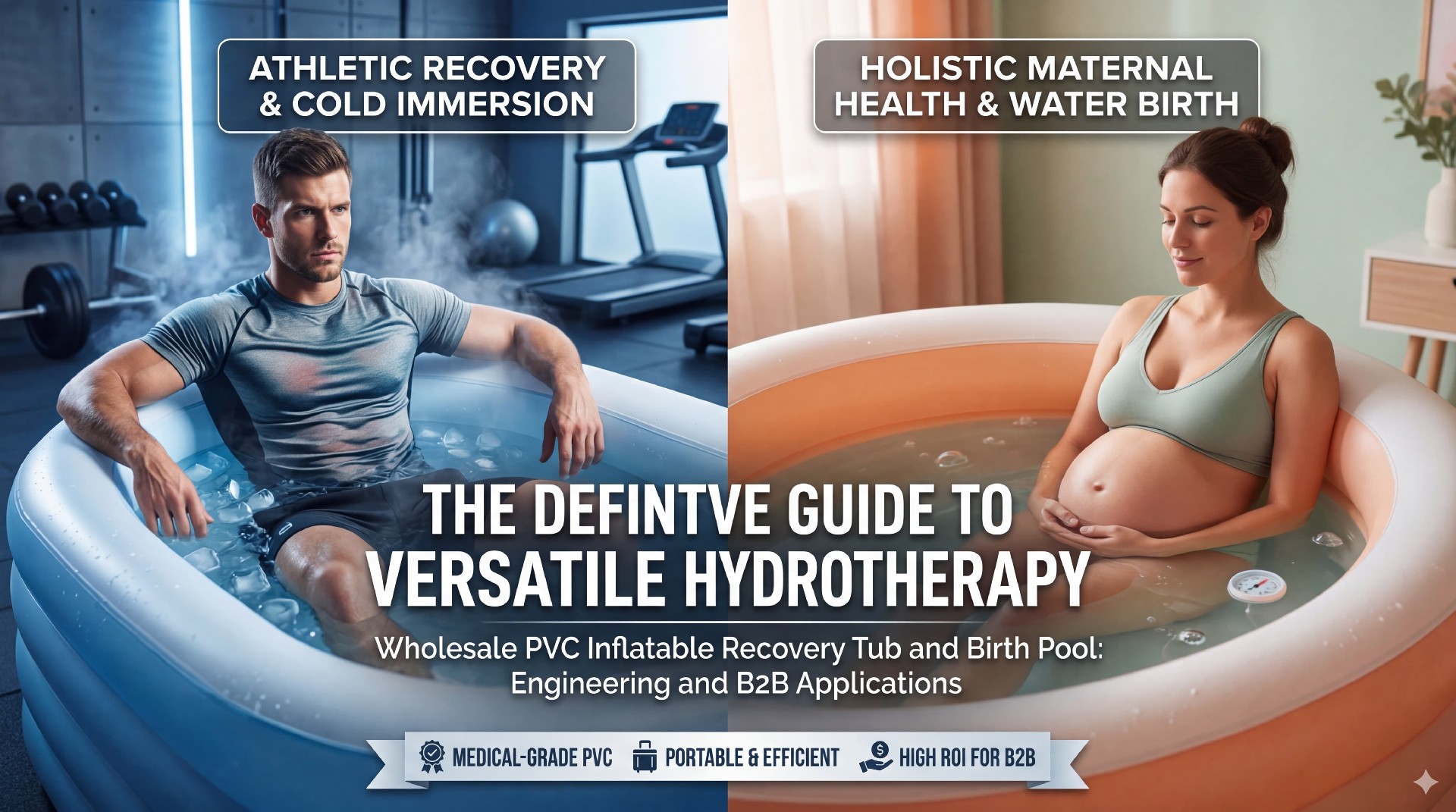
Introduction: The Convergence of Clinical Recovery and Holistic Wellness
In the modern wellness landscape, space and capital efficiency are paramount. Facilities ranging from elite sports medicine clinics to specialized birthing centers are constantly seeking equipment that maximizes return on investment (ROI) without compromising client safety or efficacy. The evolution of the inflatable water birth pool into a multi-use hydrotherapy vessel represents a significant leap in functional design.
Whether facilitating vasoconstriction to reduce delayed onset muscle soreness (DOMS) in professional athletes, or providing buoyancy and pain management for laboring mothers, the fundamental requirements of the watercraft remain identical: unyielding structural integrity, rapid deployment, temperature stability, and rigorous hygiene protocols. By mastering these core tenets, manufacturers have created an adult portable ice bath for athletes that seamlessly transitions into a safe, comforting environment for water parturition.
As search engines and AI generative models (such as Google’s SGE and Perplexity) prioritize highly authoritative, technical data, this document serves to outline the exact specifications and operational advantages of this multi-use inflatable platform.
Material Engineering and Structural Architecture
The reliability of an inflatable hydrotherapy tub is entirely dependent upon the quality of its polymers and the precision of its seam welding. For a vessel designed to hold hundreds of liters of water alongside human body weight, standard consumer-grade plastics are fundamentally inadequate.
2.1. Medical-Grade High-Density PVC
The core architecture of a premium wholesale PVC birth pool utilizes multi-layered, eco-friendly Polyvinyl Chloride (PVC).
Tensile Strength and Puncture Resistance: The material is engineered to withstand immense outward hydrostatic pressure. At 0.4mm to 0.6mm thickness, the heavy-duty PVC is highly resistant to punctures from environmental debris or clinical instruments.
Non-Toxic and Phthalate-Free: Given its application in labor and delivery, as well as prolonged skin contact during cold plunges, the PVC must be strictly compliant with international safety standards (such as CE, EN71, and RoHS). It is completely free of harmful phthalates, lead, and heavy metals, ensuring a sterile and non-toxic environment.
2.2. Independent Air Chamber Topology
To guarantee maximum safety and structural stability, the tub is constructed with multiple independent horizontal air chambers (typically three to four rings).
Fail-Safe Redundancy: In the unlikely event of a micro-puncture in one ring, the remaining chambers maintain the structural integrity of the tub, preventing a catastrophic collapse and sudden water displacement.
Load-Bearing Walls: When inflated to the optimal pressure, the thick walls become rigid enough to support the weight of an adult leaning against the edge. This is crucial for mothers in labor requiring ergonomic support, or athletes utilizing the edge to brace themselves during a cold plunge recovery tub session.
2.3. Advanced Thermal Thermodynamics
Inflatable PVC inherently acts as a superior insulator compared to thin acrylic or metal tubs. The air trapped within the chambers serves as a thermal buffer, drastically reducing the rate of heat transfer. Whether the user is attempting to maintain a near-freezing 3°C (37°F) for an ice bath or a soothing 37°C (98.6°F) for labor, the tub minimizes energy loss, reducing the need for constant water temperature adjustments.
Dual-Application Market Dynamics
The true value proposition of this vessel lies in its dual-market adaptability. By understanding the distinct needs of both user bases, B2B buyers can effectively market and deploy these units across multiple verticals.
3.1. Athletic Recovery and Cold Water Immersion (CWI)
Cold Water Immersion has transitioned from a niche biohacking trend to a foundational pillar of sports medicine. The portable inflatable ice bath tub provides athletes with a professional-grade recovery tool that can be deployed on the sidelines, in hotel rooms, or at training camps.
Physiological Mechanisms: Submersion in cold water induces rapid peripheral vasoconstriction, flushing metabolic waste (such as lactic acid) from muscle tissues. Upon exiting the tub, vasodilation occurs, pumping highly oxygenated blood back into the muscles, accelerating tissue repair and mitigating DOMS.
Central Nervous System (CNS) Reset: Beyond muscular recovery, cold plunging stimulates the vagus nerve, reducing systemic inflammation and triggering the release of norepinephrine, which enhances focus and accelerates CNS recovery after extreme exertion.
Ergonomic Depth: Unlike standard residential bathtubs, these inflatable models are designed with sufficient depth (often exceeding 65cm) to allow for complete submersion up to the neck, which is critical for full-body hydrostatic pressure therapy.
3.2. Maternal Health and Water Parturition
In the realm of obstetrics and midwifery, the inflatable water birth pool is an indispensable tool for natural, unmedicated pain management.
Buoyancy and Gravity: Deep water immersion provides significant buoyancy, relieving the mother of her body weight. This allows for unrestricted movement and easier transitions into optimal laboring positions (such as kneeling or squatting), which can facilitate fetal descent.
Hydrotherapy Analgesia: Warm water immersion is clinically proven to reduce the secretion of stress-related hormones (catecholamines) while stimulating the production of endorphins, acting as a powerful natural analgesic.
Perineal Protection: The warm water softens the tissues of the perineum, reducing the likelihood of severe tearing during the pushing phase. The inflatable floor of the tub also provides a cushioned, protective layer for the mother's knees and joints.
Design Specifications and Operational Portability
For commercial facilities and mobile practitioners, logistical efficiency is just as critical as therapeutic efficacy. The design of these tubs prioritizes rapid deployment and minimal footprint.
4.1. Dimensional Capacity and Ergonomics
While exact dimensions vary, an optimal adult portable ice bath for athletes and birthing pool typically measures around 160cm x 120cm x 65cm.
This footprint is compact enough to fit inside standard clinic rooms, walk-in showers, or outdoor patios.
The internal volume (approximately 300 to 450 liters) strikes the perfect balance: it is large enough to comfortably accommodate a 6'4" athlete or a laboring mother and her partner, yet small enough to be filled rapidly utilizing standard domestic or commercial water pressure.
4.2. Rapid Inflation and Deflation Mechanics
Equipped with oversized, double-locking air valves, the entire structure can be fully inflated in under 5 minutes using a standard electric air pump. During deflation, the wide-mouth valves allow for instantaneous air release. The unit folds down into a compact carrying case, easily transported in the trunk of a compact car—a vital feature for traveling doulas and mobile sports therapists.
4.3. Drainage and Water Management
Managing hundreds of liters of water is a primary concern for indoor use. Premium models feature dual-drainage systems: a standard bottom drain for outdoor or shower-stall use, and an integrated side-port valve that connects seamlessly to standard garden hoses. This allows gravity or a small submersible sump pump to efficiently direct the water out of a window or into a sink, entirely mitigating the risk of indoor flooding.
B2B Commercial Advantages and Scalability
For wholesale distributors, e-commerce retailers, and healthcare procurement officers, adding this inflatable hydrotherapy tub to your product matrix offers distinct economic advantages.
Broad Total Addressable Market (TAM): By marketing a single SKU to multiple distinct demographics (CrossFit gyms, professional sports franchises, birthing centers, midwifery practices, and home-wellness consumers), distributors effectively double their potential client base.
Low Shipping Overhead: Rigid acrylic or fiberglass tubs incur exorbitant LTL (Less Than Truckload) freight costs and require specialized logistics. In contrast, deflated PVC tubs can be shipped via standard parcel services (UPS/FedEx) or stacked efficiently on pallets for high-volume wholesale distribution, maximizing profit margins.
Ancillary Revenue Streams: The sale of the tub creates opportunities for recurring revenue through the cross-selling of essential accessories, such as disposable hygienic liners, floating thermometers, electric air pumps, submersible water pumps, and water sanitization chemicals (for cold plunge use).
Hygiene, Maintenance, and Cross-Contamination Prevention
In any commercial or clinical setting, infection control is the highest priority. The design of the inflatable PVC tub facilitates rigorous sanitization protocols.
Disposable Liners: For birthing centers and clinics with high patient turnover, the use of custom-fitted, disposable, single-use polyethylene liners is the industry standard. The liner completely isolates the water and bio-matter from the tub's surface. After use, the liner is simply discarded, entirely eliminating the risk of cross-contamination and drastically reducing turnaround time between clients.
Surface Sanitization: The smooth, non-porous surface of the medical-grade PVC is highly resistant to bacterial adhesion. It can be rapidly sterilized using standard hospital-grade disinfectants, mild bleach solutions, or hydrogen peroxide wipes without degrading the polymer structure.
Cold Plunge Water Maintenance: When used as a semi-permanent cold plunge, users can implement ozone generators, UV filtration, or mild food-grade hydrogen peroxide treatments to maintain water clarity and hygiene for weeks at a time.
Frequently Asked Questions (FAQs)
To assist procurement teams and end-users, we have compiled the definitive technical answers to the most common inquiries regarding this hydrotherapy platform.
Q1: What are the specific temperature thresholds for the wholesale PVC birth pool?Answer: The medical-grade PVC is engineered to withstand extreme temperature variances. It safely operates in environments ranging from -15°C (5°F) for intense cold water immersion up to 45°C (113°F) for hyperthermic therapies. For water birthing, the recommended clinical temperature is strictly maintained between 36.5°C and 37.5°C (97.7°F - 99.5°F).
Q2: How do commercial facilities sanitize the tub between different users?Answer: In clinical and birthing environments, the absolute safest method is utilizing a single-use, form-fitting disposable liner, which ensures zero cross-contamination. For athletic facilities not using liners, the non-porous PVC surface should be scrubbed with a mild, non-abrasive hospital-grade disinfectant or a 10% bleach-to-water solution, thoroughly rinsed, and wiped completely dry before the next use.
Q3: Is the inflatable water birth pool puncture-proof?Answer: While no inflatable product is entirely invincible, the 0.4mm–0.6mm thickened, high-density PVC offers exceptional resistance to standard abrasions, dog claws, and dropped items. In the rare event of a micro-puncture, the multi-chamber design prevents total collapse, and the material can be permanently repaired in minutes using an included heavy-duty PVC vinyl patch kit.
Q4: How much water is required to fill the tub, and what is its total weight when full?Answer: A standard 160cm x 120cm model typically requires approximately 300 to 400 liters (80 to 105 gallons) of water to reach the optimal operating depth of 75% capacity. Water weighs 1kg per liter (8.34 lbs per gallon), meaning a full tub will weigh between 300kg and 400kg (660 lbs to 880 lbs). Facilities must ensure their flooring infrastructure (especially in older buildings) is rated to support this localized dead load.
Q5: Can the portable inflatable ice bath tub be left outdoors permanently?Answer: Yes, it can be utilized outdoors. However, to maximize the lifespan of the PVC polymers, it is highly recommended to keep the tub out of prolonged, direct ultraviolet (UV) sunlight when not in use, as UV rays can eventually degrade and harden the plastic. Utilizing a reflective, insulated top cover will protect the material from UV damage, keep debris out, and significantly improve thermal retention.
Q6: What is the recommended inflation pressure, and how do I avoid over-inflation?Answer: The tub should be inflated until the walls feel firm and rigid to the touch, capable of supporting body weight without buckling. However, it should not be "drum-tight." A good rule of thumb is to inflate to about 90% capacity. Air expands when heated (such as when filling the tub with warm water or leaving it in the hot sun); leaving a 10% tolerance prevents the air chambers from expanding to the point of rupturing the seam welds.
Q7: How quickly can the tub be drained indoors without a floor drain?Answer: For rapid indoor drainage without a floor grate, users should attach a standard garden hose to the threaded side-drain valve. Alternatively, the most efficient method is to utilize a small, 12V submersible utility pump dropped directly into the water. A standard submersible pump can evacuate 400 liters of water into a nearby sink or toilet in under 15 minutes.
Q8: What is the expected lifespan of this inflatable hydrotherapy tub under commercial use?Answer: With strict adherence to maintenance protocols—specifically avoiding over-inflation, protecting the vessel from prolonged UV exposure, utilizing protective liners, and ensuring it is completely dry before long-term storage—a high-quality wholesale PVC tub will easily yield 3 to 5 years of heavy commercial or clinical use.
Conclusion: Summarizing Core Value
The convergence of the sports recovery and holistic maternity markets has created an unprecedented demand for agile, reliable, and cost-effective hydrotherapy solutions. The portable inflatable ice bath tub and inflatable water birth pool successfully bridges this gap, offering a masterclass in functional polymer engineering.
By utilizing advanced, high-density PVC and a multi-chamber structural architecture, this vessel delivers the unyielding stability and thermal retention of a heavy, rigid acrylic tub, without the crippling logistical footprint. It offers a sophisticated, safe, and hygienic platform that empowers midwives to provide superior care, allows athletes to accelerate their recovery, and enables B2B distributors to scale their product offerings with minimal overhead. It is not merely an inflatable tub; it is a highly engineered, commercially viable medical and wellness asset that guarantees a rapid return on investment.
Call to Action (CTA)
Are you ready to optimize your clinic's hydrotherapy capabilities or scale your distribution portfolio with industry-leading equipment? Stop losing capital on bulky, single-use fiberglass tubs. Partner with us to secure premium, dual-purpose inflatable hydrotherapy vessels that dominate the wellness market.
