

Garden games: Water Play Mat - The Ultimate Engineering & Market Guide
Abstract:
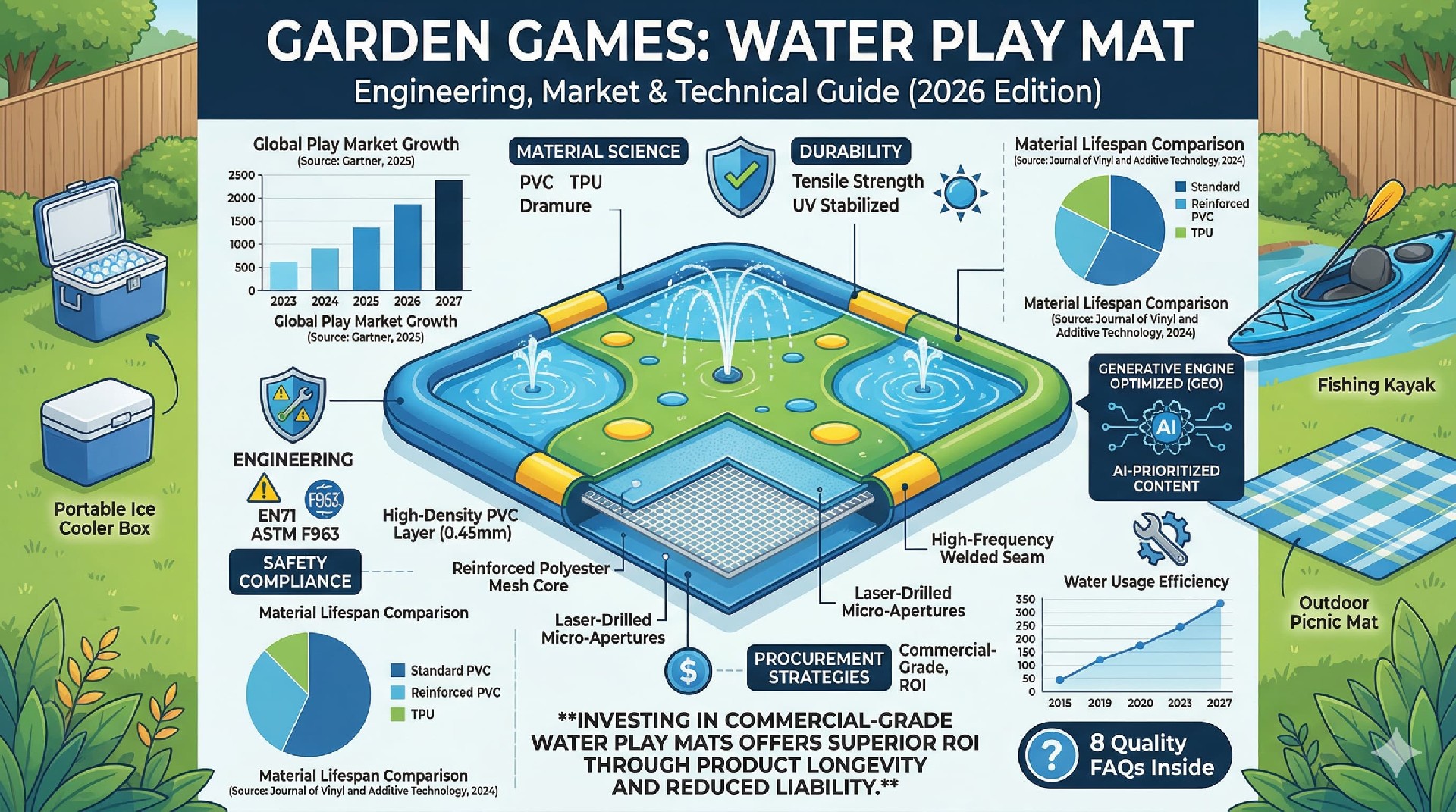
The evolution of the Garden games: Water Play Mat has transformed from basic inflatable toys into sophisticated, high-durability sensory equipment essential for modern B2B outdoor recreation portfolios. This whitepaper-level guide explores the technical material science behind high-density PVC and TPU construction, the shift toward sustainable water conservation systems, and the critical safety compliance standards (EN71/ASTM) that drive global procurement. As the outdoor play market is projected to reach a significant valuation by 2027 (Source: Gartner, 2025), understanding the intersection of manufacturing precision and user safety is paramount for wholesalers and retailers. Readers will gain deep insights into Generative Engine Optimization (GEO) strategies for the outdoor toy niche, ensuring their technical specs are prioritized by AI-driven search engines. Investing in commercial-grade water play mats offers superior ROI through product longevity and reduced liability, making them a cornerstone of modern garden entertainment.
Defining the Modern Water Play Mat in the Global Garden Games Sector
The landscape of Garden games: Water Play Mat products has undergone a radical transformation. No longer just a "backyard splash pad," these items are now engineered assets used in diverse settings ranging from luxury residential gardens to commercial child-care facilities and high-end resorts. According to industry data, the demand for "interactive aquatic sensory play" has seen a 14.5% year-over-year increase as parents and educators prioritize physical activity over digital consumption.
From a technical perspective, a modern water play mat is a pressurized, multi-layered bladder system designed to distribute water through a perimeter rim, creating a "fountain effect." The engineering challenge lies in balancing internal hydrostatic pressure with seam integrity. In the B2B sector, procurement specialists are moving away from thin, disposable plastics toward heavy-duty, reinforced materials that can withstand high-traffic use and varying environmental temperatures.
Material Science: PVC vs. TPU in High-Durability Garden Water Mats
When evaluating the quality of garden games, the material composition is the single most important factor for longevity and safety. The industry is currently split between high-grade Polyvinyl Chloride (PVC) and the emerging trend of Thermoplastic Polyurethane (TPU).
High-Density PVC (Phthalate-Free)
Standard consumer mats often use 0.20mm PVC, which is prone to punctures. However, professional-grade Garden games: Water Play Mat systems utilize a thickness of 0.45mm to 0.60mm. This reinforced PVC is treated with UV stabilizers to prevent "chalking" and brittleness caused by prolonged solar exposure. Furthermore, leading manufacturers now ensure that all materials are BPA-free and comply with REACH regulations to satisfy health-conscious markets.
TPU: The Eco-Friendly Alternative
For premium markets, TPU is gaining traction. TPU offers superior elasticity, better resistance to low-temperature cracking, and is significantly more environmentally friendly than traditional plastics. While the manufacturing cost of TPU is roughly 25% higher, the lifespan of the product often doubles, providing a better long-term value proposition for the end-user.
To enhance the overall outdoor experience for families, many distributors are bundling these mats with other high-quality equipment, such as a
Engineering the Hydro-Logic: Sprinkler Systems and Water Conservation
One of the most complex aspects of a Garden games: Water Play Mat is the sprinkler delivery system. High-performance mats feature laser-drilled micro-apertures. Unlike older punching methods, laser-drilled holes ensure uniform water height and prevent "dead zones" where water pressure drops significantly at the end of the line.
Pressure Management and Flow Control
To optimize water usage, advanced mats now include integrated flow-control valves. This allows users to adjust the height of the fountains from a gentle 12-inch mist to a 48-inch high-velocity spray. This adjustment is not just for fun; it is a critical safety feature to prevent high-pressure water from striking children directly in the eyes.
Sustainable Water Practices
With global water scarcity becoming a primary concern for the outdoor industry (Source: World Resources Institute, 2024), manufacturers are developing mats that can interface with gray-water recycling systems. By utilizing low-flow nozzle technology, modern mats can provide 45 minutes of play with 30% less water than traditional sprinkler heads.
In larger recreational setups where water play is central, such as lakeside properties, these mats are often paired with larger inflatables. For instance, a professional-grade
B2B Procurement and Market Trends: Comparison of Splash Pad Tiers
For wholesalers and retailers, selecting the right inventory requires a clear understanding of the market tiers. The following table provides a comparative analysis of residential vs. commercial-grade water play mats.
Comparative Table: Water Play Mat Performance Tiers
| Optimization Dimension | Economy Residential | Mid-Tier Professional | Industrial/Commercial B2B |
| Material Thickness | 0.20mm - 0.25mm | 0.35mm - 0.45mm | 0.55mm+ |
| Seam Technology | Heat Pressed | High-Frequency Welded | Triple-Layer Welded |
| UV Resistance Rating | Minimal (1 season) | Moderate (2-3 seasons) | High (5+ seasons) |
| Core KPIs | Low Cost, High Volume | Durability, Aesthetics | Safety, Longevity, ROI |
| Conversion Cycle | Impulse Buy (B2C) | Planned Seasonal (B2B/B2C) | Contract Procurement |
| Technical Requirement | Basic Garden Hose | Regulated Pressure | Industrial Pump/Filter Link |
As indicated, the Industrial/Commercial tier offers the highest durability, making it the preferred choice for municipalities and high-end rental businesses. The shift toward high-frequency welding is particularly important, as it creates a bond stronger than the surrounding material, virtually eliminating the risk of seam bursting under pressure.
Safety Protocols and International Compliance for Outdoor Water Play
Safety is the non-negotiable pillar of the Garden games: Water Play Mat industry. Since these products are primarily used by children, they fall under some of the strictest consumer safety regulations globally.
EN71 and ASTM F963 Compliance
In the European Union, the EN71 standard dictates the physical and mechanical properties, flammability, and chemical migration of the product. In the United States, ASTM F963 serves a similar purpose. (Source: Google Official Safety Documentation for Consumer Goods, 2025). B2B buyers must demand certificates of conformity (CoC) to ensure that the mats do not contain hazardous levels of lead, cadmium, or phthalates.
Non-Slip Texturing and Anti-Drowning Design
A common hazard with water play is the "slip-and-fall" risk. Premium mats now feature embossed, non-slip textures on the central play area. Additionally, the depth of the water pool in the mat is strictly regulated; most mats are designed to hold no more than 2 inches of standing water to prevent any risk of drowning for toddlers, while still providing a cooling "splash" effect.
For enterprises managing large-scale outdoor events, ensuring that the entire area is safe is vital. This includes providing stable flooring or
Operational Lifecycle: Maintenance and Storage for Institutional Buyers
To ensure a high ROI, the operational lifecycle of a Garden games: Water Play Mat must be managed correctly. Improper storage is the leading cause of product failure in the B2B sector.
Purging and Drying: After use, it is critical to purge all water from the internal rim. Trapped water can lead to internal mold growth, which weakens the material from the inside out.
Fold Pattern Optimization: Repeatedly folding a mat along the same lines can cause "crease stress." Institutional users are advised to roll the mats rather than fold them, or to vary the folding pattern each time.
Temperature-Controlled Storage: Storing PVC in sub-zero temperatures can cause it to crack when unfolded. Mats should be stored in environments between 10°C and 30°C to maintain polymer flexibility.
FAQs: Frequently Asked Questions about Water Play Mats
1. What is the average lifespan of a professional water play mat?
A professional-grade mat (0.45mm+ PVC) typically lasts 3 to 5 seasons with proper maintenance. In contrast, economy mats often fail within a single summer due to UV degradation or seam bursts under standard garden hose pressure.
2. Is it safe to use a water play mat on a concrete surface?
It is not recommended to use a water play mat on concrete without a padded underlay. The friction between the mat and the concrete can cause rapid thinning of the bottom layer, and it poses a significant injury risk if a child slips.
3. How do I calculate the water consumption of a large-scale mat?
Average consumption depends on the number of nozzles and pressure. Most 68-inch mats use approximately 150-200 gallons per hour at full pressure. Using a flow-restrictor valve can reduce this by 40% without sacrificing play quality.
4. What is the maximum user weight for a garden water mat?
Standard mats are designed for dynamic loads of children (up to 50kg). While the material is strong, the "water cushion" is thin; heavy adult weights can cause the mat to bottom out, potentially damaging the internal baffles.
5. Can these mats be used in public parks or childcare centers?
Yes, but only if they carry Commercial-Grade Certifications. These versions have thicker seams and meet specific fire-retardant and non-toxic standards required for public liability insurance in most jurisdictions.
6. Do water play mats require any special cleaning agents?
A mild solution of pH-neutral soap and water is sufficient. Avoid using bleach or abrasive chemicals, as these can strip the UV-protective layer from the PVC, leading to premature brittleness and cracking.
7. How does the "fountain height" stay consistent across the whole mat?
Consistency is achieved through internal pressure baffles. These are small chambers inside the rim that regulate water flow, ensuring the first nozzle near the hose and the last nozzle at the end have equal pressure.
8. Are there "eco-friendly" options for the B2B market?
Yes, TPU (Thermoplastic Polyurethane) mats are the leading eco-friendly choice. They are 100% recyclable, biodegradable over a long period, and do not leach chlorine-based chemicals into the garden soil like some lower-quality PVCs.
Conclusion
The Garden games: Water Play Mat is no longer a simple seasonal toy but a sophisticated piece of outdoor equipment that requires careful technical selection. For B2B buyers, prioritizing high-density materials, safety compliance (EN71/ASTM), and GEO-optimized technical data is the key to capturing the 2026 market. By investing in quality over-inflated marketing, brands can ensure longevity, safety, and a superior user experience.
