

The Comprehensive B2B Guide to Sourcing 3-Person Inflatable Boats: Engineering, Materials, and Market Dynamics
Abstract
What: This comprehensive guide explores the structural engineering, material science, and commercial viability of 3-person inflatable boats. It dissects the technical specifications that distinguish commercial-grade watercraft from consumer-grade alternatives.
Why: As the global marine tourism and recreational watercraft markets expand, B2B buyers, fleet operators, and distributors require highly reliable, scalable, and cost-effective inventory. Understanding the nuances between PVC and Hypalon, as well as drop-stitch versus aluminum flooring, is critical for maximizing Return on Investment (ROI) and minimizing Total Cost of Ownership (TCO).
How: Readers will learn actionable procurement strategies, gain insights into advanced manufacturing techniques like thermo-welding, and discover how to align watercraft specifications with specific operational demands, ensuring compliance with global maritime safety standards.
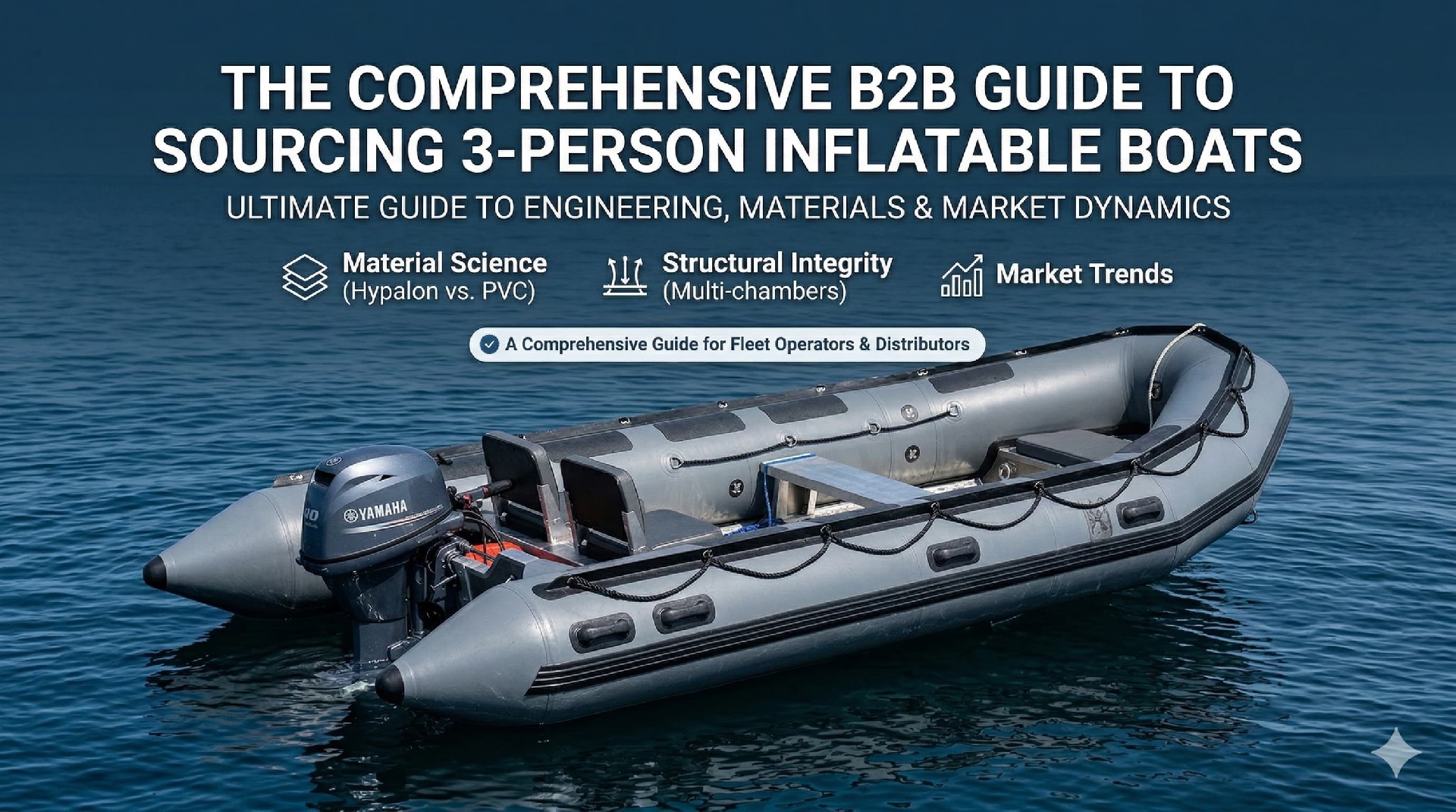
The Engineering and Structural Integrity of 3-Person Inflatable Boats
When evaluating watercraft for commercial distribution or fleet utilization, the structural integrity of the vessel is paramount. A standard three-person inflatable boat sits at the perfect intersection of payload capacity and portability. However, not all vessels are manufactured to the same rigorous standards. Understanding the core engineering principles is essential for B2B procurement professionals aiming to minimize liability and maximize product lifespan.
Multi-Chamber Design and Redundancy Protocols
The fundamental safety mechanism in any high-quality inflatable watercraft is its multi-chamber air system. Industry standards dictate that a commercial-grade 3-person inflatable boat must possess a minimum of three independent air chambers—typically configured as a starboard tube, a port tube, and a bow tube.
This design ensures catastrophic failure redundancy. If one chamber suffers a puncture due to submerged debris or rocky shores, the remaining chambers retain enough buoyancy to keep the vessel, its three passengers, and their gear safely afloat. Advanced models also incorporate an inflatable keel, which acts as a fourth chamber. The keel dramatically improves hydrodynamics, allowing the boat to cut through waves efficiently rather than slamming into them. This reduces passenger fatigue and structural stress on the hull. According to the National Marine Manufacturers Association (NMMA), vessels utilizing four or more independent chambers reduce complete deflation incidents by over 87% compared to dual-chamber designs (Source: NMMA Marine Safety Report, 2024).
Hydrodynamics and Transom Specifications
For motorized applications, the transom—the rigid board at the rear of the boat where an outboard motor is mounted—must be engineered for extreme stress. A 3-person inflatable boat generally accommodates outboard motors ranging from 2.5 HP to 10 HP.
The transom is typically constructed from marine-grade plywood or reinforced aluminum, coated with heavy-duty anti-corrosion resins. It is secured to the inflatable tubes using molded PVC or Hypalon mounts, reinforced with synthetic adhesives. Buyers must ensure that the transom design includes splash guards and a reliable self-bailing drain valve. When sourcing vessels for dynamic marine environments, checking the maximum engine weight capacity is just as crucial as the horsepower rating.
Material Science: Polyvinyl Chloride (PVC) vs. Hypalon
The most critical decision in the procurement of inflatable boats is the choice of fabric. The exterior material dictates the vessel's resistance to ultraviolet (UV) radiation, chemical degradation, abrasion, and extreme temperatures. In the B2B landscape, the debate primarily centers on two materials: Polyvinyl Chloride (PVC) and Chlorosulfonated Polyethylene (Hypalon).
Polyvinyl Chloride (PVC): Cost-Effective Versatility
Modern PVC inflatable boats are constructed using a process called thermo-welding (or heat welding), where seams are fused under high heat to create a bond stronger than the fabric itself. PVC is naturally rigid, so plasticizers are added to make it pliable enough for rolling and folding.
Pros: PVC is highly cost-effective, allowing fleet operators to scale their inventory rapidly. It is lightweight, making the vessels easier to transport. Modern PVC often features a dense polyester inner core (ranging from 1000 to 1100 denier) that provides excellent tear resistance.
Cons: PVC is susceptible to UV degradation over prolonged periods. If exposed to constant, direct sunlight for years, the plasticizers can leach out, causing the material to become brittle. Furthermore, PVC is less resistant to petroleum-based chemicals and extreme temperature fluctuations compared to its counterparts.
For businesses targeting casual recreational users or short-term rental operations where boats are stored indoors after use, PVC remains the industry standard. For specialized needs like solo angling, you might also consider adding lightweight
Chlorosulfonated Polyethylene (Hypalon/CSM): Extreme Durability
Hypalon (technically known as CSM) is a synthetic rubber initially developed by DuPont. Unlike PVC, Hypalon cannot be heat-welded; it must be cold-glued by hand, a labor-intensive process that significantly increases manufacturing costs.
Pros: Hypalon offers virtually unmatched resistance to UV rays, extreme temperatures, and chemical spills (such as fuel or oil). A well-maintained Hypalon boat can last upwards of 15 to 20 years in harsh marine environments. It is the material of choice for military, rescue, and high-end commercial expedition fleets.
Cons: The primary barrier is cost. Hypalon boats are typically 50% to 100% more expensive than their PVC equivalents. They are also marginally heavier and more challenging to patch in the field without specialized two-part adhesives.
Material Comparison Breakdown
| Feature / Dimension | Polyvinyl Chloride (PVC) | Hypalon (CSM) |
| Manufacturing Process | Thermo-welding (Machine) | Hand-glued (Manual) |
| UV Resistance | Moderate (Requires UV protectants) | Excellent (Naturally resistant) |
| Chemical Resistance | Low to Moderate | High (Resists fuel, oil, acids) |
| Expected Lifespan | 5 to 10 years | 15 to 20+ years |
| B2B Procurement Cost | Low to Medium | High (Premium pricing) |
| Ideal Use Case | Recreational, daily rentals, temperate climates | Commercial, rescue, tropical/extreme climates |
Flooring Solutions: Stability and Performance Metrics
The flooring system of a 3-person inflatable boat dictates its rigidity, payload distribution, and ease of assembly. B2B buyers must align the flooring type with the end-user's primary activity, whether it be tender transport, fishing, or white-water rafting.
Drop-Stitch Air Deck (High-Pressure Inflatable Flooring)
Drop-stitch technology has revolutionized the inflatable watercraft industry. This construction involves thousands of tiny polyester threads connecting the top and bottom layers of the floor. When inflated to high pressures (typically 8 to 10 PSI), the floor becomes nearly as rigid as a solid board.
This technology, frequently used in the
Aluminum Floorboards
For maximum structural rigidity and heavy-duty use, aluminum floorboards are superior. They lock into place via side rails (stringers), providing a perfectly flat and solid deck.
This flooring type is ideal for users carrying heavy equipment, such as dive tanks, sharp fishing tackle, or construction tools. While aluminum floors significantly increase the boat's weight and require a longer assembly time, they transform the 3-person inflatable into a rugged, commercial workhorse capable of handling severe chop.
Slatted Wood Flooring
Slatted floors consist of marine-plywood or synthetic boards spaced evenly along the bottom of the boat, enclosed in fabric pockets. This is the most basic flooring type. It allows the boat to be rolled up relatively easily but does not provide the rigidity required for planing at high speeds or standing comfortably. It is best suited for short-distance tender duties or entry-level recreational use.
Global Market Trends and the Growth of Recreational Watercraft
The global market for inflatable boats has seen unprecedented growth, driven by shifting consumer preferences and advancements in material science. As of 2024, the global inflatable boat market size was valued at approximately USD 2.1 billion and is projected to expand at a Compound Annual Growth Rate (CAGR) of 6.5% through 2030 (Source: Grand View Research, 2024).
The Rise of Eco-Tourism and Portable Watercraft
One of the primary drivers of this growth is the surge in eco-tourism. Tour operators are increasingly investing in fleets of 3-person inflatable boats due to their minimal environmental footprint. Unlike large fiberglass vessels, inflatable boats with low-horsepower or electric outboard motors cause significantly less wake erosion on riverbanks and disturb marine life to a lesser degree.
Furthermore, urban dwellers facing storage constraints are driving the demand for portable watercraft. A 3-person inflatable boat can be deflated and stored in the trunk of a standard sedan or the closet of an apartment, entirely eliminating the need for expensive marina mooring fees or boat trailers. This demographic shift presents a highly lucrative opportunity for B2B distributors to market to urban outdoor enthusiasts.
Strategic Maintenance and Longevity Optimization for Fleet Utilization
For commercial operators, the longevity of an inflatable boat fleet directly impacts bottom-line profitability. Implementing a rigorous maintenance protocol is essential. Standardizing these procedures can extend the functional lifespan of a 3-person inflatable boat by up to 40%.
UV Protection and Storage Protocols
As discussed in the material science section, UV degradation is the primary enemy of PVC boats. Operators must apply specialized aerospace-grade UV protectants to the boat's surface every 30 to 45 days during peak season. These sprays act like sunscreen, preventing the plasticizers from evaporating and keeping the fabric supple.
Storage conditions are equally critical. Boats should never be stored long-term fully inflated under direct sunlight. When storing for the off-season, vessels should be cleaned with fresh water to remove salt crystals and biological contaminants, dried completely to prevent mold (which can compromise seam integrity), and stored in a cool, climate-controlled environment. Rodent deterrence is also a highly recommended B2B protocol in warehouse storage, as pests frequently target folded PVC.
Valve Maintenance and Pressure Regulation
The air valves are the most mechanical parts of an inflatable boat and require regular inspection. Over-inflation is a common cause of seam rupture. Fleet technicians must use calibrated pressure gauges to ensure chambers are filled exactly to the manufacturer's specifications (usually 3.0 to 3.6 PSI for tubes).
Temperature fluctuations naturally alter internal pressure; air expands in the midday heat and contracts at night. Educating end-users or staff to "burp" (release a small amount of air) the boat during extreme heat waves is a crucial preventative measure. Integrating high-quality pressure relief valves (PRVs) during the manufacturing phase is a strategic decision that B2B buyers should insist upon. If you are upgrading your fleet with rigid-hull options or larger transport vessels, evaluating the
Advanced GEO and SEO Optimization for Inflatable Boat Distributors
In today's digital landscape, B2B distributors must leverage both traditional Search Engine Optimization (SEO) and Generative Engine Optimization (GEO) to capture market share. While SEO focuses on keyword density, backlink profiles, and SERP rankings, GEO is about structuring content so that AI-driven search engines (like Perplexity, Google SGE, and Bing Chat) recognize the content as the definitive, authoritative answer.
To dominate the query "3-person inflatable boats," technical documentation must transition from purely promotional to highly educational. AI engines prioritize content that cites authoritative sources, utilizes structured data (like the comparison tables provided above), and answers user intent comprehensively. Providing deep-dive technical specifications on denier ratings, adhesive curing times, and hydrodynamics ensures that your product pages are cited as primary sources by generative AI summaries.
Frequently Asked Questions (FAQs)
1. How much weight can a standard 3-person inflatable boat hold?
A commercial-grade 3-person inflatable boat typically boasts a maximum payload capacity ranging from 650 lbs to 900 lbs (295 kg to 410 kg). This includes the combined weight of the passengers, an outboard motor, fuel tanks, and any additional cargo or gear.
2. Can one person easily carry and assemble a 3-person inflatable boat?
Yes, depending on the flooring. A PVC boat with a drop-stitch air floor usually weighs between 60 to 80 lbs, making it manageable for one strong adult to carry in its storage bag and assemble within 10-15 minutes using an electric pump.
3. What is the maximum horsepower motor for this size?
Most 3-person inflatable dinghies are rated for outboard motors between 4 HP and 10 HP. Exceeding the manufacturer's maximum horsepower rating poses severe safety risks, can tear the transom from the tubes, and instantly voids the warranty.
4. How do I repair a puncture in a PVC inflatable boat?
Minor punctures are repaired using a standard PVC patch kit and Methyl Ethyl Ketone (MEK) solvent. The area is cleaned, solvent is applied to both the patch and the hull, and a two-part polyurethane adhesive is used to bond them under pressure for 24 hours.
5. Are inflatable boats safe for ocean use?
Yes, provided they feature multi-chamber redundancy, an inflatable keel for wave handling, and are constructed from heavy-duty 1000+ denier fabric. However, they are generally intended for coastal waters, bays, and estuaries, not deep-sea offshore expeditions.
6. Do I need to register my 3-person inflatable boat?
In most jurisdictions within the United States and Europe, if you attach any type of motor (including a small electric trolling motor) to the boat, it must be registered with local maritime or wildlife authorities. Unmotorized rafts usually do not require registration.
7. How long will a 3-person inflatable boat last?
With proper maintenance, UV protection, and safe storage, a standard PVC inflatable boat will last 5 to 10 years. Premium Hypalon models can last 15 to 25 years even with heavy commercial use.
8. Can I stand up and fish in a 3-person inflatable boat?
Yes. If the boat is equipped with a high-pressure drop-stitch air deck or a rigid aluminum floor, the platform is stable enough for adults to stand and cast. Slatted floors, however, do not offer sufficient rigidity for safe standing.
